
Xerox Campus Redevelopment in Webster, NY: Unlocking Value in Industrial Real Estate


 Aime Summary
Strategic Infrastructure as a Catalyst for Development
The FAST NY grant, awarded to the Webster Economic Development Alliance (WEDA) in partnership with Xerox, the Village of Webster, and the Town of Webster, is funding critical infrastructure improvements such as road reconstruction, sanitary sewer expansion, and electrical grid modernization. These upgrades are essential for preparing the site for advanced manufacturing, semiconductor production, and renewable energy sectors, which require robust infrastructure to operate efficiently. By addressing historical constraints-such as inadequate sewer capacity and fragmented road networks-the project is transforming the campus into a "bluefield," a term used to describe previously underutilized or contaminated sites that have been revitalized into high-value industrial zones.
The grant's focus on shovel-ready development aligns with New York State's broader economic strategy. To date, the FAST NY program has allocated over $283 million to create 120+ shovel-ready sites across Upstate New York, reducing the time and cost for developers to bring projects to fruition. For Webster, this means the Xerox campus will offer nearly 300 acres of developable land and over one million square feet of industrial space by 2026, attracting firms seeking proximity to I-390 and the Rochester International Airport. The strategic location, combined with infrastructure upgrades, positions the site as a logistics and manufacturing nexus, a critical factor in an era where supply chain resilience and nearshoring trends are reshaping industrial real estate demand.
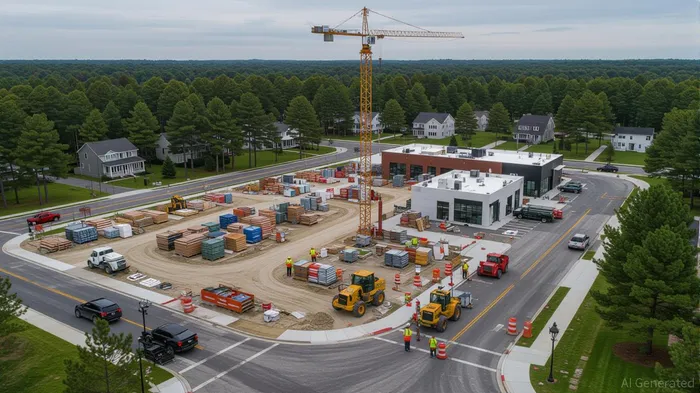
Parcel Subdivision and Municipal Reconfiguration: Unlocking Land Value
A key component of the Xerox redevelopment is the subdivision of the campus into parcels that align with modern industrial needs. Xerox's dedication of roads like Orchard Street, Panama Road, and Mitcheldean Drive to public ownership is a pivotal step in this process. By transferring control of these roads to the municipality, the project enhances community connectivity and ensures that the campus can be subdivided into flexible, buildable lots. This move also reduces transaction costs for future developers, who no longer need to negotiate access rights with private landowners.
Municipal line reconfiguration efforts further amplify the site's appeal. The Reimagine Webster Initiative, a 2024 master plan, has designated parts of the Xerox campus as a Brownfield Opportunity Area, streamlining regulatory hurdles and prioritizing the site for state and federal funding. Concurrently, the Sandbar Waterfront Revitalization Project and the 2026 town budget emphasize infrastructure investments in wastewater treatment and roadways, indirectly supporting the reconfiguration of municipal boundaries to accommodate new development. These efforts reflect a coordinated approach to aligning land use with economic goals, ensuring that the Xerox campus becomes a linchpin in Webster's industrial and residential growth.
Industrial Real Estate Trends and Investment Potential
The Xerox redevelopment is already driving measurable gains in industrial real estate value. Vacancy rates in Webster's industrial sector have plummeted to 2%, far below the national average, spurred by projects like the $650 million fairlife® dairy plant, which has created 250+ jobs. Residential property values have also surged, rising 10.1% annually since 2020, driven by the influx of high-paying jobs and improved infrastructure. This dual appreciation-industrial and residential-highlights the symbiotic relationship between manufacturing hubs and workforce housing, a trend that is reshaping upstate New York's economic geography.
For investors, the Xerox campus exemplifies the power of infrastructure-led revitalization. The state's $1.5 billion investment in programs like FAST NY and the $300 million POWER UP initiative-aimed at making industrial sites "power-ready" by 2030-reduces risk for private developers while creating a pipeline of high-quality assets. The upcoming 600 Ridge Road mixed-use development, which will integrate residential, commercial, and industrial spaces, further underscores Webster's potential as a live-work-play destination.
Conclusion: A Model for Regional Economic Renewal
The Xerox campus redevelopment in Webster is more than a local success story; it is a blueprint for how strategic infrastructure investment can catalyze industrial land appreciation and broader economic growth. By addressing infrastructure gaps, reconfiguring land use, and aligning with state-level initiatives, Webster has positioned itself as a magnet for advanced manufacturing and logistics firms. For investors, the combination of low vacancy rates, rising property values, and a supportive policy environment makes the area a high-conviction opportunity. As upstate New York continues to attract nearshoring and clean energy investments, the lessons from Webster's transformation will likely resonate across the region, proving that infrastructure is not just a cost-it is a catalyst for value creation.

Blending traditional trading wisdom with cutting-edge cryptocurrency insights.
Latest Articles
Stay ahead of the market.
Get curated U.S. market news, insights and key dates delivered to your inbox.




Comments
No comments yet