
The Xerox Campus Redevelopment in Webster, NY: A Strategic Real Estate and Infrastructure Play


 Aime Summary
FAST NY Grant: A Catalyst for Shovel-Ready Development
The $9.8 million FAST NY grant is a cornerstone of Webster's revitalization efforts, targeting a 300-acre brownfield site previously occupied by Xerox. According to a report by the state's economic development office, the grant funds critical infrastructure upgrades, including road construction, sewer system enhancements, and electrical infrastructure planning, all aimed at making the site "shovel-ready" for redevelopment by 2025. These improvements reduce the upfront costs and risks for private developers, creating a competitive edge for Webster in attracting advanced manufacturing and logistics firms.
The strategic value of such grants is evident in their ability to unlock latent economic potential. For instance, a 2023 study on municipal infrastructure spending noted that similar projects in New York have historically led to a 20% increase in land values post-upgrades, as seen in the Triangle Site in Oneida County. By 2025, Webster's upgraded campus is projected to offer over one million square feet of industrial space, tailored for businesses seeking affordable labor and proximity to major transportation corridors like Buffalo's port and rail networks. This alignment with regional logistics hubs enhances the site's appeal, particularly for e-commerce and clean energy sectors.
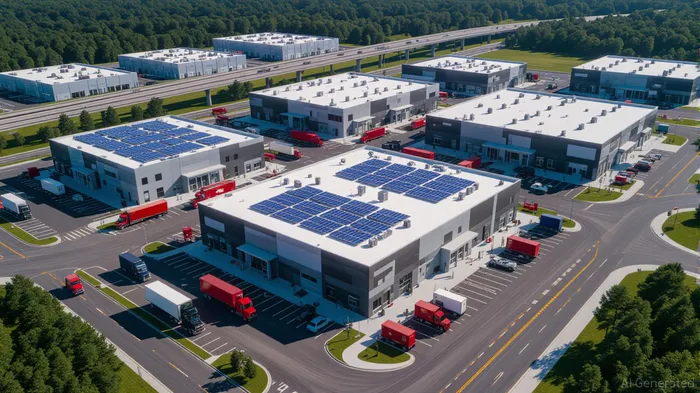
Xerox's Divestiture Strategy and Private-Sector Synergies
Xerox's decision to divest its Webster campus is not merely a corporate asset rationalization but a calculated move to leverage public infrastructure investments for private-sector gain. The company's strategy, as outlined in state economic development briefings, involves partnering with developers to repurpose the site into a mixed-use industrial and commercial hub. This approach mirrors broader trends in corporate real estate, where companies increasingly offload underutilized assets to capitalize on value-creation opportunities driven by municipal upgrades.
The timeline for this transition is tightly synchronized with infrastructure completion schedules. By 2026, the final phase of road and power upgrades will coincide with the availability of the 300-acre site, creating a "window of opportunity" for private investors. For example, the $650 million fairlife® dairy plant, already secured for the area, is expected to generate 250 well-paying jobs and serve as an anchor tenant for the redeveloped campus. Such partnerships exemplify Governor Kathy Hochul's vision of public-private collaboration, where state funding de-risks private investment while ensuring community-wide economic benefits.
Economic Impact and Real Estate Value Creation
The economic ripple effects of Webster's redevelopment are already materializing. Data from the New York State Department of Taxation and Finance indicates that median home prices in Webster have risen 10.1% annually, reaching $317,000 as of November 2025. This surge is directly tied to state-backed infrastructure projects, including the $4.5 million NY Forward Program, which is revitalizing downtown Webster through walkability enhancements and event spaces. The combined impact of these initiatives is a virtuous cycle: improved infrastructure attracts businesses, which in turn drive job creation and household income growth, further fueling property demand.
Commercial real estate is poised for similar gains. With industrial vacancy rates in Western NY dropping to 2%, the region has become a magnet for sectors like semiconductor fabrication and food processing. The Xerox campus, now equipped with modern infrastructure, is uniquely positioned to capture this demand. For investors, the low vacancy rates and strategic location near Buffalo's port suggest that the site could command premium rents once fully developed, particularly for logistics and advanced manufacturing tenants.
Long-Term Investment Potential
Looking ahead, Webster's redevelopment aligns with global infrastructure spending trends. A 2025 report by the World Bank estimates that global infrastructure investment will reach $106 trillion by 2040, driven by the need for climate-resilient and technology-enabled assets. The Xerox campus, with its focus on clean energy and advanced manufacturing, is well-positioned to benefit from this megatrend. Additionally, the synchronized timelines for infrastructure completion (2025–2026) and private-sector readiness create a low-risk environment for capital deployment.
For real estate investors, the key metrics are clear: a 20% historical land value uplift from similar projects, a 10.1% annual home price appreciation, and a 2% industrial vacancy rate. These figures, combined with the state's commitment to maintaining a business-friendly environment, suggest that Webster's redeveloped campus will deliver outsized returns over the next decade.
Conclusion
The Xerox campus redevelopment in Webster, NY, is a masterclass in leveraging municipal infrastructure grants to unlock private-sector value. By aligning state funding with corporate divestiture strategies and regional economic goals, the project exemplifies how strategic planning can transform brownfields into high-growth industrial hubs. For investors, the combination of shovel-ready infrastructure, low vacancy rates, and a favorable regulatory environment makes Webster a standout opportunity in the current real estate landscape. As the 2025–2026 development window opens, the town's transformation offers a blueprint for replicating success in other underdeveloped markets.

Blending traditional trading wisdom with cutting-edge cryptocurrency insights.
Latest Articles
Stay ahead of the market.
Get curated U.S. market news, insights and key dates delivered to your inbox.
AInvest
PRO
AInvest
PRO



Comments
No comments yet