
The Xerox Campus Redevelopment in Webster, NY: A Strategic Opportunity for Industrial Real Estate and Infrastructure Investors


 Aime Summary
Infrastructure as a Catalyst: The FAST NY Grant and Brownfield Revitalization
The $9.8 million FAST NY grant is the cornerstone of the Xerox campus redevelopment, funding critical upgrades to roads, sewer systems, and electrical infrastructure across 300 acres of brownfield land. These improvements are not merely cosmetic; they address systemic challenges that have historically hindered brownfield sites, such as outdated utilities and limited connectivity. By modernizing infrastructure, the project aligns with Governor Kathy Hochul's vision of a "sustainable economic ecosystem," where public investment reduces development risks and attracts private-sector participation.
For instance, the grant has enabled the expansion of sewer capacity and the modernization of electrical systems, making the campus competitive with industrial hubs in the Sun Belt and Midwest. This infrastructure overhaul is particularly significant given the site's strategic location near Buffalo's port and rail systems, which reduces shipping delays and lowers logistics costs for manufacturers. As a result, the campus is now positioned to attract advanced manufacturing, semiconductor production, and renewable energy projects-sectors poised for long-term growth in the U.S. According to industry analysis.
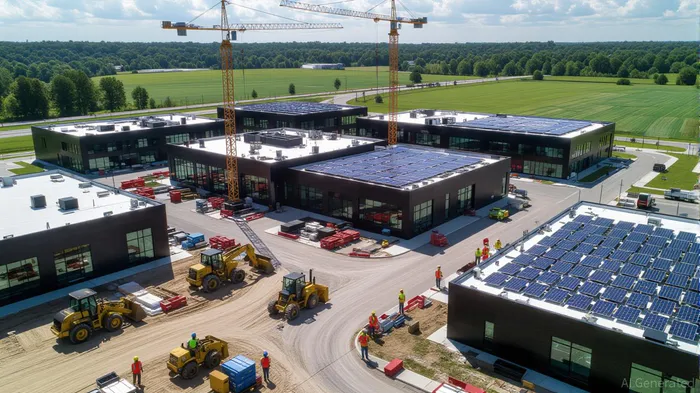
Xerox's Strategic Divestiture: From Corporate Asset to Community-Driven Growth
Xerox's decision to divest parcels and reconfigure its Webster campus reflects a broader corporate strategy to pivot from legacy industrial assets to value-driven opportunities. By 2025, the company has transferred 8.5 lane-miles of its industrial roadway network to public ownership, a move that enhances mobility and facilitates broader redevelopment. This divestiture is part of a larger trend among corporations to offload underutilized assets in favor of partnerships that align with regional economic goals.
The rezoning of the campus under New York State's Brownfield Opportunity Area (BOA) program further underscores this alignment. Mixed-use development is now permitted, blending industrial, residential, and commercial components to create a "bluefield" model that fosters economic diversification. For example, the demolition of the 600 Ridge Road facility by late 2025 has cleared the way for residential and retail developments, while the $650 million fairlife® dairy plant-set to create 250 jobs-highlights the site's appeal to high-value industries. These changes are not only revitalizing the campus but also driving real estate appreciation, with median home prices in Webster rising 10.1% annually as of October 2025.
Public-Private Partnerships: Mitigating Risks and Scaling Impact
The success of the Xerox campus redevelopment hinges on public-private partnerships (PPPs) that leverage state and federal funding to mitigate construction costs and environmental approvals. The Community Access Project, backed by $2.041 million in state and federal funds, is a case in point. By enhancing infrastructure around the campus, this initiative reduces barriers for future occupants, ensuring the site remains competitive in a tightening industrial leasing market.
Governor Hochul's emphasis on infrastructure as a driver of industrial growth is also evident in the state's broader $283 million initiative to expand Upstate New York's industrial sector According to state planning documents. These efforts are paying dividends: Western NY's industrial vacancy rate stands at 2% in 2025, far below the national average of 7.3%, signaling strong demand for high-quality industrial space. For investors, this dynamic creates a compelling opportunity to acquire assets in a market where supply constraints and strategic location are driving premium valuations.
Long-Term Prospects: A Model for Secondary Market Growth
The Xerox campus redevelopment exemplifies how secondary markets like Webster can outpace primary cities in industrial real estate growth. With its low costs, skilled labor force, and proximity to major transportation networks, the site is attracting projects that align with national trends such as domestic manufacturing and e-commerce logistics According to market analysts. Industry forecasts predict a recovery in industrial leasing by mid-2026, further reinforcing the campus's potential as a long-term investment.
For infrastructure and real estate investors, the key takeaway is clear: strategic municipal funding and corporate divestiture are not just mitigating risks but actively reshaping the industrial landscape. The Xerox campus in Webster, NY, is a testament to this shift, offering a scalable model for brownfield redevelopment that balances economic growth with environmental sustainability.

Blending traditional trading wisdom with cutting-edge cryptocurrency insights.
Latest Articles
Stay ahead of the market.
Get curated U.S. market news, insights and key dates delivered to your inbox.
AInvest
PRO
AInvest
PRO



Comments
No comments yet