
The Xerox Campus Redevelopment in Webster, NY: A Strategic Opportunity in Industrial Real Estate


 Aime Summary
Infrastructure as a Catalyst for Value Creation
The FAST NY Grant has funded critical upgrades to roads, sewer systems, and electrical grids, transforming a 300-acre brownfield into a fully operational industrial zone. These improvements, part of Governor Kathy Hochul's broader economic strategy, have already yielded measurable outcomes: residential property values in Webster have surged by 10.1% since the project's inception, while industrial vacancy rates have plummeted to 2%, far below the national average. Such metrics underscore the grant's role in de-risking real estate investments by ensuring infrastructure readiness-a key consideration for manufacturers and logistics firms seeking to scale operations without the delays of site preparation.
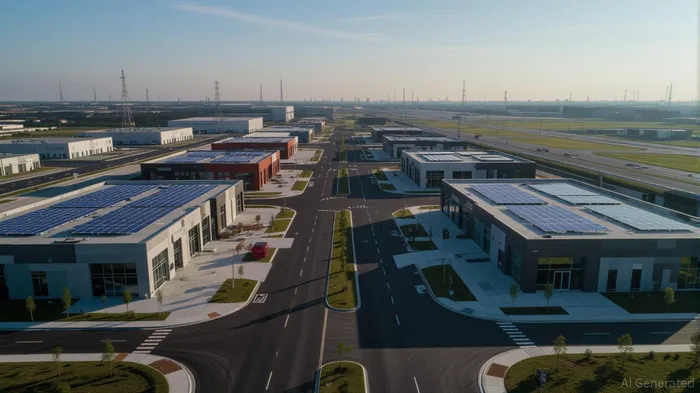 The grant's impact extends beyond immediate infrastructure. By 2026, all FAST NY-funded upgrades will be completed, including road realignments and grid modernization, solidifying Webster's position as a business-friendly community. This phased approach ensures that the site remains competitive in attracting capital-intensive industries, particularly as companies prioritize supply chain resilience and proximity to multimodal transportation networks like I-390 and the Rochester International Airport.
The subdividability plan aligns with broader municipal goals to stimulate private investment. By pre-approving zoning and infrastructure for each parcel, Webster has minimized regulatory friction, a factor that often deters industrial developers. This streamlined approach mirrors successful models in regions like the Research Triangle, where pre-graded sites and utility-ready infrastructure have historically driven rapid capital deployment.
Municipal Realignment and Long-Term Resilience
Webster's municipal realignment efforts further amplify the investment thesis. The Community Access Project, funded by a $1.838 million grant, is rehabilitating industrial roadways and enhancing pedestrian access, creating a dual-purpose infrastructure that supports both commercial activity and residential growth. These improvements are part of the Reimagine Webster Initiative, which seeks to address affordable housing shortages while fostering mixed-use development. For investors, this signals a long-term commitment to urban revitalization, where industrial zones are not isolated but integrated into thriving communities.
The economic benefits of this realignment are already evident. Median household income in Webster rose by 4.31% in 2023, even as employment dipped slightly due to sector transitions. This suggests a shift toward higher-paying jobs in advanced manufacturing, a trend that aligns with the influx of projects like fairlife's dairy plant. Such wage growth not only strengthens local demand but also enhances the creditworthiness of real estate markets, making Webster an attractive jurisdiction for both commercial and residential developers.
A Near-Term Investment Play
For investors, the Xerox campus redevelopment offers a near-term play on industrial real estate value acceleration. The combination of FAST NY-funded infrastructure, subdividable land, and municipal realignment creates a self-reinforcing cycle: improved infrastructure attracts private capital, which in turn drives property appreciation and job creation. With the site projected to be fully operational by 2026, the window for capturing early-stage gains is narrowing.
Moreover, the project's alignment with regional supply chain resilience strategies-such as reducing reliance on high-cost coastal markets-positions it as a hedge against macroeconomic volatility. As companies diversify their production footprints, Webster's strategic location and pre-built infrastructure will likely command a premium, particularly in sectors like dairy production, advanced manufacturing, and logistics.
Conclusion
The Xerox campus redevelopment in Webster, NY, exemplifies how targeted infrastructure investment can unlock latent value in underutilized industrial zones. By leveraging the FAST NY Grant, subdividability plans, and municipal realignment, Webster has created a blueprint for industrial real estate revitalization that balances short-term gains with long-term resilience. For investors, this represents a strategic opportunity to capitalize on a market in transition-one where public policy and private ambition converge to redefine the economics of industrial land.

Blending traditional trading wisdom with cutting-edge cryptocurrency insights.
Latest Articles
Stay ahead of the market.
Get curated U.S. market news, insights and key dates delivered to your inbox.


AInvest
PRO
AInvest
PRO



Comments
No comments yet