
The Xerox Campus Redevelopment in Webster, NY: A Strategic Opportunity in Industrial Real Estate


 Aime Summary
Infrastructure Upgrades: The Foundation for Growth
The FAST NY grant has prioritized infrastructure as the cornerstone of Webster's revitalization. Key projects include road realignment, sewer expansion, and electrical grid modernization, which have already made the site "shovel-ready" for private developers. For instance, the $650 million fairlife® dairy processing facility, a flagship tenant, is set to create 250 jobs and occupy over one million square feet of space by 2025. Such infrastructure investments are critical for industries requiring robust supply chains, such as semiconductor production and food processing.
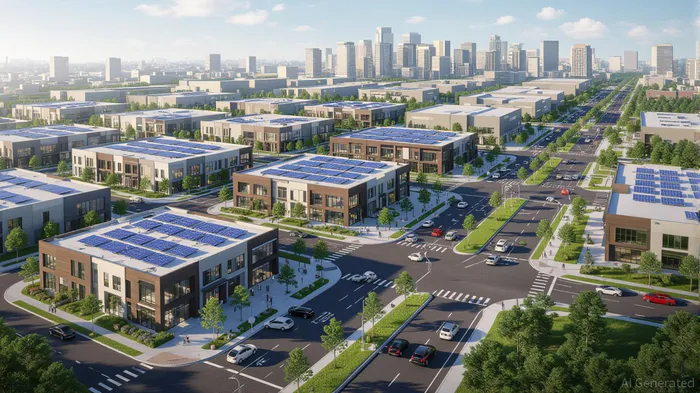 The impact of these upgrades is evident in Webster's economic metrics. Industrial vacancy rates have plummeted to 2%, far below the national average of 7.4%, while residential property values have surged by 10.1% annually. This dual growth in industrial and residential markets underscores the project's ability to stimulate cross-sector development. Additionally, the Webster Economic Access Project, funded by $1.838 million, is enhancing road connectivity to serve logistics operations, further solidifying the town's appeal to manufacturers.
Municipal Boundary Changes and Zoning Innovations
Strategic municipal boundary adjustments and zoning reforms have expanded Webster's industrial footprint to 1,400 contiguous acres, creating one of the largest development-ready sites in upstate New York. These changes, coupled with the Brownfield Opportunity Area (BOA) initiative, have reclassified the former Xerox campus from a derelict brownfield to a "bluefield" model that integrates industrial and residential uses. This approach not only accelerates land repurposing but also aligns with Governor Kathy Hochul's vision for a "sustainable economic ecosystem".
The integration of the Xerox campus with neighboring properties, such as the 600 Ridge Road site, is fostering a unified industrial-commercial complex. This clustering effect enhances scalability for developers, enabling them to leverage shared infrastructure and logistics networks. For example, the proximity to I-390 and Rochester International Airport provides a competitive edge for firms requiring rapid distribution capabilities.
Public-Private Partnerships: Mitigating Risk, Amplifying Returns
The success of Webster's redevelopment hinges on public-private partnerships that reduce investment risks and amplify returns. The Webster Economic Development Alliance (WEDA) has played a central role in coordinating these efforts, managing the FAST NY grant, and attracting private developers like fairlife®. Tax incentives and state-backed infrastructure projects further de-risk investments, making the area competitive with larger urban markets.
A notable example is the $4.5 million NY Forward Program, which funds downtown revitalization projects such as Veterans Memorial Park and Harmony House. These initiatives enhance the town's livability, indirectly supporting industrial growth by attracting a skilled workforce. Similarly, the Community Access Project, backed by $500,000 in federal funding, is improving multi-modal transportation infrastructure around key redevelopment sites.
Investment Opportunities: Targeting High-Growth Sectors
For investors, Webster's transformation offers opportunities in both industrial real estate and infrastructure development. The $650 million fairlife® facility exemplifies the potential of large-scale manufacturing projects, while the NEAT site's phased development plan ensures a steady pipeline of industrial space through 2026. Additionally, mixed-use developments, such as the proposed multipurpose conservatory and wayfinding signage projects, present opportunities in commercial and residential real estate.
Investors should also consider firms directly involved in the redevelopment. The Webster Community Coalition for Economic Development, Inc., which manages the FAST NY grant, is a key player in infrastructure upgrades. Similarly, real estate developers collaborating with WEDA, such as Ranger Design, are positioned to benefit from the area's growth trajectory according to recent reports.
Conclusion
The Xerox campus redevelopment in Webster, NY, is a masterclass in leveraging municipal infrastructure upgrades and land repurposing to unlock private investment. With state funding, strategic zoning reforms, and public-private partnerships, the town is emerging as a model for post-industrial revitalization. For investors, the combination of shovel-ready sites, tax incentives, and a strategic location near major transportation corridors positions Webster as a high-potential market for industrial real estate and infrastructure projects. As the NEAT site nears full completion by 2026, the time to act is now.

Blending traditional trading wisdom with cutting-edge cryptocurrency insights.
Latest Articles
Stay ahead of the market.
Get curated U.S. market news, insights and key dates delivered to your inbox.


AInvest
PRO
AInvest
PRO



Comments
No comments yet