
The Xerox Campus Redevelopment in Webster, NY: A Strategic Infrastructure Play for Industrial Real Estate and Economic Growth


 Aime Summary
Infrastructure as a Catalyst for Real Estate Value
Infrastructure upgrades are not merely logistical necessities; they are powerful levers for unlocking economic potential. In Webster, the FAST NY-funded improvements-ranging from road construction and sanitary sewer extensions to electrical master planning-are designed to transform a previously underutilized site into a "shovel-ready" hub for industrial activity. Such projects historically correlate with significant real estate value increases. For instance, the extension of the Washington Metro's Silver Line spurred development in Northern Virginia, with property values along the route appreciating sharply. Similarly, proximity to transportation hubs and upgraded utilities enhances the desirability of commercial properties by reducing operational costs and improving accessibility for businesses and workers.
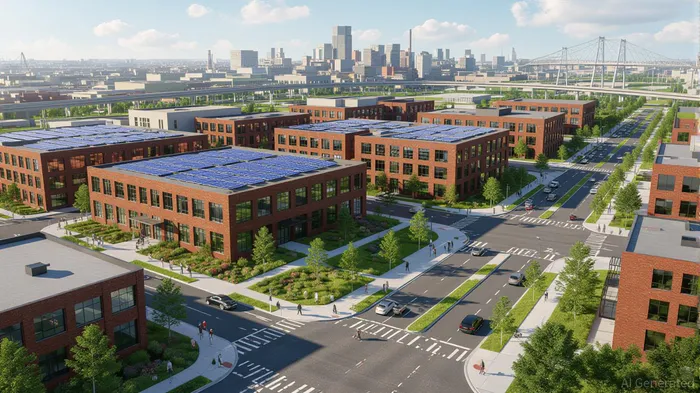 Webster's experience mirrors these trends. Residential real estate in the area has already seen a 10.1% year-over-year increase in median sale prices, reaching $317,000 in November 2025, while commercial property values are expected to follow suit as the Xerox campus becomes fully operational according to real estate market data. The town's low vacancy rates (2%) and strategic location near the U.S.-Canada border further amplify its appeal, particularly for industries seeking to avoid cross-border tariffs as reported in regional economic analyses.
Economic Growth and the Role of Strategic Location
The economic impact of the Xerox redevelopment extends beyond real estate. By attracting capital-intensive industries such as advanced manufacturing and food processing, the project is projected to create thousands of jobs and stimulate ancillary business activity. A notable example is the $650 million fairlife® dairy plant, set to open by year-end 2025 and generate 250 well-paying jobs. These developments align with broader national and global trends: infrastructure investment is increasingly recognized as a driver of economic resilience, with the U.S. and Asia leading a projected $106 trillion in global infrastructure spending by 2040.
Moreover, the integration of digital infrastructure-such as AI-driven water management systems and digital twin platforms for urban planning-highlights how modern infrastructure projects enhance long-term sustainability. While Webster's focus remains on physical upgrades, the principles of resilience and scalability are evident in its approach to road and utility improvements, which are designed to support future industrial expansion.
Mitigating Risks and Ensuring Long-Term Viability
Despite the optimism, challenges such as gentrification and overvaluation must be addressed. Rising property values could displace long-time residents or create unsustainable market bubbles, as seen in other rapidly developing regions. However, Webster's Community Access Project-focusing on pedestrian accessibility, roadway rehabilitation, and mixed-use development-demonstrates a commitment to inclusive growth. By balancing industrial expansion with affordable housing and community amenities, the town aims to avoid the pitfalls of unchecked development.
For investors, the key lies in aligning with projects that prioritize long-term viability. The Xerox campus, with its shovel-ready infrastructure and proximity to major transportation corridors, offers a compelling opportunity. Data from the past year shows that commercial properties near the site are already experiencing heightened demand, with industrial space selling quickly and at premium prices. This trend is likely to accelerate as the 2025 infrastructure upgrades reach completion.
Conclusion: A Model for Future-Ready Investment
The Xerox campus redevelopment in Webster exemplifies how targeted infrastructure investments can catalyze both real estate value appreciation and economic diversification. By creating a foundation for advanced manufacturing and leveraging strategic location advantages, the project positions Webster as a magnet for industrial capital. For investors, the lesson is clear: infrastructure upgrades are not just enablers of growth but foundational assets in their own right. As global infrastructure spending accelerates, regions like Webster-where public and private sectors collaborate to build resilient, future-ready ecosystems-will increasingly define the next frontier of profitable investment.

Blending traditional trading wisdom with cutting-edge cryptocurrency insights.
Latest Articles
Stay ahead of the market.
Get curated U.S. market news, insights and key dates delivered to your inbox.
AInvest
PRO
AInvest
PRO



Comments
No comments yet