
Xerox Campus Redevelopment in Webster, NY: A High-Yield Opportunity in Industrial Real Estate?


 Aime Summary
Infrastructure as a Catalyst for Value Creation
The FAST NY grant has funded critical upgrades to roads, sanitary sewer systems, and electrical infrastructure, positioning the Xerox campus as a "shovel-ready" site for high-demand sectors such as semiconductor manufacturing, food processing, and advanced logistics. These improvements align with the state's broader strategy to attract capital-intensive industries by reducing development timelines and upfront costs for private developers. According to a report by the Webster Economic Development Alliance, the infrastructure upgrades are expected to facilitate the subdivision of over one million square feet of industrial space, directly enhancing the site's appeal to firms requiring modern, scalable facilities.
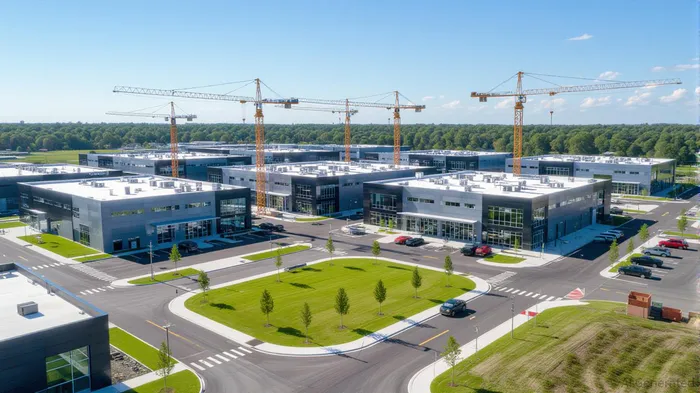 The timing of these investments is particularly noteworthy. For instance, road and sewer upgrades are synchronized with the construction of the $650 million fairlife dairy plant, a project that alone will create 250 jobs by 2025. This coordination minimizes delays and ensures that infrastructure improvements directly serve immediate development needs. Such precision is rare in urban redevelopment projects, where bureaucratic inertia often erodes investor confidence.
The impact of these efforts is already evident in local market dynamics. Industrial vacancy rates in Webster have plummeted to 2%, a stark contrast to the national average of 6.5% in 2025. This scarcity-driven demand is further amplified by the influx of high-energy-demand industries, which require the upgraded electrical grid now being implemented. For investors, low vacancy rates signal a robust absorption rate for new developments, reducing the risk of prolonged underutilization.
Residential property values in Webster have also surged by 10.1% since 2023, driven by improved connectivity and the town's rebranding as a hub for innovation. This residential premium is not incidental; it reflects the broader economic uplift generated by industrial redevelopment. As noted by the Community Access Project-a $2.04 million initiative to connect Phillips Village affordable housing with the Webster Recreation Center-such projects enhance livability, making the area more attractive to both workers and businesses.
Strategic Positioning and Future Projections
Webster's success hinges on its ability to position itself as a competitive alternative to traditional industrial hubs like Chicago or Atlanta. The FAST NY program's state-wide focus on shovel-ready sites-having allocated $283 million across 37 projects since 2020-demonstrates a deliberate effort to decentralize manufacturing and logistics activity. For Webster, this means access to a pipeline of capital and corporate interest that transcends local constraints.
Looking ahead, the completion of infrastructure projects between 2025 and 2026 is expected to create a surge in demand for industrial space, particularly as firms in the semiconductor and food-processing sectors seek to diversify supply chains. According to market analysis, investors who secure properties before this peak period stand to benefit from both rental income and capital appreciation. Xerox's own $1.8 million contribution to road improvements further underscores the private sector's confidence in the project's long-term viability.
Conclusion: A High-Yield Proposition
The Xerox campus redevelopment in Webster exemplifies how strategic infrastructure investments can catalyze industrial land value creation. By aligning public funding with private-sector priorities, the town has transformed a brownfield into a magnet for high-growth industries. For investors, the combination of low vacancy rates, rising residential premiums, and state-backed infrastructure makes this a high-yield opportunity. However, the window for entry is narrowing. As the final phase of upgrades nears completion, the risk of price inflation looms. Those who act swiftly may yet secure a stake in a redeveloped landscape where value is no longer latent but manifest.

Blending traditional trading wisdom with cutting-edge cryptocurrency insights.
Latest Articles
Stay ahead of the market.
Get curated U.S. market news, insights and key dates delivered to your inbox.


AInvest
PRO
AInvest
PRO



Comments
No comments yet