
The Xerox Campus Redevelopment and Webster, NY's Economic Renaissance: A Blueprint for Infrastructure-Driven Value Creation in Industrial Land Markets
 Aime Summary
Infrastructure as a Catalyst for Industrial Demand
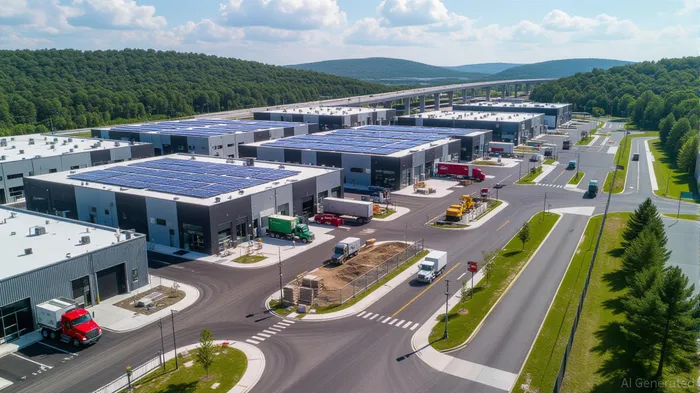
The cornerstone of Webster's resurgence lies in its infrastructure upgrades. Road and sewer improvements, alongside modernized energy systems, have positioned the site to accommodate over one million square feet of industrial space by 2025. These enhancements are not merely technical fixes but strategic interventions to align with state sustainability goals and attract high-tech manufacturers, logistics firms, and green energy enterprises. The result is a sharp reduction in industrial vacancy rates-now at just 2%-reflecting robust demand for advanced manufacturing and warehouse facilities in upstate New York (https://www.bitget.com/news/detail/12560605086564).
This demand is further amplified by the site's proximity to the U.S.-Canada border, a critical logistics corridor, and its integration with the 600 Ridge Road site, which is undergoing environmental assessments to enable mixed-use development (https://www.bitget.com/news/detail/12560605086442). Such coordination ensures that infrastructure investments are not siloed but part of a cohesive plan to create a multi-modal industrial and commercial hub.
Real Estate Value Creation and Economic Spillovers
The economic impact of these developments extends beyond industrial land markets. Median home prices in Webster are projected to rise by 10.1% annually through 2025, driven by job creation and improved connectivity. A key driver is the $650 million fairlife® dairy facility, set to generate 250 new jobs and further diversify the local economy. Additionally, pedestrian-focused improvements, such as those from the Community Access Project, are enhancing walkability and public access, making the area more attractive to both residents and businesses (https://www.bitget.com/news/detail/12560605086174).
The state's Brownfield Opportunity Area (BOA) designation has also played a pivotal role. By streamlining regulatory processes and providing access to resources, the BOA framework has reduced development risks, encouraging private-sector participation. This public-private partnership model is critical in unlocking value from previously underutilized or contaminated sites.
Broader Implications for Industrial Land Markets
Webster's experience highlights a broader trend: the redefinition of industrial land markets through infrastructure-led growth. As global supply chains become more localized and sustainability demands intensify, regions that invest in modern infrastructure-particularly in brownfield sites-stand to gain significant competitive advantages. The Xerox campus redevelopment demonstrates how such investments can transform industrial land from a liability into an asset, attracting capital and talent while aligning with macroeconomic priorities like decarbonization and regional equity.
For investors, the lesson is clear: industrial land markets are no longer passive assets but dynamic ecosystems shaped by policy, infrastructure, and innovation. Webster's trajectory offers a blueprint for how these elements can converge to drive value creation, not just in real estate but across the broader economy.

Blending traditional trading wisdom with cutting-edge cryptocurrency insights.
Latest Articles
Stay ahead of the market.
Get curated U.S. market news, insights and key dates delivered to your inbox.


AInvest
PRO
AInvest
PRO



Comments
No comments yet