
The Xerox Campus Redevelopment in Webster, NY: A Catalyst for Regional Industrial Real Estate Growth


 Aime Summary
Strategic Infrastructure Investments: Enabling Shovel-Ready Development
The FAST NY grant is being leveraged to address critical infrastructure gaps, including road reconstruction, sanitary sewer system expansions, and electrical master planning according to municipal reports. These upgrades are essential for transforming the brownfield site into a competitive industrial zone. According to a report by RBJ, the project aims to deliver nearly one million square feet of industrial space by 2025, with full readiness anticipated by 2026. Such timelines are critical for investors, as they reduce development risks and expedite project timelines for tenants.
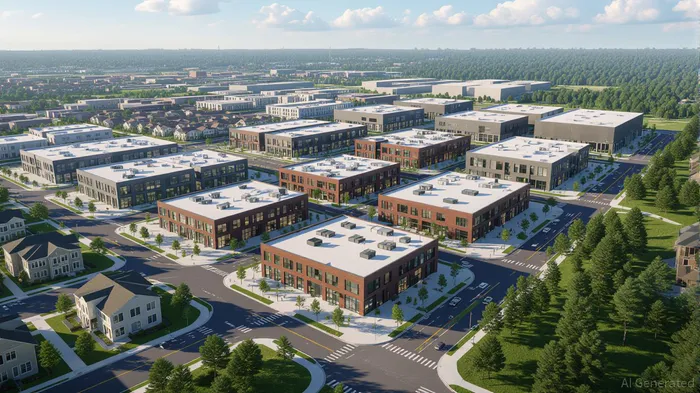 The $283 million in state funding allocated for infrastructure upgrades further solidifies the site's appeal according to project documentation. For instance, the Community Access Project-a component of the redevelopment-includes $2.041 million in state assistance and $500,000 in federal funding to enhance roadways, pedestrian access, and public spaces according to official project details. These improvements not only connect the campus to nearby neighborhoods like Phillips Village but also elevate the site's accessibility, a key factor for logistics and manufacturing operations.
Municipal Boundary Adjustments and Mixed-Use Synergies
Webster's municipal boundary adjustments and zoning reforms are redefining the campus's potential. By permitting mixed-use development-including residential, retail, and commercial components-the project adopts a "bluefield" model that revitalizes underused spaces without encroaching on greenfield land according to planning documents. This approach aligns with modern industrial real estate trends, where workforce housing and retail amenities are increasingly integrated to support employee retention and community cohesion.
The inclusion of 500 new housing units and 200,000 square feet of commercial space according to project plans signals a strategic shift toward creating self-sustaining ecosystems. For investors, this diversification reduces reliance on single-industry cycles and enhances long-term asset resilience. Additionally, the demolition of the 600 Ridge Road facility-completed by year-end 2025-has cleared the way for large-scale projects like the $650 million fairlife® dairy plant, which is projected to generate 250 jobs according to company projections.
Economic Impact and Investment Opportunities
The Xerox campus redevelopment is expected to catalyze broader economic growth. According to state and local reports, the project will attract advanced manufacturing and logistics firms, positioning Webster as a regional hub for high-growth industries. The anticipated creation of 250 jobs according to company announcements and over 200,000 square feet of commercial space according to project updates highlights the site's capacity to serve as a magnet for private capital.
For infrastructure investors, the focus on electrical master planning and sewer system expansions according to municipal planning presents opportunities in utility and public works sectors. Meanwhile, real estate developers can capitalize on the mixed-use zoning to create value-add projects that cater to both industrial tenants and residential buyers. The alignment of state funding with private investment-such as the $650 million fairlife® plant-demonstrates a model where public-private partnerships mitigate financial risks while amplifying returns.
Actionable Insights for Investors
- Prioritize Shovel-Ready Sites: The 2026 readiness timeline according to RBJ reports makes the Xerox campus an attractive option for firms seeking immediate deployment of capital with minimal predevelopment costs.
- Leverage Mixed-Use Potential: Investors should explore opportunities in residential and retail components to diversify revenue streams and align with workforce housing demand.
- Engage with Public-Private Partnerships: The state's commitment to infrastructure funding according to official statements reduces capital outlays for private developers, making Webster a low-risk, high-reward market.
- Monitor Zoning and Boundary Changes: Ongoing municipal adjustments according to planning documents could unlock additional acreage or amenities, enhancing site flexibility for future expansions.
Conclusion
The Xerox campus redevelopment in Webster, NY, exemplifies how strategic infrastructure investments and adaptive land-use policies can revitalize industrial real estate markets. By transforming a brownfield into a bluefield, the project not only addresses environmental and logistical challenges but also creates a blueprint for sustainable growth. For investors, the combination of state-backed infrastructure, mixed-use synergies, and a clear timeline for readiness positions Webster as a compelling destination for capital seeking high-impact, future-proof opportunities.

Blending traditional trading wisdom with cutting-edge cryptocurrency insights.
Latest Articles
Stay ahead of the market.
Get curated U.S. market news, insights and key dates delivered to your inbox.
AInvest
PRO
AInvest
PRO



Comments
No comments yet