
Xerox Campus Redevelopment in Webster, NY: A Catalyst for Real Estate and Infrastructure Investment


 Aime Summary
The FAST NY Grant: A Catalyst for Shovel-Ready Infrastructure
The $9.8 million FAST NY grant is a cornerstone of Webster's redevelopment strategy, targeting critical infrastructure upgrades at the 300-acre Xerox campus. These funds are allocated to modernize roads, expand sewer capacity, and enhance electrical systems, positioning the site as a competitive location for advanced manufacturing and logistics firms. By 2025, these improvements are expected to create over one million square feet of industrial space, directly addressing the low vacancy rates in the region.
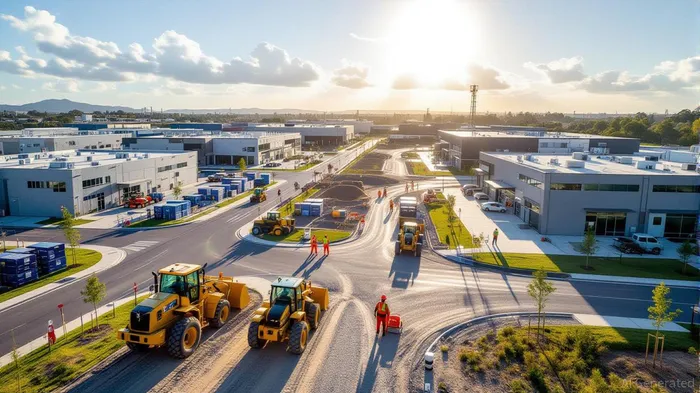
The grant's impact extends beyond infrastructure. According to a report by the Webster Economic Development Alliance, the project has already spurred a 10.1% year-over-year increase in residential property values. This surge is attributed to mixed-use zoning that integrates residential, commercial, and industrial development, fostering a walkable environment while maintaining proximity to major transportation corridors like Buffalo's port and rail lines as noted in a 2025 report. The strategic alignment of infrastructure with economic objectives-such as attracting the $650 million fairlife® dairy facility (expected to create 250 jobs)-demonstrates a clear path to value creation as reported by Governor Hochul.
Municipal Reconfiguration: Redefining Connectivity and Development Risk
Xerox's municipal line reconfiguration is another critical driver of the campus's repositioning. Road realignment and blight removal at the 600 Ridge Road site are enhancing connectivity to the broader Webster Hamlet, reducing development risks for private investors. These efforts are part of the Reimagine Webster initiative, which prioritizes public-private collaboration to streamline land development processes.
The reconfiguration also underscores the town's focus on industrial and residential synergies. By aligning infrastructure with the needs of advanced manufacturing-such as data centers and clean energy projects-Webster is creating a diversified economic base. As noted in a 2025 report, the site's shovel-ready status by 2026 will further accelerate private-sector investment, with the fairlife® facility serving as a flagship example.
Phase 2 Environmental Remediation: Mitigating Legacy Risks
Environmental remediation remains a linchpin of the Xerox campus's long-term viability. The site, once a hub for industrial activity, has faced contamination from volatile organic compounds (VOCs) and asbestos, particularly in structures built in the 1960s and 1970s as documented by the EPA. Phase 2 testing, delayed initially due to property ownership complexities, is now underway following the demolition of the 600 Ridge Road facility.
According to the NYSDEC, remediation efforts include pump-and-treat groundwater systems, controlled blasting to increase bedrock permeability, and two-phase extraction techniques to reduce contaminant plumes. These measures are critical for ensuring the site meets unrestricted use standards, enabling mixed-use development and industrial activity. The alignment of environmental compliance with New York's clean energy goals as reported in 2025 analysis further enhances the site's appeal for eco-conscious investors.
Strategic Implications for Investors
The convergence of infrastructure, environmental remediation, and municipal planning positions Webster as a model for post-industrial revitalization. For real estate investors, the 10.1% property value increase and the influx of high-tech manufacturing suggest a trajectory of sustained appreciation. Infrastructure investors, meanwhile, benefit from the FAST NY grant's focus on shovel-ready projects, which reduce development timelines and costs.
The environmental remediation efforts also mitigate long-term liabilities, ensuring the site remains viable for decades. As noted in a 2025 analysis, the integration of solar gardens and sustainable development practices aligns with broader trends in green infrastructure, offering additional value propositions.
Conclusion
The Xerox campus redevelopment in Webster, NY, exemplifies how strategic urban development can unlock value in post-industrial corridors. By combining targeted infrastructure investment, municipal reconfiguration, and rigorous environmental remediation, the town is creating a blueprint for economic resilience. For investors, the project underscores the importance of aligning with regions that prioritize long-term planning, regulatory compliance, and public-private collaboration. As the 2025 timeline unfolds, Webster's transformation will likely serve as a benchmark for similar initiatives nationwide.

Blending traditional trading wisdom with cutting-edge cryptocurrency insights.
Latest Articles
Stay ahead of the market.
Get curated U.S. market news, insights and key dates delivered to your inbox.
AInvest
PRO
AInvest
PRO



Comments
No comments yet