
The Xerox Campus Redevelopment in Webster, NY: A Catalyst for Real Estate and Infrastructure Growth


 Aime Summary
A Market in Transition: Webster's Real Estate Dynamics
Webster's residential real estate market has shown resilience amid broader economic uncertainties. By October 2025, the median sale price of a home had dipped slightly to $293,000, a 1.1% year-over-year decline according to market data. However, this figure masks a more nuanced trend: earlier in 2025, median listing prices reached $374.9K, reflecting a period of upward momentum. The market's volatility is underscored by rapid turnover, with homes selling in an average of 9 days by October 2025, down from 18 days in July. This dynamic suggests a competitive buyer's market, where inventory constraints and demand outpace supply.
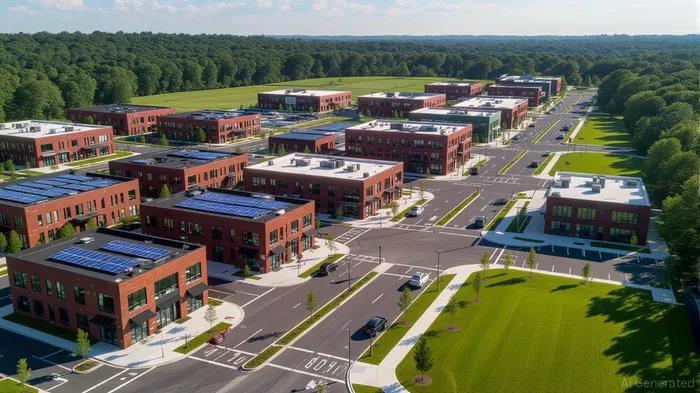
The catalyst for this shift lies in the Xerox campus redevelopment. A $9.8 million FAST NY grant has funded critical infrastructure upgrades, including road improvements, expanded sewer systems, and modernized electrical grids. These investments have catalyzed a 10.1% year-over-year increase in residential property values, pushing the median to $317,000 by November 2025. The rezoning of the 569-acre campus under New York's Brownfield Opportunity Area (BOA) program has further amplified this effect, offering tax incentives and streamlined permitting to reduce development risks.
Strategic Zoning and Industrial Resilience
Webster's industrial real estate sector is equally compelling. The campus's transformation into a mixed-use "bluefield" model-integrating advanced manufacturing, logistics, and residential development-has positioned it as a high-growth hub. Industrial vacancy rates in Webster remain at 2%, significantly below the national average of 7.3%. This is in stark contrast to markets like Rochester, where downtown office vacancy rates hit 27.3% in Q4 2024, reflecting a broader shift away from traditional office spaces.
The strategic location of Webster near Buffalo's port and rail systems, combined with competitive energy costs and tax incentives, has made it a magnet for industries like dairy processing and semiconductor manufacturing. The impending $650 million fairlife® dairy facility, expected to create 250 jobs, exemplifies the kind of private investment being drawn to the area. Meanwhile, Buffalo's industrial market, while robust with a 1.9% vacancy rate in 2024, faces challenges such as limited buildable land and zoning restrictions according to industry reports. Webster's proactive approach to rezoning and infrastructure modernization gives it a distinct edge.
Public-Private Partnerships: A Model for Sustainable Growth
Webster's success hinges on its innovative PPP frameworks. The FAST NY grant and NY Forward Program have enabled the village to share risks and resources with private stakeholders, accelerating development timelines. For instance, $4.5 million in NY Forward funding is earmarked for downtown revitalization, focusing on walkable spaces and sustainable projects. These partnerships are not merely financial tools but strategic enablers, aligning public infrastructure with private-sector needs.
This model contrasts with other upstate markets, where PPPs often lack the same level of coordination. In Buffalo, for example, while industrial demand remains strong, developers face hurdles like environmental permitting delays. Webster's streamlined permitting under the BOA program, coupled with its shovel-ready infrastructure, reduces these barriers. The result is a market where investors can deploy capital with confidence, knowing that public support is aligned with private interests.
Quantifying Undervaluation: A Comparative Edge
To assess Webster's undervaluation, consider its industrial metrics relative to peers. Buffalo's industrial vacancy rate of 6.7% in Q2 2025 pales against Webster's 2%, while Syracuse and Rochester lack comparable granular data. Nationally, industrial vacancy rates averaged 4.8% in 2024, underscoring Webster's exceptional competitiveness.
Price per square foot data for Webster's industrial properties is sparse, but the broader trend of rising residential values-driven by the Xerox campus-signals a spillover effect into commercial real estate. The 10.1% annual increase in residential prices suggests that commercial valuations are poised to follow, particularly as mixed-use zoning blurs the lines between residential and industrial development.
Conclusion: A Prime Investment Destination
Webster's real estate market is undervalued not because it lacks potential, but because its transformation is still unfolding. The Xerox campus redevelopment, supported by strategic zoning shifts and robust PPPs, is creating a virtuous cycle of infrastructure investment, job creation, and property appreciation. For investors, the combination of low vacancy rates, rapid absorption, and a supportive regulatory environment makes Webster a standout opportunity in upstate New York's evolving industrial and residential landscape.
As the region continues to adapt to national trends like supply chain reshoring and the rise of advanced manufacturing, Webster's proactive approach ensures it will remain a key player in the post-industrial economy.

Blending traditional trading wisdom with cutting-edge cryptocurrency insights.
Latest Articles
Stay ahead of the market.
Get curated U.S. market news, insights and key dates delivered to your inbox.




Comments
No comments yet