
The Xerox Campus Redevelopment in Webster, NY: A Blueprint for Industrial Real Estate Growth in 2026


 Aime Summary
The FAST NY Grant: Laying the Infrastructure Foundation
The $9.8 million FAST NY grant is the cornerstone of Webster's transformation. According to a report by , this funding is being allocated to critical infrastructure upgrades, including road construction, sanitary sewer system modernization, and electrical master planning. These improvements are not merely cosmetic-they are designed to make the site "shovel-ready" for advanced manufacturing and logistics companies. By addressing long-standing brownfield challenges, the grant reduces development risk and accelerates project timelines, making Webster an attractive destination for capital-intensive industries.
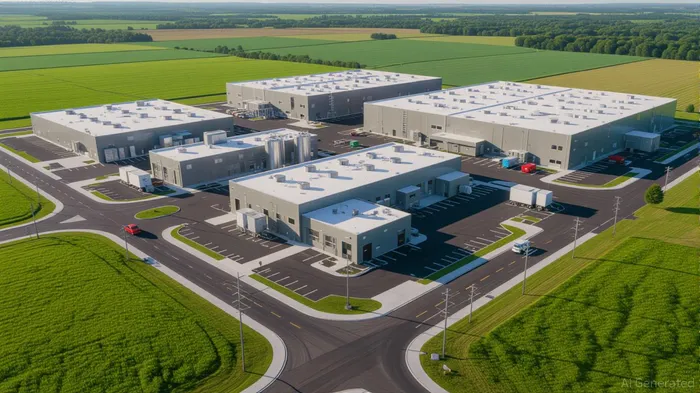 The impact of this infrastructure investment is already evident. The fairlife® dairy plant, a flagship tenant, is projected to create 250 jobs and serve as a catalyst for further industrial activity. Additionally, the grant's focus on mixed-use zoning-allowing for 500 housing units and 200,000 square feet of commercial space-creates a balanced ecosystem that supports both residential and industrial growth. This dual-purpose approach enhances the site's long-term viability, ensuring that workforce housing and commercial demand remain in sync.
Municipal Line Adjustments: Removing Bureaucratic Barriers
A less visible but equally critical factor in Webster's success is the adjustment of municipal boundaries. As detailed in , Xerox has applied to reconfigure the municipal line on parts of its 800+ acre campus to ensure that subdividable parcels fall entirely within either the Village or the Town of Webster. This move eliminates the complications of cross-jurisdictional regulations, streamlining permitting and zoning processes for developers.
Such adjustments are a strategic win for industrial land value appreciation. By simplifying administrative hurdles, the project becomes more attractive to investors who prioritize efficiency and predictability. As noted in a report by , these boundary changes are part of a broader strategy to align with Governor Hochul's vision for sustainable economic ecosystems, which emphasizes infrastructure investment and public-private partnerships. The result is a site that is not only physically ready but also administratively optimized for large-scale development.
Xerox's Divestiture Strategy: Timing and Synergy
Xerox's decision to divest parts of its campus is not arbitrary-it is meticulously timed to coincide with infrastructure upgrades and market demand. According to , the company's divestiture strategy is synchronized with the 2025-2026 project timeline, ensuring that parcels are available for immediate development once the site is fully prepared. This alignment reduces holding costs and maximizes the value of the land by positioning it as a ready-to-use asset in a competitive market.
The synergy between Xerox's exit and Webster's redevelopment is further amplified by the state's $283 million in additional funding. This financial backing signals confidence in the project's success, deterring speculative risks and attracting anchor tenants like fairlife®. For investors, this creates a low-risk, high-reward environment where land appreciation is supported by both private and public sector commitments.
Strategic Regional Significance and Long-Term Value
Webster's location near I-390 and the Rochester International Airport gives it a strategic edge in the logistics and e-commerce sectors. As global supply chains evolve, sites with cold-chain logistics capabilities and proximity to major transportation corridors will see disproportionate value appreciation. Data from indicates that residential home prices in Webster have already increased by 10.1% annually, a trend that is likely to extend to industrial land as the campus becomes fully operational.
The project's alignment with state initiatives-such as Governor Hochul's focus on semiconductor manufacturing and renewable energy-further cements its long-term potential. These industries require large, well-connected sites with robust infrastructure, a niche that the Xerox campus is uniquely positioned to fill.
Conclusion: A Model for Future Development
The Xerox campus redevelopment in Webster, NY, is more than a local success story-it is a blueprint for how infrastructure investment, strategic planning, and public-private collaboration can unlock industrial real estate value. By 2026, the site's transformation into a $1 billion hub will not only create jobs and reduce industrial vacancy rates to 2% but also set a precedent for similar projects in brownfield-heavy regions. For investors, the combination of FAST NY funding, municipal line adjustments, and Xerox's divestiture strategy offers a rare opportunity to capitalize on a market in transition.
As the project nears completion, Webster's industrial land is likely to see sustained appreciation, driven by its strategic location, infrastructure readiness, and alignment with state economic goals. This is a case study in how thoughtful planning can turn underutilized assets into engines of growth-a lesson that will resonate far beyond the borders of Webster.

Blending traditional trading wisdom with cutting-edge cryptocurrency insights.
Latest Articles
Stay ahead of the market.
Get curated U.S. market news, insights and key dates delivered to your inbox.
AInvest
PRO
AInvest
PRO



Comments
No comments yet