
Xerox Campus Redevelopment and the Webster Economic Alliance (WEDA): A Catalyst for Industrial Real Estate Value


 Aime Summary
The Xerox Campus: A Shovel-Ready Industrial Powerhouse
The Xerox campus redevelopment is a prime example of how brownfield revitalization can create a competitive edge in industrial real estate. By 2025, the project aims to transform 300 acres of underutilized land into a fully functional industrial zone, complete with upgraded roads, sewer systems, and electrical infrastructure. These upgrades have already reduced industrial vacancy rates to a mere 2%, far below the national average of 7.4%, making Webster an attractive destination for advanced manufacturing and logistics firms.
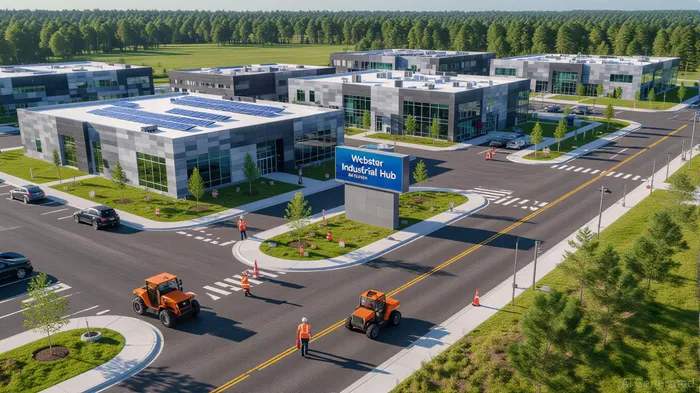 The strategic location near I-90, combined with access to a skilled workforce and state tax incentives, further amplifies the area's appeal. For instance, the $650 million fairlife® dairy facility, expected to create 250 jobs, underscores the region's ability to attract large-scale private investment. Such projects not only stabilize local employment but also create a ripple effect, boosting demand for ancillary services and infrastructure.
WEDA's Role: Bridging Public and Private Investment
The Webster Economic Alliance (WEDA) has been instrumental in orchestrating this transformation. By leveraging the FAST NY grant, WEDA has prioritized infrastructure upgrades that reduce development risks for private entities. These efforts align with Governor Kathy Hochul's vision for a "sustainable economic ecosystem," where public investment in roads, utilities, and zoning reforms attracts industries like semiconductors and renewable energy.
WEDA's approach extends beyond infrastructure. Tax incentives and public-private partnerships have created a fertile ground for industrial real estate growth. For example, the alliance's collaboration with developers on the Xerox campus has expanded the development-ready industrial zone to 1,400 acres through zoning reforms and municipal boundary adjustments. This scalability is critical for attracting large-scale tenants, as evidenced by the fairlife® dairy project, which anchors the revitalized district.
Industrial Real Estate Trends: A Surge in Value and Demand
The economic impact of these initiatives is already evident in Webster's industrial real estate market. Median home prices have risen by 10.1% annually, driven by the influx of high-paying jobs and improved infrastructure. Meanwhile, industrial property values are surging as demand outpaces supply. The low vacancy rate of 2%-a direct result of the Xerox campus redevelopment-has positioned Webster as a magnet for advanced manufacturing and logistics firms seeking cost-effective, high-quality spaces.
Key infrastructure projects, such as roadway transfers to public ownership, are slated for completion by late 2025 or mid-2026, further solidifying the region's appeal. These developments are not isolated; they are part of a broader trend where upstate New York's industrial corridors are becoming viable alternatives to overpriced urban markets. The combination of strategic location, tax incentives, and a skilled workforce makes Webster a microcosm of this shift.
Investment Outlook: A Strategic Opportunity
For investors, the Xerox campus and WEDA's initiatives present a rare confluence of factors: a shovel-ready site, a supportive policy environment, and a growing demand for industrial space. The $9.8 million FAST NY grant has already de-risked the project, making it an attractive proposition for developers and tenants alike. Moreover, the alignment of public and private investments-such as the fairlife® dairy facility-demonstrates the region's capacity to sustain long-term growth.
However, the window of opportunity is narrowing. With industrial vacancy rates at historic lows and property values rising rapidly, early-stage investors stand to benefit from the compounding effects of infrastructure-driven development. The key lies in securing assets before the full value of the Xerox campus and its surrounding industrial zone is realized.
Conclusion
The Xerox campus redevelopment and WEDA's initiatives exemplify how strategic infrastructure investment can catalyze industrial real estate value. By transforming a brownfield into a high-tech industrial hub, Webster has positioned itself as a model for post-industrial revitalization. For investors, the message is clear: upstate New York's industrial corridors are no longer overlooked-they are the next frontier for growth.

La combinación de la sabiduría tradicional en el comercio con las perspectivas más avanzadas en el área de las criptomonedas.
Latest Articles
Stay ahead of the market.
Get curated U.S. market news, insights and key dates delivered to your inbox.
AInvest
PRO
AInvest
PRO



Comments
No comments yet