
Xerox Campus Redevelopment and Webster's $9.8M FAST NY Grant: A Strategic Inflection Point for Real Estate and Infrastructure Investors?


 Aime Summary
The FAST NY Program: A Catalyst for Shovel-Ready Industrial Sites
The FAST NY Grant Program, administered by the New York State Empire State Development (ESD), is designed to accelerate the development of industrial sites by addressing critical infrastructure gaps. The program's three tracks-site marketing certification, pre-development grants, and infrastructure improvements-reflect a strategic focus on reducing risks for private developers. As of August 2025, over $283 million has been awarded to 37 projects across the state, with recent allocations including a $32.36 million grant for Oneida County's Griffiss International Airport and an $8.1 million grant for Oswego County's industrial park upgrades according to ESD. These projects highlight the state's commitment to creating "shovel-ready" sites that can attract capital-intensive industries like semiconductors and renewable energy.
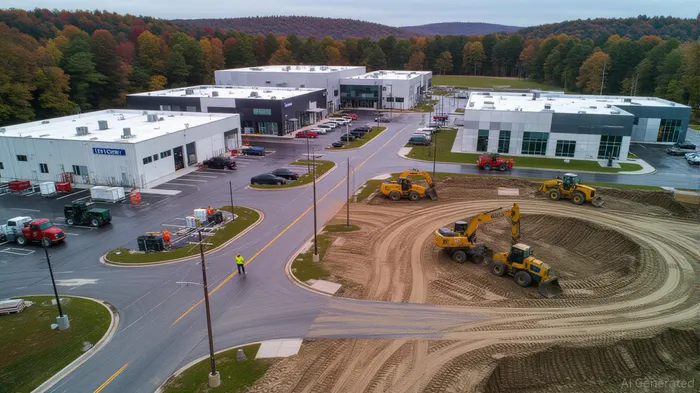
The Webster project, which received $9.8 million under Track C for infrastructure improvements, is emblematic of this strategy. According to a report by , the grant will fund road construction, sewer expansion, and electrical system modernization at the Xerox campus, enabling the site to offer over one million square feet of industrial space for advanced manufacturing and technology sectors. This aligns with Governor Kathy Hochul's vision of a "sustainable economic ecosystem," where infrastructure investments act as a magnet for industries seeking reliable, scalable locations according to reports.
Xerox's Campus: A Case Study in Public-Private Partnerships
The Xerox Webster Campus redevelopment is not just a local story-it's a case study in how public-private partnerships can mitigate risks and accelerate large-scale projects. The Webster Economic Development Alliance (WEDA) was awarded the $9.8 million grant to enhance the area around the Xerox campus, including improvements to roadways and sanitary sewer systems according to WEDA. These upgrades are critical for attracting tenants in sectors like semiconductors, which require robust utility infrastructure and logistics connectivity.
What makes this project particularly compelling for investors is its alignment with national trends. The U.S. is experiencing a surge in demand for industrial real estate, driven by nearshoring and the need for resilient supply chains. According to data from NIREO, industrial vacancy rates in the Northeast have hit historic lows, with demand outpacing supply. The Xerox campus, once a symbol of declining manufacturing, is now positioned to become a hub for high-tech production, leveraging state-funded infrastructure to meet this demand.
Strategic Implications for Investors
For infrastructure and real estate investors, the Webster project underscores the importance of "first-mover" advantages in revitalized industrial zones. The FAST NY program's focus on pre-development grants and site readiness reduces the capital burden on private developers, making projects like the Xerox campus more attractive. Investors who acquire land or infrastructure assets in these zones before major tenants commit could see outsized returns, particularly if the sites become anchors for regional supply chains.
Moreover, the state's emphasis on sustainability adds another layer of appeal. The Xerox campus redevelopment includes green infrastructure components, such as energy-efficient electrical systems and stormwater management upgrades according to reports. As environmental, social, and governance (ESG) criteria gain prominence, projects that integrate sustainability into their core design are likely to attract both institutional capital and regulatory support.
Risks and Considerations
No investment opportunity is without risk. While the FAST NY grants provide a strong foundation, the success of the Xerox campus depends on private-sector follow-through. Delays in securing tenants or underperformance in utility infrastructure could dampen returns. Additionally, the industrial real estate market is cyclical, and a slowdown in sectors like semiconductors could reduce demand for new space. Investors must also weigh the long-term viability of post-industrial zones, ensuring that the workforce and supply chains necessary for high-tech manufacturing are in place.
Conclusion: A Golden Opportunity or a Hail Mary?
The Xerox Webster Campus redevelopment, backed by the FAST NY Grant, represents a strategic inflection point for investors who understand the interplay between public infrastructure and private-sector innovation. By transforming a brownfield into a high-tech industrial hub, Webster is demonstrating how municipalities can leverage state funding to create value. For those willing to navigate the risks, this project-and others like it-could offer a rare chance to participate in the next phase of America's industrial renaissance.
As the state continues to pour resources into shovel-ready sites, the key takeaway is clear: Infrastructure-driven real estate is no longer a niche play. It's a sector where patient capital and strategic foresight can yield substantial rewards.

Blending traditional trading wisdom with cutting-edge cryptocurrency insights.
Latest Articles
Stay ahead of the market.
Get curated U.S. market news, insights and key dates delivered to your inbox.
AInvest
PRO
AInvest
PRO



Comments
No comments yet