
The Xerox Campus Redevelopment: A New Wave of Industrial Real Estate Growth in Webster, NY


 Aime Summary
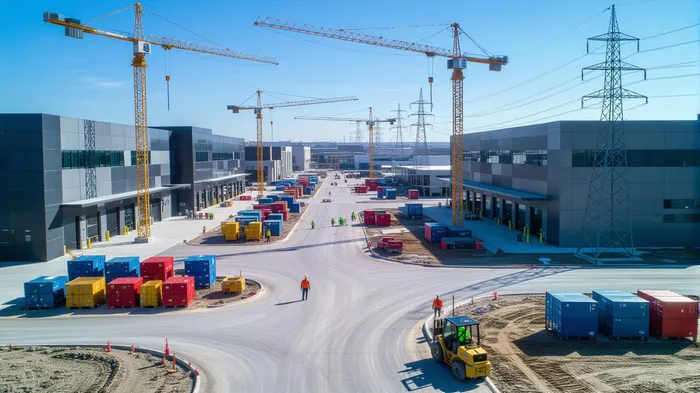
Let's break it down. First, the infrastructure upgrades are nothing short of transformative. The FAST NY grant is funding road realignment, sewer system expansions, and electrical grid modernization, turning the site into a "shovel-ready" asset for tenants in semiconductor production, renewable energy, and logistics. By 2025, over one million square feet of industrial space will be available, with vacancy rates already at a staggering 2%-well below the national average of 7.4%. This isn't just a local story; it's a national imperative. As supply chains shift and nearshoring gains momentum, locations like Webster are becoming critical nodes in the U.S. industrial ecosystem.
But the magic doesn't stop at infrastructure. Xerox has applied to reclassify 300–500 acres of its campus as subdividable parcels, surrounded by Village or Town roads and updated power infrastructure. This move would enable the sale of 40–100-acre lots, tailored for private-sector development. Imagine the appeal for a manufacturer or logistics firm: pre-vetted land, pre-built infrastructure, and a workforce trained for advanced manufacturing. The state's investment is essentially de-risking the project for private players, making it a low-risk, high-reward proposition.
Environmental remediation, often a hidden cost in brownfield projects, is another area where Webster is setting a gold standard. Xerox has deployed EPA-approved techniques like pump-and-treat groundwater systems, controlled blasting to enhance bedrock permeability, and two-phase extraction to reduce contamination. These efforts have already shrunk groundwater plumes and brought indoor air quality to safe occupational levels. For investors, this means the site is not just viable but unrestricted for future use-a critical factor in securing long-term tenants.
The economic ripple effects are equally compelling. Residential property values in Webster have surged 10.1% from 2023 to 2024, while median household income rose 4.31%. Nearby projects, like the $650 million fairlife® dairy plant, are creating 250 jobs and anchoring the new industrial district. State incentives and affordable energy further sweeten the deal, positioning Webster as a magnet for manufacturers seeking cost efficiency without sacrificing scale.
Now, let's talk numbers. The projected absorption rate for industrial space post-2025 is robust, with demand outpacing supply in a market where vacancy rates are already near zero. Strategic investors are already circling, drawn by the alignment of Governor Hochul's "sustainable economic ecosystem" vision and the site's proximity to major transportation networks. Public-private partnerships are reducing development risks, and the state's $400 million broader initiative is a testament to the political will backing this project.
Of course, no investment is without risk. Tenant acquisition could face delays if supply chain dynamics shift, and workforce availability remains a wildcard. But for firms with a long-term horizon, these are manageable challenges. The key is to act early-before the market catches up to the potential of this site.
In conclusion, the Xerox campus redevelopment is a textbook case of how strategic industrial property investment can thrive when public policy, environmental stewardship, and private-sector innovation align. For real estate and development firms, this is more than a project-it's a playbook for the next decade of industrial growth in Upstate New York. The question isn't whether to invest, but how quickly you can get in.

La combinación de la sabiduría tradicional en el comercio con las perspectivas más avanzadas sobre las criptomonedas.
Latest Articles
Stay ahead of the market.
Get curated U.S. market news, insights and key dates delivered to your inbox.
AInvest
PRO
AInvest
PRO



Comments
No comments yet