
Xerox Campus Redevelopment: Unlocking Undervalued Industrial Real Estate in Webster, NY


 Aime Summary
Strategic Infrastructure as a Catalyst for Value Creation
The FAST NY grant has been pivotal in transforming the XeroxXRX-- campus into a "shovel-ready" site for advanced manufacturing and logistics. According to a report by , the grant funds critical infrastructure upgrades, including road realignment, sewer system expansion, and electrical grid modernization. These improvements are designed to reduce transaction costs for developers and accelerate project timelines, making the site highly attractive for capital-intensive industries such as semiconductors and renewable energy. By 2025, the campus is expected to offer over one million square feet of industrial space, with vacancy rates plummeting to 2%-well below the national average of 7.4%.
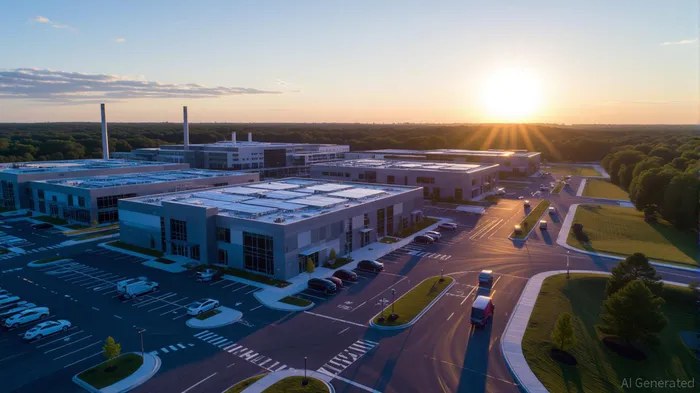
The infrastructure-driven approach has already yielded measurable economic returns. indicates that property values in Webster have surged by 10.1% annually since 2020, driven by the influx of high-paying jobs and the proximity to upgraded transportation networks like I-390 and the Rochester International Airport. This appreciation is not merely speculative; it reflects the tangible benefits of infrastructure that reduces operational costs and enhances connectivity for businesses.
Xerox's Land Divestiture: A Blueprint for Repositioning
Xerox's decision to divest its Webster campus aligns with a broader trend of corporate land repurposing to maximize asset value. The company is subdividing the 300-acre site into 40–100-acre parcels, each fully aligned with either the Village or Town of Webster to streamline zoning and permitting processes. This strategic realignment eliminates jurisdictional fragmentation, a common barrier to development, and positions the land for rapid absorption by industrial and logistics firms.
The divestiture is further bolstered by public-private partnerships. A notable example is the $650 million fairlife® dairy facility, which is expected to create 250 jobs by 2025. Such projects validate the site's appeal to high-value industries and signal confidence in its long-term viability. As stated by local officials, the Xerox campus is now part of a $283 million state initiative to rejuvenate industrial corridors, creating a "sustainable economic ecosystem" that bridges manufacturing, logistics, and residential growth.
Capital Appreciation and the Future of Industrial Real Estate
The infrastructure upgrades and strategic subdivision of the Xerox campus are poised to drive significant capital appreciation. Early market indicators suggest that the area's industrial real estate is already outperforming national trends. For instance, the 10.1% annual increase in property values since 2020 reflects the growing demand for land with pre-approved infrastructure-a critical differentiator in an era of supply chain reconfiguration.
Moreover, the inclusion of mixed-use zoning for 500 housing units and 200,000 square feet of commercial space ensures that the redevelopment supports workforce retention, a key consideration for industries reliant on skilled labor. This holistic approach-combining industrial, residential, and commercial development-creates a self-sustaining ecosystem that enhances the site's long-term value.
Conclusion: A Model for Regional Resilience
The Xerox campus redevelopment in Webster exemplifies how strategic industrial land repositioning can catalyze economic growth and asset appreciation. By prioritizing infrastructure readiness, simplifying regulatory hurdles, and fostering public-private collaboration, the project has transformed a brownfield into a high-demand industrial corridor. For investors, the lessons are clear: industrial real estate in proximity to upgraded infrastructure and strategic supply chain hubs offers compelling long-term returns. As Governor Hochul's vision of decentralizing manufacturing gains momentum, Webster's model may well serve as a blueprint for revitalizing underutilized assets across the Northeast.

Blending traditional trading wisdom with cutting-edge cryptocurrency insights.
Latest Articles
Stay ahead of the market.
Get curated U.S. market news, insights and key dates delivered to your inbox.
AInvest
PRO
AInvest
PRO



Comments
No comments yet