
Xerox Campus Redevelopment and Its Implications for Real Estate and Infrastructure-Linked Investments in Webster, NY
 Aime Summary
Infrastructure Funding and Public-Private Partnerships: A Catalyst for Redevelopment
The cornerstone of the XeroxXRX-- campus transformation is the $9.8 million FAST NY grant, awarded to WEDA for infrastructure upgrades including roadway enhancements, sanitary sewer modernization, and electrical grid planning. These improvements are critical for subdividing the site and attracting industries such as semiconductor supply chains and food manufacturing, which require robust infrastructure to operate efficiently. Complementing this, the Community Access Project secured $500,000 in federal funding for pedestrian and transportation infrastructure, while the Village of Webster received $4.5 million through the NY Forward Community Revitalization Program to revitalize downtown areas according to program documents.
Such funding mechanisms exemplify how public-private partnerships can de-risk large-scale redevelopment. By addressing infrastructure gaps upfront, the project reduces the capital burden on private developers and accelerates timelines for commercialization. For instance, the $650 million fairlife® dairy facility, set to create 250 jobs and operational by late 2025, is a direct beneficiary of these pre-emptive upgrades. Investors in industrial real estate should note that such projects often serve as anchors, spurring ancillary demand for warehousing, distribution centers, and logistics hubs in proximity to newly developed corridors.
Municipal Road Transfers: Enhancing Accessibility and Market Potential
A critical but underappreciated component of the redevelopment is the transfer of 8.5 lane-miles of private roadways-Orchard Street, Panama Road, and Mitcheldean Drive-into public ownership as part of the Webster Economic Access Project. This initiative, part of the Webster Economic Access Project, aims to reactivate the industrial corridor by improving access for both residents and businesses. By converting internal roads to public infrastructure, the Village of Webster is not only enhancing mobility but also aligning the campus with broader regional economic goals, such as positioning the area as a logistics hub near the U.S.-Canada border.
The strategic value of these transfers lies in their ability to unlock underutilized assets. For example, the rezoning of the campus under the Brownfield Opportunity Area (BOA) program has already driven a 10.1% year-over-year increase in residential property values. This trend suggests that improved accessibility and infrastructure can catalyze both commercial and residential development, creating a compounding effect on asset appreciation. Investors in infrastructure bonds may find particular appeal in the repayment guarantees tied to these public works projects, which are often backed by municipal revenues and state-level commitments.
Brownfield Rezoning and Mixed-Use Development: A Blueprint for Sustainable Growth
The BOA program's role in the Xerox campus redevelopment highlights the intersection of environmental remediation and economic revitalization. By designating the North End Business District as a BOA, the Village of Webster has streamlined approval processes for new developments and expanded access to state resources. This rezoning has enabled mixed-use projects that blend residential, commercial, and industrial functions, a model increasingly favored by investors seeking diversified risk profiles.
For instance, the integration of advanced manufacturing with residential zones not only supports job creation but also fosters localized labor markets, reducing commuting costs and enhancing workforce retention. This synergy is particularly relevant for logistics-focused industries, where proximity to labor and transportation networks is a competitive advantage. Furthermore, the environmental remediation efforts associated with the BOA program mitigate long-term liabilities, making the site more attractive to capital-intensive industries such as semiconductors and pharmaceuticals.
Investment Opportunities and Alpha Generation
The confluence of infrastructure funding, road transfers, and rezoning creates a fertile ground for alpha generation. In the short term, infrastructure bonds tied to the FAST NY and NY Forward programs offer stable returns with low default risk, given their alignment with state priorities. For example, the $9.8 million infrastructure grant is likely to be repaid through a combination of tax increment financing and developer fees, ensuring predictable cash flows for bondholders. 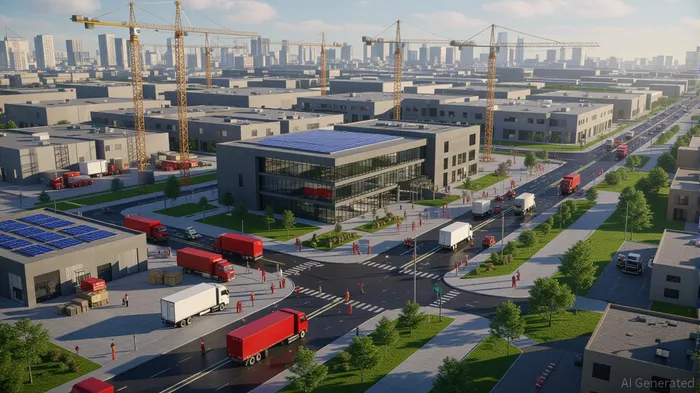
In the medium to long term, industrial real estate investors can capitalize on the campus's repositioning as a logistics and manufacturing hub. The proximity to the U.S.-Canada border, coupled with upgraded infrastructure, positions the area to benefit from cross-border trade flows and supply chain reconfiguration. Additionally, the 10.1% annual property value growth observed in residential markets suggests that mixed-use developments could yield outsized returns, particularly as the campus attracts a workforce seeking affordable housing near employment centers.
Conclusion
The Xerox campus redevelopment in Webster, NY, exemplifies how strategic industrial land repositioning, when paired with public-private infrastructure funding, can unlock significant commercial potential. By addressing infrastructure gaps, enhancing accessibility, and leveraging brownfield remediation, the project is creating a blueprint for sustainable economic growth. For investors, the implications are clear: a diversified portfolio targeting infrastructure bonds, logistics-focused industrial assets, and mixed-use developments in redeveloped brownfield sites can generate both risk-adjusted returns and long-term value. As the campus moves toward operational milestones in late 2025 and mid-2026, the time to act is now.

Mezclando la sabiduría tradicional en el comercio con las perspectivas de vanguardia relacionadas con las criptomonedas.
Latest Articles
Stay ahead of the market.
Get curated U.S. market news, insights and key dates delivered to your inbox.




Comments
No comments yet