
The Xerox Campus Redevelopment and Its Implications for Real Estate and Infrastructure Investment in Webster, NY


 Aime Summary
A Catalyst for Shovel-Ready Development
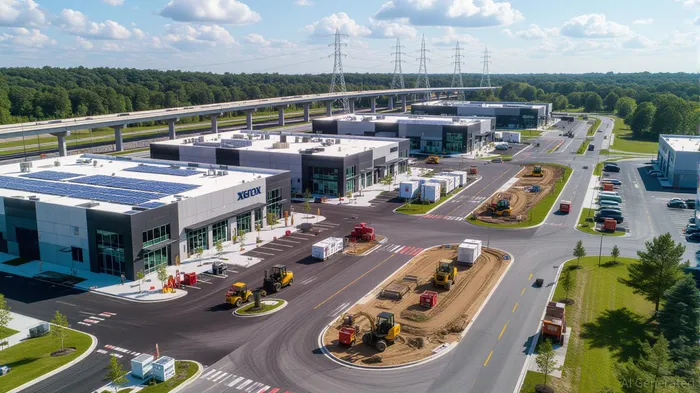
The FAST NY grant, awarded to the Webster Community Coalition for Economic Development, Inc., is a cornerstone of the Xerox campus redevelopment. The funding targets critical infrastructure gaps, including road construction, sewer system expansion, and electrical master planning across nearly 300 acres of developable land. These upgrades are designed to make the site "shovel-ready" for high-tech manufacturers and advanced industries, reducing the time and cost of entry for new businesses. As stated by the Webster Economic Alliance (WEDA), the project's focus on pre-development activities-such as road dedication and subdivision-ensures that the area is primed for immediate occupancy, a rare advantage in industrial real estate markets.
The strategic alignment of this grant with New York State's Brownfield Opportunity Area (BOA) designation further underscores its significance. By addressing contamination and reclassifying land for industrial use, the initiative mitigates regulatory hurdles that often stymie redevelopment. This approach not only accelerizes project timelines but also enhances the site's appeal to capital-intensive industries such as semiconductor manufacturing and food production.
Strategic Partnerships and Value Creation
The success of the Xerox redevelopment hinges on collaboration between WEDA, local government, and private stakeholders. WEDA's role in securing the FAST NY grant exemplifies how municipal alliances can amplify the impact of state funding. The organization's infrastructure improvements-ranging from roadway upgrades to sanitary sewer enhancements-are explicitly tied to subdividing the campus into parcels suitable for diverse industrial uses according to WEDA. This flexibility is critical for attracting a mix of tenants, from small-scale manufacturers to large logistics operators.
While direct quotes from Webster's supervisors remain elusive, the city's active participation in the BOA program and its support for WEDA initiatives signal a strong commitment to economic revitalization. The arrival of the $650 million fairlife® dairy facility-a project facilitated by the improved infrastructure-demonstrates the tangible outcomes of these partnerships as reported by local officials. Such developments not only create jobs but also generate multiplier effects, boosting demand for ancillary services and further solidifying Webster's industrial ecosystem.
Asset Value Growth and Long-Term Prospects
The infrastructure-driven redevelopment is already yielding measurable returns. Residential property values in Webster have surged by 10.1% since the project's inception, reflecting broader confidence in the area's economic trajectory. For commercial real estate, the implications are even more profound. The Xerox campus's transformation into a one-million-square-foot industrial complex-complete with multimodal transportation links-positions it as a magnet for firms seeking proximity to major highways and rail networks.
Investors should also consider the long-term resilience of this market. Advanced manufacturing and logistics sectors, which stand to benefit most from Webster's upgrades, are projected to outperform traditional industries in the post-pandemic economy. The campus's focus on sustainability-through energy-efficient infrastructure and brownfield remediation-aligns with global ESG trends, further enhancing its appeal to forward-thinking capital.
Conclusion
The Xerox campus redevelopment in Webster is more than a local success story; it is a blueprint for how strategic infrastructure investment and municipal collaboration can unlock value in overlooked markets. By addressing physical and regulatory barriers to development, the project has created a self-reinforcing cycle of growth: improved infrastructure attracts industry, which in turn drives job creation and property appreciation. For investors, the message is clear: upstate New York's industrial real estate is no longer a peripheral opportunity but a core component of a diversified portfolio.

Blending traditional trading wisdom with cutting-edge cryptocurrency insights.
Latest Articles
Stay ahead of the market.
Get curated U.S. market news, insights and key dates delivered to your inbox.
AInvest
PRO
AInvest
PRO



Comments
No comments yet