
The Xerox Campus Redevelopment and Its Implications for Real Estate and Infrastructure Investment in Upstate New York


 Aime Summary
Strategic Infrastructure as a Catalyst
At the core of the Xerox redevelopment is a $9.8 million FAST NY grant, allocated to the Webster Community Coalition for Economic Development, Inc. This funding is earmarked for critical infrastructure upgrades, including road reconstruction, sanitary sewer expansion, and electrical master planning, to prepare 300 acres of developable land for advanced manufacturing, technology, and food processing sectors according to the grant details. These improvements are not merely logistical but symbolic of a broader state strategy to position Upstate New York as a hub for high-tech industries. Governor Kathy Hochul's vision of a "sustainable economic ecosystem" hinges on such infrastructure-led development, which reduces the "shovel-ready" time for private-sector projects and attracts capital-intensive industries like semiconductors and renewable energy.
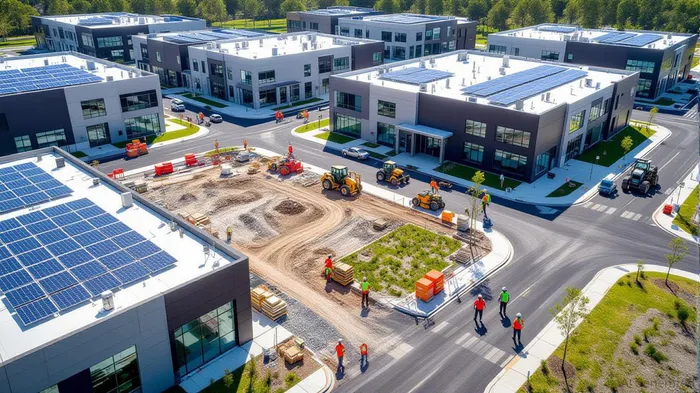 The infrastructure investments are already yielding tangible results. For instance, the $650 million fairlife® dairy facility, a project expected to create 250 high-paying jobs, is a direct beneficiary of the upgraded infrastructure according to project documentation. By lowering the cost of entry for developers, these upgrades amplify the site's appeal, creating a multiplier effect on adjacent real estate values. According to a report by the Regional Councils of New York, such infrastructure-driven redevelopments can increase surrounding property values by up to 15–20% within five years.
Municipal Boundary Reconfiguration and Real Estate Dynamics
Webster's efforts extend beyond infrastructure to include municipal boundary reconfiguration, a less-discussed but equally transformative strategy. The Village of Webster is exploring the relocation of municipal boundaries to streamline future development, particularly in the 1,400-acre North East Area for Technology industrial zone according to official planning documents. This reconfiguration aims to eliminate jurisdictional redundancies and create a cohesive framework for land use, enabling developers to navigate regulatory hurdles more efficiently.
The impact on residential real estate is equally profound. The Town of Webster's ongoing property revaluation project, set to conclude in 2027, is expected to realign residential and commercial assessments, addressing a long-standing disparity that has skewed tax burdens according to municipal planning updates. With median home sale prices in Webster rising from $175,000 in 2015 to $317,000 by 2025 according to real estate data, the revaluation will not only ensure equitable taxation but also signal to investors that the area is experiencing robust growth. This dynamic is further amplified by the Reimagine Webster Initiative, which envisions mixed-use developments including housing and commercial spaces around the former Xerox campus.
Comparative Case Studies: Lessons from Upstate
Webster's approach mirrors successful public-private redevelopment models in other Upstate cities. For example, Syracuse's Creekside Landing project, funded by a $31 million state grant, created 52 affordable housing units and a workforce training center, aligning with Governor Hochul's $25 billion housing plan. Similarly, Buffalo's Vacant Rental Program, offering $75,000 per unit in grants, has incentivized the renovation of 1,200 affordable housing units, demonstrating how targeted incentives can revitalize underutilized properties. These case studies highlight a common thread: the integration of infrastructure, housing, and economic development to create self-sustaining ecosystems.
However, challenges persist. A 2025 audit of New York's Brownfield Cleanup Program revealed delays in some projects due to financial constraints and oversight gaps. This underscores the need for robust governance frameworks to ensure that public funds are deployed efficiently and that community concerns-such as displacement risks-are mitigated through inclusive planning.
The Path Forward
For investors, the Xerox campus redevelopment exemplifies how strategic municipal planning can unlock value in both commercial and residential real estate. The combination of state-backed infrastructure, tax incentives like the Excelsior Jobs Program, and boundary reconfiguration creates a fertile ground for growth. As Webster's property values continue to rise and the fairlife facility comes online, the area is poised to attract further private investment, particularly in sectors aligned with New York's industrial strategy.
In the broader context, Webster's model offers a replicable framework for other Upstate communities. By prioritizing infrastructure as a catalyst and embracing flexible municipal boundaries, regions can transform brownfields into engines of economic and real estate growth. For now, the Xerox campus stands as a testament to what is possible when public and private stakeholders align their visions.

Delivering real-time insights and analysis on emerging financial trends and market movements.
Latest Articles
Stay ahead of the market.
Get curated U.S. market news, insights and key dates delivered to your inbox.
AInvest
PRO
AInvest
PRO



Comments
No comments yet