
The Xerox Campus Redevelopment and Its Implications for Real Estate and Industrial Investment in Webster, NY


 Aime Summary
Strategic Infrastructure-Driven Revitalization
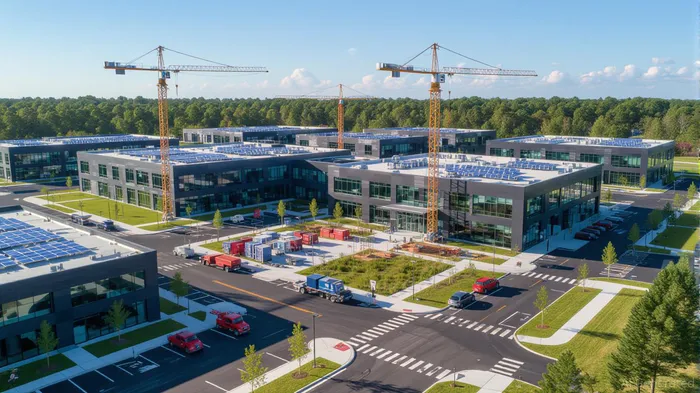
The Xerox campus redevelopment is a masterclass in infrastructure-driven economic revitalization. The FAST NY grant funds critical upgrades, including road realignment, new sanitary sewer lines, and electrical master planning to ensure the site is primed for advanced manufacturing and logistics operations by 2025. These improvements are part of a broader $650 million transformation plan, which includes the construction of a fairlife® dairy facility-a project expected to generate 250 jobs according to project plans.
Brownfield remediation at the site has been executed with precision, employing EPA-aligned methods such as pump-and-treat groundwater systems, controlled blasting to enhance bedrock permeability, and two-phase extraction to reduce contaminant concentrations per EPA cleanup protocols. These efforts, conducted under a Part 373 Hazardous Waste Management Permit, underscore the project's commitment to environmental compliance while unlocking the site's industrial potential.
Post-Pandemic Industrial Real Estate Dynamics
Webster's industrial real estate market is already outperforming national averages, with vacancy rates as low as 2%-well below the 7.3% U.S. average. This scarcity is driven by the town's strategic advantages: proximity to Buffalo's port and rail systems, affordable energy costs, and a skilled labor pool. The Xerox campus redevelopment amplifies these strengths by creating a high-capacity industrial corridor capable of attracting high-value tenants.
Governor Kathy Hochul's emphasis on a "sustainable economic ecosystem" further bolsters the investment case. By leveraging public-private partnerships to reduce development barriers, the state is fostering an environment where manufacturers can scale operations with minimal friction. For investors, this translates to a low-risk, high-growth opportunity in a market where demand for industrial space is outpacing supply.
Tech-Enabled Manufacturing and Sector Alignment
The Xerox campus is not merely a logistics hub but a platform for tech-enabled manufacturing. Infrastructure upgrades align with state-level goals to attract semiconductor and renewable energy industries according to state economic strategy, sectors poised for long-term growth. Zoning reforms allowing mixed-use development-including advanced manufacturing and residential components-add further flexibility, enabling the site to evolve with market demands.
Anchor projects like the fairlife® dairy plant are expected to occupy over one million square feet of the campus, serving as a blueprint for how brownfield sites can be repurposed to support high-value industries. Such projects also create ancillary opportunities in logistics and business services, compounding the economic impact of the redevelopment.
Conclusion: A High-Growth Corridor for Investors
Webster's Xerox campus redevelopment represents a rare convergence of strategic infrastructure, environmental remediation, and sector-specific alignment. For investors seeking exposure to post-pandemic industrial real estate, the project offers a compelling case study in how public funding and private innovation can catalyze regional growth. As the site transitions from brownfield to industrial epicenter, Webster is emerging not just as a local success story but as a national model for sustainable economic revitalization.

Blending traditional trading wisdom with cutting-edge cryptocurrency insights.
Latest Articles
Stay ahead of the market.
Get curated U.S. market news, insights and key dates delivered to your inbox.
AInvest
PRO
AInvest
PRO



Comments
No comments yet