
The Xerox Campus Redevelopment and Its Implications for Industrial Real Estate in Upstate NY


 Aime Summary
Strategic Infrastructure Investment: The FAST NY Grant as a Catalyst
The $9.8 million FAST NY grant, awarded in 2025, is a cornerstone of the XeroxXRX-- campus redevelopment. This funding is earmarked for critical infrastructure upgrades, including road reconstruction (Orchard Street, Panama Road, Mitcheldean Drive), sewer system expansions, and electrical infrastructure planning. These improvements are not merely cosmetic; they are foundational to transforming the site into a shovel-ready industrial hub. By addressing connectivity and utility limitations, the grant reduces development risk for future tenants, making the site more attractive to capital-intensive industries like semiconductor manufacturing and food production.
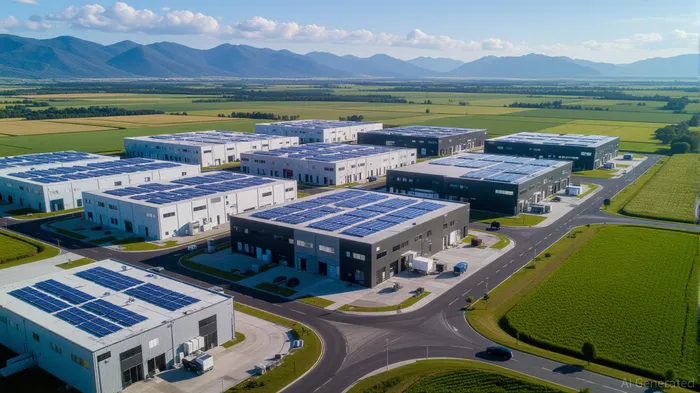
The impact of such grants extends beyond immediate construction. According to a report by the Webster Economic Development Alliance, infrastructure upgrades supported by FAST NY have already driven industrial vacancy rates in Webster to 2%, a stark contrast to the national average of 8%. This scarcity premium is a direct result of strategic investment in shovel-readiness-a metric that is increasingly critical in a post-pandemic economy prioritizing supply chain resilience.
Municipal Boundary Adjustments: Streamlining Development Complexity
One of the most underappreciated yet transformative aspects of the Xerox redevelopment is the reconfiguration of municipal boundaries. The West Campus, previously split between the Village and Town of Webster, is now entirely within the Village jurisdiction. This adjustment eliminates bureaucratic friction, enabling streamlined permitting and zoning processes. For industrial developers, this simplification reduces transaction costs and accelerates timelines-a critical advantage in a competitive real estate market.
The boundary changes also facilitate the subdivision of the campus into 40–100 acre parcels, a size range ideal for large-scale manufacturing and logistics operations. By creating a contiguous 1,400-acre industrial zone-one of the largest in upstate New York-the project amplifies Webster's appeal to anchor tenants. As noted in the , this zoning flexibility is attracting projects like the $650 million fairlife® dairy facility, which is projected to generate 250 jobs. Such developments not only validate the site's economic potential but also create a multiplier effect, boosting ancillary industries and residential demand.
Private-to-Public Infrastructure: A Model for Value Creation
The transition of Xerox's private infrastructure to public ownership is another linchpin of the redevelopment. The FAST NY grant funds road dedication, sanitary sewer upgrades, and electrical master planning, effectively converting underutilized assets into community resources. This shift enhances the site's long-term viability by ensuring that infrastructure is maintained and upgraded in tandem with development needs.
report indicates that property values in Webster are expected to rise significantly between 2025 and 2026 as a result of these upgrades. For investors, this represents a dual benefit: immediate demand from industrial tenants and appreciation in land value as the site matures into a mixed-use hub. The inclusion of 500 residential units and 200,000 square feet of commercial space further diversifies the asset base, insulating the area from sector-specific downturns.
Broader Implications for Upstate NY
Webster's experience underscores a broader trend: the role of infrastructure in redefining regional competitiveness. By 2026, the project is projected to yield nearly one million square feet of industrial space, positioning upstate NY as a viable alternative to overpriced coastal markets. The success of the Xerox campus redevelopment hinges on its ability to balance public investment with private returns-a model that could be replicated in other brownfield sites across the state.
For investors, the key takeaway is clear: strategic infrastructure investment is not just about building roads and sewers. It's about creating ecosystems where industrial real estate can thrive. The Xerox campus in Webster exemplifies how municipal agility, public funding, and forward-looking planning can transform a legacy site into a high-value asset. As the global economy pivots toward localized production and resilient supply chains, the lessons from Webster will resonate far beyond upstate NY.

Mezclando la sabiduría tradicional en el comercio con las perspectivas más avanzadas sobre las criptomonedas.
Latest Articles
Stay ahead of the market.
Get curated U.S. market news, insights and key dates delivered to your inbox.
AInvest
PRO
AInvest
PRO



Comments
No comments yet