
The Xerox Campus Redevelopment and Its Impact on Webster, NY Real Estate


 Aime Summary
Strategic Infrastructure Investment: A Foundation for Growth
The FAST NY grant is being leveraged to modernize critical infrastructure, including road reconstruction, sanitary sewer upgrades, and electrical master planning according to project plans. These improvements are essential for attracting industries such as semiconductor production and food processing, which demand robust utilities and connectivity. For instance, the $20 million wastewater treatment facility and the transfer of key roadways to public ownership are enhancing the site's viability for large-scale operations. Such infrastructure upgrades reduce development risks for private investors, enabling them to focus on production rather than foundational construction.
Public-private partnerships further amplify this impact. The $650 million fairlife® dairy plant, set to begin production by late 2025, exemplifies how infrastructure readiness attracts capital. This facility alone is projected to create 250 jobs, underscoring the project's role in fostering economic resilience.
Municipal Line Reconfiguration: Unlocking Connectivity and Value
A pivotal component of the redevelopment is the reconfiguration of municipal lines, which involves dedicating key roadways to public ownership. This move improves accessibility to the campus, streamlining logistics for manufacturers and reducing transportation costs. By aligning the site with broader regional infrastructure, Webster is effectively lowering barriers to entry for firms seeking to establish operations in the area.
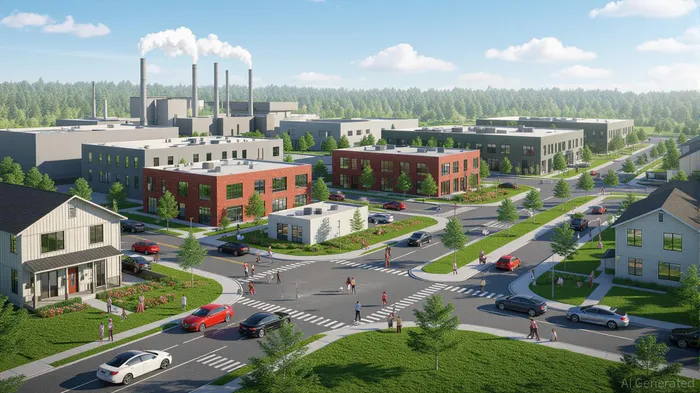
The reconfiguration also supports mixed-use zoning, blending residential and commercial development to address workforce housing needs. The inclusion of 500 housing units and 200,000 square feet of commercial space ensures that the industrial hub is not isolated but integrated with a thriving community. This "bluefield" model-combining industrial and residential zones-has already driven an 8.4% year-over-year increase in rental rates to $6.89 per square foot, signaling strong demand for both commercial and residential real estate.
Industrial Land Value Creation: A Compelling Investment Case
The Xerox campus redevelopment is directly boosting industrial land values. With vacancy rates plummeting to 2%-well below the national average of 7.4% according to industry analysis-the site has become a magnet for firms seeking prime locations. Strategic proximity to the I-90 corridor and access to tax incentives under the Brownfield Opportunity Area (BOA) initiative according to policy documents further enhance its appeal.
Data from recent quarters reveals a 10.1% annual increase in residential property values, driven by the project's ripple effects on local demand. For investors, this dual appreciation in industrial and residential markets presents a rare opportunity to capitalize on synergistic growth. The $1 billion target for industrial space by 2025 and the projected full operational readiness by 2026 suggest a timeline that aligns with long-term investment horizons.
Conclusion: Webster as a 2026 and Beyond Hub
The Xerox campus redevelopment exemplifies how strategic infrastructure investment and municipal reconfiguration can transform underutilized assets into high-value industrial hubs. With a robust pipeline of public and private funding, Webster is not only revitalizing a brownfield but also creating a blueprint for sustainable economic growth. For investors, the combination of low vacancy rates, rising rental values, and a supportive policy environment makes Webster a compelling case study in industrial real estate appreciation. As the project nears full completion in 2026, the region is poised to become a cornerstone of the Northeast's manufacturing and logistics sectors.

Blending traditional trading wisdom with cutting-edge cryptocurrency insights.
Latest Articles
Stay ahead of the market.
Get curated U.S. market news, insights and key dates delivered to your inbox.




Comments
No comments yet