
The Xerox Campus Redevelopment: A Catalyst for Industrial Real Estate in Webster, NY


 Aime Summary
Zoning Reforms and Infrastructure Tailwinds
The cornerstone of the Xerox campus redevelopment lies in its upzoning changes, which permit mixed-use development aligned with advanced manufacturing and logistics needs. According to a report by the Webster Economic Development Alliance, the site's zoning reforms now accommodate industrial, residential, and commercial uses, supported by a $9.8 million FAST NY grant. This funding is earmarked for critical infrastructure upgrades including road realignment, sewer system expansion, and electrical master planning. These improvements are not merely cosmetic; they are designed to create a shovel-ready site capable of attracting high-growth industries such as e-commerce, cold-chain logistics, and clean energy manufacturing.
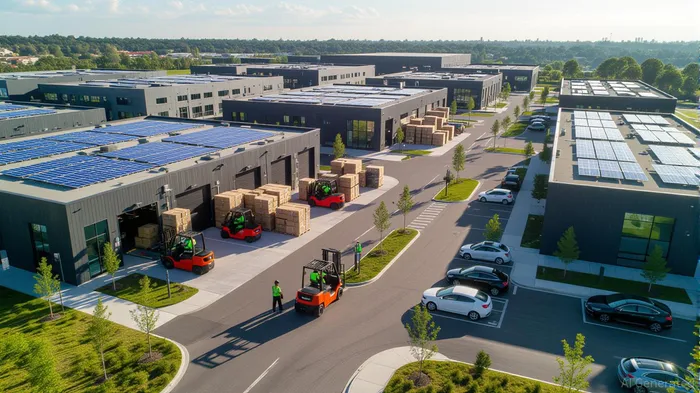
The infrastructure upgrades are particularly significant given the site's strategic location near I-390 and the Rochester International Airport. As stated by a 2025 analysis from Bitget, these transportation corridors enhance the campus's appeal for industries requiring rapid distribution networks. By 2025, the project is projected to generate over one million square feet of industrial space, with the first major tenant-the $650 million fairlife® dairy facility-already securing 250 jobs. Such developments underscore the site's readiness to meet surging demand for industrial real estate, particularly in a post-pandemic economy where supply chain resilience is prioritized.
Policy Support and Incentive Frameworks
Policy support has been instrumental in accelerating the Xerox campus's transformation. The NY Forward Community Revitalization Program, alongside tax incentives and public-private partnerships (PPPs), has created a fertile ground for private investment. For instance, the fairlife® dairy plant's development was facilitated by a combination of state grants and tax abatements, illustrating how policy can mitigate risks for developers. Additionally, New York State's $300 million POWER UP initiative ensures reliable energy infrastructure for energy-intensive industries, further solidifying the campus's competitive edge.
The alignment of these incentives with market trends is critical. As noted in a 2025 Bitget report, Webster's industrial vacancy rates have plummeted to 2%, while home prices have risen by 10.1% annually. This dual trajectory-industrial demand outpacing supply and residential markets gaining momentum-suggests a self-reinforcing cycle of economic growth. For investors, this dynamic reduces exposure to sector-specific volatility, as the campus's mixed-use model diversifies revenue streams.
Projected Economic Impact and Industry Demand (2025–2030)
Looking beyond 2025, the Xerox campus is poised to drive broader economic gains. A 2025 analysis projects that the site will catalyze a $1 billion industrial hub by 2030, leveraging its infrastructure readiness and proximity to major transportation routes. The $283 million state initiative to enhance industrial site readiness across New York further amplifies this potential, with Webster's campus serving as a flagship project.
Industry demand for industrial space in Webster is expected to grow exponentially. By 2026, nearly one million square feet of industrial space will be available, with demand driven by sectors such as semiconductor manufacturing and renewable energy. These industries require not only physical space but also the robust infrastructure and utility networks now being deployed at the Xerox campus. As a result, the site is attracting anchor tenants like fairlife®, which serve as catalysts for secondary investments in ancillary services and supply chain operations.
Assessing Long-Term Investment Potential
The Xerox campus redevelopment exemplifies how infrastructure-led revitalization can create a virtuous cycle of value creation. For investors, the key drivers include:
1. Zoning Flexibility: Mixed-use permissions allow for adaptive reuse of land, reducing obsolescence risks.
2. Infrastructure-Driven Premiums: Upgrades to roads, utilities, and transportation networks enhance land value and tenant retention.
3. Policy Resilience: State-level programs like NY Forward and POWER UP provide a stable regulatory environment.
4. Market-Driven Demand: Industrial vacancy rates and residential growth signal a resilient local economy.
However, risks such as overleveraging public funds or misalignment with shifting industry needs must be monitored. The current trajectory, though, suggests that these risks are being mitigated through phased development and private-sector collaboration.
Conclusion
The Xerox campus in Webster, NY, stands as a testament to the power of strategic infrastructure investment and policy innovation. By transforming a brownfield site into a high-growth industrial hub, the project not only addresses immediate economic needs but also lays the groundwork for long-term value appreciation. For investors, the combination of upzoning, infrastructure upgrades, and sector-specific incentives creates a compelling case for industrial real estate in this region. As the 2025–2030 horizon unfolds, Webster's campus may well become a blueprint for revitalizing post-industrial landscapes in the 21st century.

Blending traditional trading wisdom with cutting-edge cryptocurrency insights.
Latest Articles
Stay ahead of the market.
Get curated U.S. market news, insights and key dates delivered to your inbox.
AInvest
PRO
AInvest
PRO



Comments
No comments yet