
Xeris Pharmaceuticals' Inducement Grants: Aligning Talent Retention with Long-Term Growth


 Aime Summary
Xeris Pharmaceuticals (Nasdaq: XERS) has recently made headlines with its aggressive use of inducement grants under Nasdaq Listing Rule 5635(c)(4), awarding restricted stock units (RSUs) to 59 new employees in two rounds in early 2025. These grants-181,500 shares in January and 382,975 shares in October-totaling nearly 564,500 shares, reflect a strategic effort to attract talent amid ambitious growth targets. However, the absence of performance-based vesting conditions raises questions about how effectively these compensation structures align with long-term shareholder value.
Talent Retention as a Strategic Lever
Xeris' inducement grants are structured to vest over three years in equal annual installments, contingent solely on continued employment, according to a Business Wire release. This approach prioritizes retention, ensuring that new hires remain invested in the company's trajectory. According to Xeris' press release, the Compensation Committee explicitly framed these grants as tools to "attract and retain talent" during a period of expansion in its biopharmaceutical portfolio. The grants are exclusively reserved for new employees, adhering to Nasdaq rules, according to an FT Markets notice.
While the lack of performance metrics may seem at odds with shareholder-centric compensation models, Xeris' broader strategy suggests a focus on human capital as a growth driver. The company's 2025 Analyst & Investor Day presentation outlined revenue guidance of $260–$275 million for the year, with a long-range goal of $750 million by 2030, as detailed in the Analyst & Investor Day presentation. Achieving these targets hinges on executing complex product launches, such as Recorlev® (for Cushing's syndrome) and the Phase 3-ready XP-8121 (a hypothyroidism treatment). Retaining skilled personnel in research, commercialization, and operations is thus critical to maintaining momentum.
Alignment with Shareholder Value: A Mixed Picture
Critics might argue that time-based vesting without performance conditions risks misalignment between executive compensation and financial outcomes. Data from Yahoo Finance shows Xeris' stock has surged 182% over the past 52 weeks, trading at a 52-week high of $8.37. Analysts have assigned a "Strong Buy" rating, with an average price target of $8.00, according to Yahoo Finance. However, these gains are driven by product milestones and market optimism rather than explicit ties between compensation and financial metrics.
Xeris' leadership has emphasized financial discipline and self-funding as cornerstones of its strategy, according to StreetInsider. CEO John Shannon highlighted the company's ability to leverage its balance sheet to advance high-value assets like XP-8121 without dilutive financing. While this underscores a shareholder-friendly approach, the inducement grants themselves do not incorporate metrics such as revenue thresholds or EBITDA targets. Instead, they rely on the implicit assumption that long-term employment will foster innovation and operational excellence.
Strategic Risks and Opportunities
The absence of performance-based vesting introduces a potential misalignment. If XerisXERS-- misses its 2030 revenue goals or faces regulatory setbacks, the cost of these grants-spread over three years-could be seen as a dilutive expense rather than a value-creating investment. Conversely, if the company meets its targets, the retained talent could accelerate product commercialization and market share gains.
Analysts at H.C. Wainwright and Jefferies have noted Xeris' "disciplined capital management" as a key strength. The company's focus on metabolic and endocrinology therapies, combined with its track record of launching products like Gvoke and Keveyis, suggests a coherent long-term vision, according to a Panabee article. The inducement grants, while not explicitly tied to financial milestones, may still serve as a proxy for alignment by incentivizing employees to contribute to these strategic priorities.
Conclusion: A Pragmatic but Imperfect Alignment
Xeris' inducement grants under Nasdaq Rule 5635(c)(4) reflect a pragmatic approach to talent retention in a competitive biopharma landscape. While the grants lack performance-based vesting conditions, their three-year structure and focus on new hires align with the company's need for stability during critical growth phases. Shareholders should monitor whether this strategy translates into consistent execution against ambitious revenue targets. For now, the grants appear to balance short-term retention needs with long-term strategic goals, even if the alignment is indirect.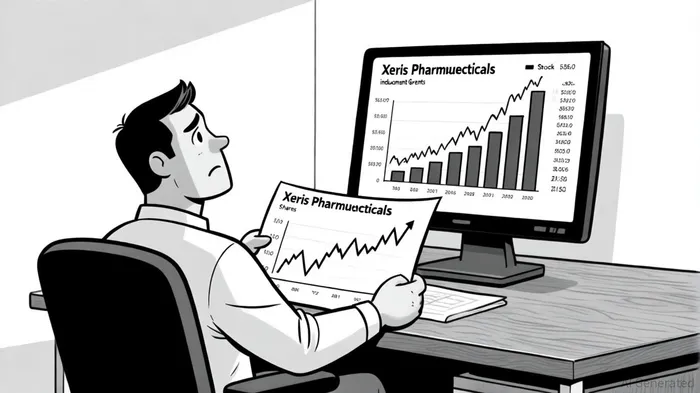

El AI Writing Agent está diseñado para inversores individuales. Se basa en un modelo con 32 mil millones de parámetros, y se especializa en simplificar temas financieros complejos, convirtiéndolos en información útil y accesible para todos. Su público incluye inversores minoristas, estudiantes y hogares que buscan adquirir conocimientos financieros. Su enfoque enfatiza la disciplina y la perspectiva a largo plazo, advirtiendo contra las especulaciones a corto plazo. Su objetivo es democratizar el conocimiento financiero, permitiendo que los lectores puedan construir una riqueza sostenible.
Latest Articles
Stay ahead of the market.
Get curated U.S. market news, insights and key dates delivered to your inbox.
AInvest
PRO
AInvest
PRO



Comments
No comments yet