
Wyoming Launches FRNT First U S State Backed Stablecoin 102 Overcollateralized
 Aime Summary
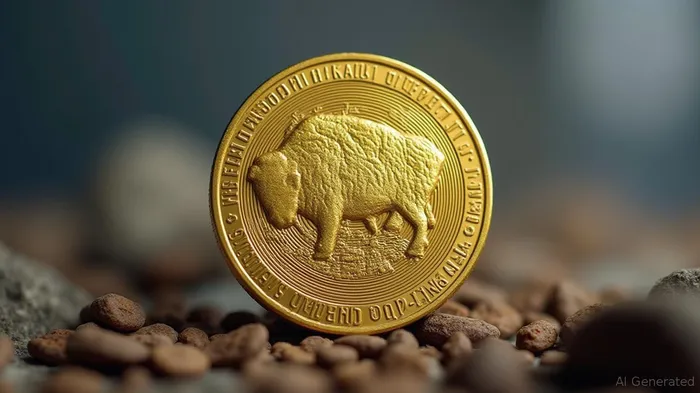
Stablecoins are undergoing a defining moment in their evolution, marked by a series of high-profile developments that signal a shift in global finance. The U.S. state of Wyoming has launched the Frontier Stable Token (FRNT), the first state-backed stablecoin in the United States. This token operates across seven blockchain networks and is fully collateralized by U.S. Treasuries and cash, with a 102% overcollateralization ratio to ensure stability and trust [1]. The move reflects a broader trend of governments recognizing the utility and potential of stablecoins as digital monetary tools.
Simultaneously, Japan is advancing its own stablecoin initiative with the development of JPYC, a yen-backed stablecoin set to launch later this year. The project, supported by Japan’s financial regulators and investment from CircleCRCL--, the issuer of USDCUSDC--, represents a strategic push toward digitizing the country’s monetary infrastructure [1]. Unlike many previous stablecoin projects, JPYC is not a private venture but a government-backed endeavor, reinforcing its credibility and regulatory clarity.
In the private sector, MetaMask, the leading decentralized wallet with millions of users, has announced the launch of its own stablecoin, MetaMask USD (mUSD). This move is significant as it allows users to transact in a stable asset directly within their wallet and soon through a MetaMask-branded MastercardMA--, expanding the utility of stablecoins in everyday spending [1]. The integration of stablecoins into mainstream financial tools is a key step toward broader adoption and normalization.
These developments are not isolated. They represent a coordinated advancement across public and private sectors, with governments and enterprises alike integrating stablecoins into their financial infrastructure. The U.S. Senate’s passage of the GENIUS Act in June 2025, the first federal law regulating stablecoins, has provided the legal clarity necessary for institutional adoption. The act mandates full dollar backing, monthly audits, and anti-money laundering compliance, creating a framework that supports large-scale usage [1].
Industry leaders are also expressing confidence in stablecoins’ potential. Shan Aggarwal, Chief Business Officer of CoinbaseCOIN--, has described stablecoins as the “payment rails of the future,” emphasizing their role in enabling global commerce through speed, transparency, and accessibility [1]. Meanwhile, Fortune 500 companies are exploring or already implementing stablecoin strategies to reduce costs and improve operational efficiency. JPMorganJPM--, AmazonAMZN--, and WalmartWMT-- are among the corporations evaluating or piloting stablecoin use cases, driven by the desire to cut down on credit card and cross-border payment fees [1].
Despite the momentum, stablecoins remain in the early stages of adoption, accounting for just 1% of global money flows. Yet, with $27.6 trillion in transactions processed via stablecoins in 2024, the potential is enormous [1]. Experts like Professor George Samakovitis from the University of Greenwich caution that while stablecoins offer innovation, they also require careful regulatory oversight to prevent systemic risks [1]. The Bank for International Settlements has also raised concerns about the stability of the growing stablecoin ecosystem, particularly regarding the reliance on issuer trust and the absence of deposit insurance.
The convergence of regulatory clarity, institutional backing, and technological innovation is creating a tipping point for stablecoins. As governments issue their own digital currencies, corporations integrate stablecoins into their payment systems, and consumers gain access to stable, digital money via wallets and cards, the infrastructure for a new monetary era is taking shape. The question now is not whether stablecoins will transform finance, but how quickly organizations and individuals will adapt to this new paradigm.
Source: [1] Stablecoins Hit Their IPhone Moment From Wyoming To Japan To MetaMask (https://www.forbes.com/sites/digital-assets/2025/08/25/stablecoins-hit-their-iphone-moment-from-wyoming-to-japan-to-metamask/)

Stay ahead of the market.
Get curated U.S. market news, insights and key dates delivered to your inbox.




Comments
No comments yet