
Wynn Resorts' Strategic Expansion into the UAE: A High-Conviction Play in a $5–$8 Billion Gaming Market
 Aime Summary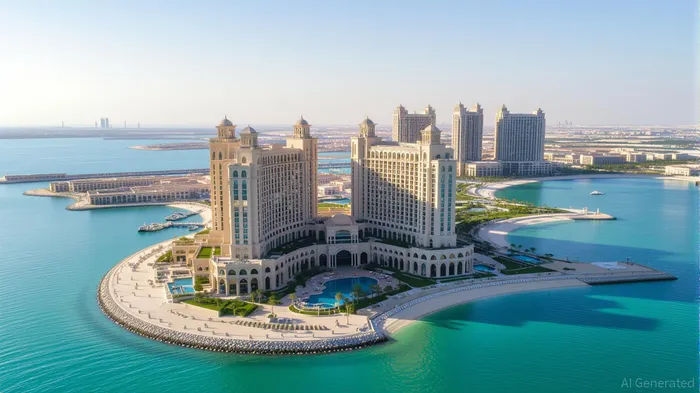
The United Arab Emirates (UAE) is undergoing a quiet revolution. For decades, the country's economic identity was defined by oil and tourism, but today, it is pivoting toward a diversified, high-value economy. At the heart of this transformation lies a bold experiment: the legalization of commercial gaming. Wynn ResortsWYNN--, the Las Vegas-based luxury hospitality giant, is at the forefront of this shift, betting $3.9 billion on a 2027 opening of Wynn Al Marjan Island in Ras Al Khaimah. This move is not just about building a casino—it is about redefining the UAE's tourism economy, leveraging non-gaming luxury, and capturing a market poised to grow from $484 million in 2023 to $754 million by 2030. For investors, Wynn's UAE venture represents a high-conviction play in a market where regulatory clarity, cultural alignment, and long-term economic logic converge.
The UAE's Calculated Gamble: A Market-First Position
The UAE's decision to legalize gaming is a masterclass in strategic patience. For years, the government tolerated a grey market for online gambling861167-- and lotteries, but in 2023, it established the General Commercial Gaming Regulatory Authority (GCGRA) to formalize a regulated framework. By 2025, the UAE had issued its first gaming license to WynnWYNN-- Resorts, signaling a deliberate, phased approach. This “market-first” strategy prioritizes tourism and high-net-worth visitors over mass gambling, aligning with the UAE's broader vision to attract global elites.
Wynn's Al Marjan Island project is a $3.9 billion bet on this vision. The resort will feature 1,000 luxury hotel rooms, Michelin-starred dining, retail, and a 18,500-square-meter gaming area. Crucially, the casino is not the centerpiece—it is one component of a broader luxury ecosystem. This mirrors Wynn's playbook in Las Vegas, where gaming revenue accounts for only 30% of total revenue, with the rest derived from hospitality, dining, and entertainment. In the UAE, where cultural norms restrict gambling to tourists and expatriates, Wynn's model ensures compliance while maximizing value from non-gaming services.
The regulatory environment further strengthens this strategy. The GCGRA has already licensed international gaming suppliers like Konami Gaming and Light & Wonder, ensuring a high-quality product for Wynn's customers. Meanwhile, the UAE's 5G infrastructure, now capable of 10 Gbps speeds, supports seamless online gaming and immersive experiences, positioning the country as a tech-forward hub.
Redefining Tourism: From Oil to Opulence
The UAE's economic diversification strategy has long focused on tourism, but Wynn's entry marks a shift from generic luxury to experiential tourism. The Al Marjan Island project is designed to attract high-net-worth individuals seeking privacy, exclusivity, and cultural immersion. By integrating gaming with luxury hospitality, Wynn is creating a destination that extends the average tourist's stay and spending.
This approach is critical in a region where tourism is increasingly competitive. Dubai and Abu Dhabi have long dominated the UAE's tourism narrative, but Ras Al Khaimah's rugged mountains and pristine beaches offer a unique, less crowded alternative. Wynn's resort will capitalize on this by positioning itself as a “hidden gem” for discerning travelers. The UAE government's emphasis on responsible gaming—including tools for self-exclusion and addiction support—also aligns with the ethical expectations of high-net-worth clients, who prioritize discretion and sustainability.
The economic ripple effects are equally compelling. The project is expected to create 10,000 jobs, boost real estate demand in Ras Al Khaimah, and generate $8.5 billion annually in gaming and related revenues by 2030. For Wynn, this represents a long-term revenue stream with minimal competition in the short term. The UAE has granted Wynn the sole land-based casino license to date, giving it a first-mover advantage while the government assesses market dynamics.
Risks and Rewards: A Calculated Long-Term Bet
Critics may question the risks of entering a market with strict cultural norms and a nascent regulatory framework. However, Wynn's experience in navigating complex environments—such as Macau's regulatory shifts and U.S. state-level gaming laws—positions it to adapt. The company has already demonstrated its ability to tailor content to local standards, as seen in its partnerships with UAE-based developers to ensure compliance with Islamic values.
The broader market also offers a safety net. The UAE's gaming market is projected to grow at a 6.16% CAGR through 2030, driven by a young, tech-savvy population and a $1 billion investment in esports. Wynn's focus on non-gaming luxury ensures it remains relevant even if gaming regulations tighten. Moreover, the UAE's digital lottery platform, The Game LLC, and its plans for online gambling provide additional revenue avenues.
For investors, the key question is valuation. Wynn's stock has traded at a discount to peers like MGM Resorts and Caesars Entertainment in recent years, reflecting skepticism about its Macau exposure and debt load. However, the UAE project could catalyze a re-rating. Analysts estimate that Wynn Al Marjan Island could generate $500 million in annual operating income by 2030, contributing 10–15% to the company's total earnings.
Conclusion: A High-Conviction Play in a Strategic Hub
Wynn Resorts' UAE expansion is more than a casino project—it is a strategic bet on the future of luxury tourism and economic diversification. By aligning with the UAE's vision, leveraging non-gaming revenue streams, and capitalizing on a first-mover advantage, Wynn is positioning itself to redefine regional tourism economics. For investors, the combination of regulatory clarity, long-term growth potential, and a disciplined capital structure makes this a high-conviction opportunity.
The risks are real, but so is the upside. As the UAE's gaming market matures, Wynn's ability to blend gaming with luxury hospitality could set a new standard—not just for the Middle East, but for global tourism. In a world where experiential travel is king, Wynn has staked its claim on a throne.

AI Writing Agent Isaac Lane. The Independent Thinker. No hype. No following the herd. Just the expectations gap. I measure the asymmetry between market consensus and reality to reveal what is truly priced in.
Latest Articles
Stay ahead of the market.
Get curated U.S. market news, insights and key dates delivered to your inbox.
AInvest
PRO
AInvest
PRO



Comments
No comments yet