
Wrapped Bitcoin Expands Cross-Chain Liquidity With Solana Integration
 Aime Summary
- Wrapped Bitcoin (WBTC) has launched a non-custodial, permissionless bridge via Hyperlane's Nexus to transfer native tokens between EthereumETH-- and SolanaSOL--, reducing counterparty risk.
- The bridge allows direct access to Solana's low-cost, high-speed DeFi ecosystem without centralized intermediaries or wrapped derivatives.
- By leveraging Solana's throughput and Ethereum's settlement layer, WBTCWBTC-- is positioning Bitcoin as a programmable asset in a multi-chain DeFi future.
Cross-chain liquidity has become a crucial development for enterprises and institutions in 2026. The rise of cross-chain crypto wallets is transforming how businesses manage blockchain assets, offering a unified interface to handle liquidity across multiple blockchains. These tools allow businesses to shift liquidity to the highest-yield chains automatically, reducing the need for manual intervention and abstracting away blockchain complexity.
Institutional-grade tokenized assets are also gaining traction on Solana. 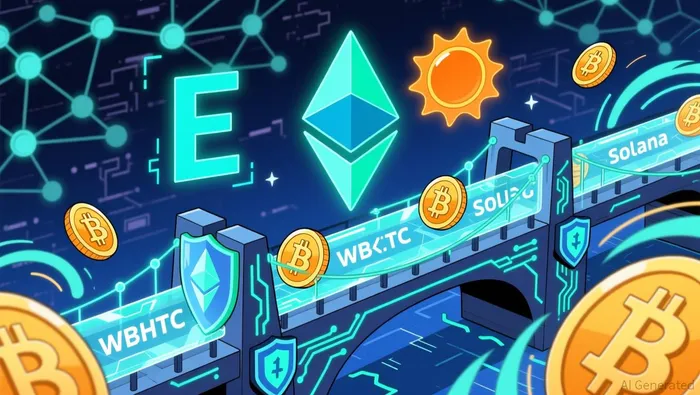 Matrixdock, a Real World Asset tokenization platform, has expanded its XAUm tokenized gold to Solana. XAUm represents one troy ounce of 99.99% pure gold and is secured in vaults with monthly attestations and proof-of-reserves reporting. This expansion allows for near-instant settlement and high-frequency interactions, making gold a liquid onchain reserve asset.
Why Is Cross-Chain Liquidity Important for Investors?
Cross-chain liquidity is important because it allows investors to access multiple blockchain ecosystems without being locked into one network. This reduces counterparty risk and enhances liquidity access to diverse DeFi platforms. The non-custodial, permissionless bridge for WBTC enables seamless asset transfers between Ethereum and Solana, providing investors with more flexibility and control over their digital assets.
The bridge's modular design supports transparency, but challenges remain in ensuring robust security across different blockchain architectures. These risks must be considered when evaluating the long-term viability of cross-chain solutions.
How Is Solana Becoming an Institutional-Grade Blockchain?
Solana is repositioning itself as an institutional-grade blockchain by attracting major players like CME Group and Fireblocks. The value of tokenized real-world assets on Solana reached $873.3 million in July, driven by institutional demand from firms like BlackRock and OndoONDO--. This trend reflects a shift from retail speculation to flow-driven adoption.
At Solana's Accelerate APAC event in Hong Kong, the network was positioned as the execution layer for 24/7 internet capital markets in Asia. The integration of WisdomTree's tokenized funds and the development of a $2.5B stablecoin liquidity engine are supporting this strategic pivot. The U.S. CLARITY Act could further accelerate tokenization adoption by providing regulatory clarity.
Despite Solana's high-throughput capabilities, liquidity remains a key challenge for illiquid assets like private credit. Bringing these assets onchain will require deeper market depth to sustain yield propositions.
What Are the Limitations of Tokenized Real-World Assets on Solana?
While tokenized real-world assets on Solana offer benefits like instant settlement and integration into DeFi protocols, they also face limitations. For instance, liquidity for illiquid assets such as private credit remains a challenge, potentially affecting their yield propositions.
Additionally, the security and robustness of cross-chain bridges across different blockchain architectures present ongoing challenges. These limitations highlight the need for further development and regulatory clarity to fully realize the potential of tokenized assets on Solana.

Blending traditional trading wisdom with cutting-edge cryptocurrency insights.
Latest Articles
Stay ahead of the market.
Get curated U.S. market news, insights and key dates delivered to your inbox.


AInvest
PRO
AInvest
PRO



Comments
No comments yet