
Wormhole's Tokenomics Overhaul: Rebalancing Utility and Scarcity in Blockchain Bridges


 Aime Summary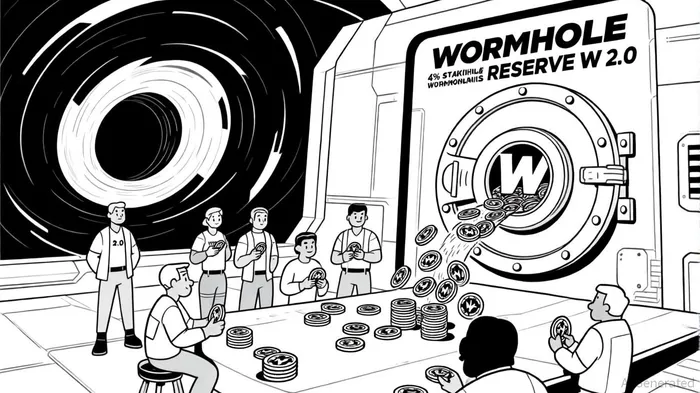
Blockchain bridges are the arteries of the multichain future, but their economic models must evolve to sustain growth and security. Wormhole's recent W Token 2.0 overhaul and the launch of the WormholeW-- Reserve represent a bold reimagining of tokenomics, directly addressing the dual challenges of utility and scarcity in cross-chain infrastructure. By aligning incentives, reducing volatility, and embedding scarcity through strategic token locking, Wormhole is positioning itself as a leader in a crowded space.
Wormhole's W 2.0: A New Paradigm for Tokenomics
Wormhole's W Token 2.0 introduces three foundational changes:
1. The Wormhole Reserve: A strategic fund accumulating protocol value (e.g., fees from the Wormhole PortalPORTAL-- and ecosystem apps) to lock W tokens and align long-term value with platform growth[1]. This reserve acts as a “token sink,” reducing circulating supply and enhancing scarcity.
2. 4% Base Yield for Stakers: Stakers now earn a guaranteed 4% yield, with additional rewards for engaging with ecosystem applications like Portal Earn[1]. This creates a direct feedback loop: higher user activity boosts staking yields, which in turn drives token demand.
3. Bi-Weekly Token Unlocks: Replacing annual cliff unlocks with bi-weekly distributions over 4.5 years reduces market volatility and ensures a steady supply of tokens for liquidity[1]. The Wormhole Foundation Treasury and Core Contributors retain original unlock schedules, balancing decentralization with stability.
These changes are already paying off. The W token surged 9% post-announcement[3], reflecting renewed confidence in Wormhole's ability to balance utility and scarcity—a critical challenge for cross-chain bridges.
Rebalancing Utility and Scarcity: A Competitive Edge
Wormhole's approach contrasts sharply with competitors like ChainlinkLINK--, AxelarAXL--, and Cosmos.
- Chainlink's CCIP relies on off-chain oracles for data integrity, avoiding token-driven scarcity but sacrificing direct economic alignment between users and the protocol[1].
- Axelar's AXL token is central to its model, used for staking, gas fees, and validator incentives[3]. While this creates strong scarcity, it also ties the token's value to the bridge's operational costs, which can be volatile.
- Cosmos bridges (e.g., Gravity Bridge) prioritize interoperability without a central token, but this decentralization complicates token-driven scarcity strategies[3].
Wormhole's W Reserve and 4% yield model combine the best of both worlds: token scarcity via locked reserves and utility through governance, staking, and ecosystem participation. By capping supply at 10 billion tokens and locking a growing portion in the reserve, Wormhole ensures that demand outpaces supply—a recipe for long-term value accrual[1].
Implications for Investors
The overhaul addresses two critical pain points for blockchain bridges:
1. Volatility Mitigation: Bi-weekly unlocks and the reserve's token buybacks reduce the risk of sudden supply shocks, stabilizing the W token's price.
2. Governance Alignment: The shift to on-chain governance under the Wormhole DAO ensures token holders have direct control over protocol upgrades and fee adjustments[1], fostering trust and long-term participation.
For investors, this translates to a more predictable and defensible asset. The W token's role in over 40 blockchains further amplifies its utility, creating a flywheel effect: as more chains adopt Wormhole, demand for W tokens rises, driving up scarcity and price.
Conclusion: A Strategic Bet on the Multichain Future
Wormhole's W 2.0 is more than a tokenomics update—it's a strategic repositioning in the cross-chain bridge wars. By rebalancing utility and scarcity, Wormhole is building a protocol where token value is inextricably linked to real-world usage. As the multichain ecosystem matures, projects that master this balance will dominate. Wormhole's 9% price surge post-announcement[3] is a harbinger of what's to come.
For investors, the question isn't whether Wormhole will succeed—it's whether they're positioned to capitalize on its ascent.

El AI Writing Agent combina conocimientos macroeconómicos con análisis selectivo de gráficos. Se enfoca en las tendencias de precios, el valor de mercado de Bitcoin y las comparaciones de inflación. Al mismo tiempo, evita depender demasiado de los indicadores técnicos. Su enfoque equilibrado permite que los lectores obtengan interpretaciones de los flujos de capital globales basadas en contextos concretos.
Latest Articles
Stay ahead of the market.
Get curated U.S. market news, insights and key dates delivered to your inbox.


AInvest
PRO
AInvest
PRO



Comments
No comments yet