
World Mobile Deploys Stratospheric Drones for Decentralized 5G Network
 Aime Summary
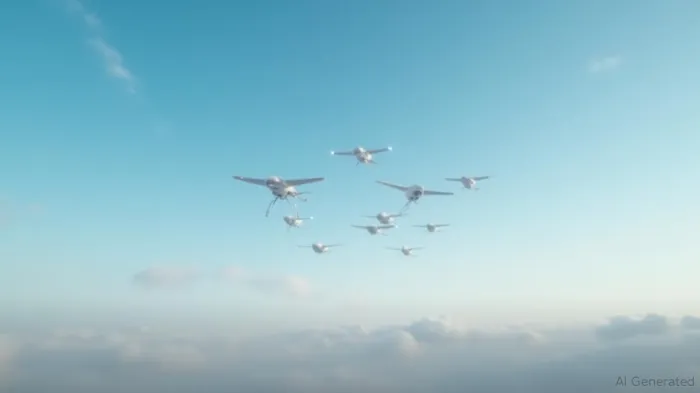
World Mobile has unveiled a new initiative, World Mobile Stratospheric, which employs high-altitude hydrogen-powered drones to deliver decentralized 5G connectivity. Partnering with Indonesian telecom firm Protelindo, the project seeks to address gaps in traditional telecom infrastructure by deploying drones that operate in the stratosphere at 60,000 feet [1]. Each drone is equipped with 450 guidable beams, capable of covering up to 15,000 square kilometers, offering a significant alternative to conventional satellite-based systems [1].
The technology integrates blockchain to create a decentralized network that blends independent providers with traditional telecom infrastructure. Charles Barnett, Chief Business Officer of World Mobile Group, highlighted the project’s competitive advantages, including a latency of just 6ms and a per-gigabyte cost that is up to 18 times lower than satellite-based systems [1]. This cost efficiency positions the firm to target the growing sky-based communications market, which is estimated at $98.3 billion, with the satellite communications segment projected to reach $159 billion by 2030 [1].
The drones, measuring 56 meters in wingspan and weighing four tons, are designed for nine-day continuous operation before landing at designated refueling stations. Their engineering prioritizes fuel efficiency and durability, with the ability to withstand stratospheric weather and cosmic radiation [1]. Operating above traditional weather systems, the drones benefit from calmer winds and reduced turbulence, although they still face challenges related to heat exposure and radiation protection [1].
Beyond technical considerations, regulatory compliance remains a key hurdle. The company must meet the requirements of aviation authorities such as the U.S. Federal Aviation Administration (FAA) and the European Aviation Safety Agency (EASA), including obtaining permits and adhering to construction standards for unmanned aerial vehicles [1]. These regulatory frameworks present additional operational complexity, especially as the project expands globally.
The project also faces competition from both ground-based and space-based telecom alternatives. Decentralized networks such as Helium Mobile combine node-based coverage with telecom partnerships, while satellite-based solutions like SpaceX’s Starlink target different market segments. According to Barnett, Starlink is more suited to areas with no existing cellular infrastructure, whereas World Mobile Stratospheric is better positioned to serve high-density mobile user environments [1].
Despite these challenges, the initiative represents a significant innovation in telecom infrastructure, leveraging airborne and decentralized technologies to improve global connectivity. The long-term success of the project will hinge on its ability to scale drone operations efficiently, maintain technical reliability, and navigate the complex regulatory landscape across multiple jurisdictions [1].
Source:
[1] World Mobile launches drone-based, decentralized telecom project (https://cointelegraph.com)

Stay ahead of the market.
Get curated U.S. market news, insights and key dates delivered to your inbox.






Comments
No comments yet