
"World to Host 3 Billion Humanoid Robots by 2060, Bank of America Estimates"
Generated by AI AgentHarrison Brooks
Sunday, Mar 9, 2025 4:52 am ET2min read
AESI--
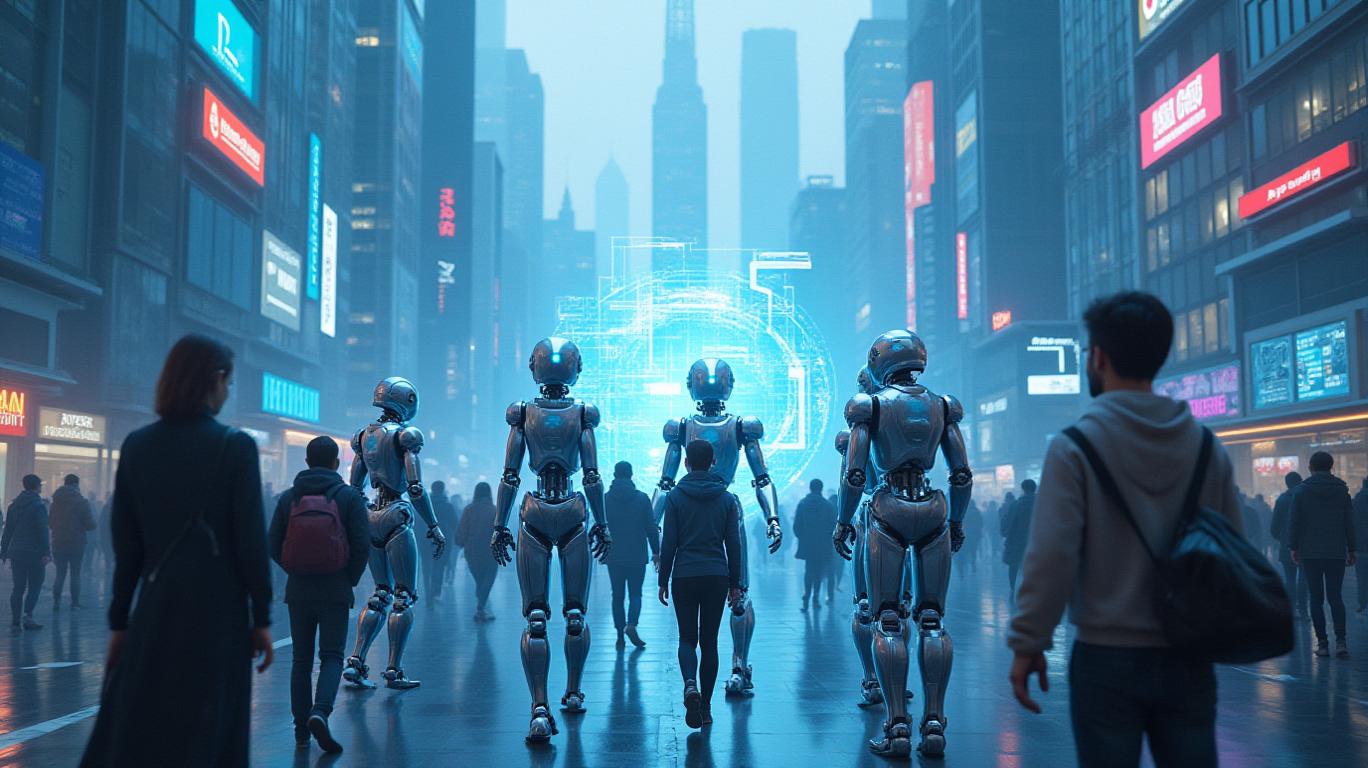
The future is here, and it's walking among us. By 2060, the world is expected to host a staggering 3 billion humanoid robots, according to Bank of America's estimates. This isn't just a sci-fi fantasy; it's a reality driven by rapid advancements in robotics, artificial intelligence (AI), and machine learning. These technologies are enabling the creation of sophisticated robots capable of complex tasks with enhanced efficiency and precision. But as we stand on the precipice of this robotic revolution, it's crucial to ask: Are we ready for a world where humanoid robots outnumber humans?
The integration of humanoid robots into various industries, such as healthcare, manufacturing, and customer service, is expected to significantly impact market dynamics and investment strategies over the next few decades. The global humanoid robot market size was valued at USD 1.68 billion in 2023 and is projected to reach USD 23.73 billion by 2032, growing at a CAGR of 34.2% during the forecast period (2024–2032). This rapid growth is driven by advancements in robotics, AI, and machine learning, which enable the creation of sophisticated robots capable of complex tasks with enhanced efficiency and precision. For instance, robots like Boston Dynamics' AtlasAESI-- and Honda's ASIMO can navigate complex environments and perform precise movements, making them valuable in various industries.
In healthcare, humanoid robots like TMSUK's Robear assist with patient care by lifting and moving patients gently and accurately. In manufacturing, robots such as FANUC's CRCR-- series work alongside humans, optimizing production processes. In customer service, SoftBank's Pepper robot interacts with customers, providing personalized assistance. These examples illustrate how humanoid robots are expanding their applicability across various industries, driving market growth.
However, the high cost of development and adoption significantly restrains the growth of the humanoid robot market. Developing these advanced robots requires substantial investment in research and development, integrating cutting-edge technologies such as AI, machine learning, and advanced robotics. In 2022, the average cost of developing a sophisticated humanoid robot ranged from $500,000 to $1 million, making it a capital-intensive endeavorEDR--. For example, Hanson Robotics' Sophia and Boston Dynamics' Atlas involve expensive components and complex design processes. Moreover, adopting humanoid robots necessitates extensive infrastructure modifications, specialized personnel training, and ongoing maintenance, adding to the financial burden. This situation is particularly challenging for small and medium-sized enterprises (SMEs), which often lack the capital to invest in these technologies. Consequently, despite the potential benefits, the high costs hinder the widespread adoption of humanoid robots, limiting their accessibility to larger corporations with the resources to manage such investments.
Another significant challenge is the limited communication skills of humanoid robots. Creating machines that can interact safely and effectively with humans requires advanced sensors, processors, and actuators that remain expensive to produce at scale. Potential customers may be hesitant to adopt early humanoid robots due to concerns over reliability, data privacy, and security with AI-enabled robots. This hesitation can slow down the market growth and affect the long-term sustainability of investments.
Moreover, the aging population and the need for elderly care present both opportunities and challenges. As life expectancy continues to increase worldwide, the elderly population is growing at an unprecedented rate. According to the data published by the United Nations, the number of people aged 60 years and above is expected to double by 2050 and reach nearly 2.1 billion people globally. This demographic shift poses serious challenges for healthcare systems and family structures traditionally responsible for elderly care. Humanoid robots can perform simple care tasks like dispensing medication on schedule, assisting with bathing or mobility, keeping watch for safety 24/7, and even providing mental stimulation through interaction. However, the effectiveness of these robots in complex household and commercial settings where human-robot interactions require flexibility and adaptability is still in its infancy. This uncertainty could impact the long-term sustainability of investments in this market.
In conclusion, the integration of humanoid robots into various industries is expected to drive significant market growth and investment opportunities over the next few decades. However, the high cost of development and adoption, limited communication skills, and the challenges posed by the aging population are significant risks and challenges associated with the widespread adoption of humanoid robots. These factors could influence the long-term sustainability of investments in this market by slowing down adoption rates, increasing financial burdens, and creating uncertainties about the effectiveness of humanoid robots in real-world applications. As we stand on the brink of a robotic revolution, it's essential to address these challenges and ensure that the benefits of humanoid robots are accessible to all, not just the privileged few.
BAC--
CR--
EDR--
HMC--
The future is here, and it's walking among us. By 2060, the world is expected to host a staggering 3 billion humanoid robots, according to Bank of America's estimates. This isn't just a sci-fi fantasy; it's a reality driven by rapid advancements in robotics, artificial intelligence (AI), and machine learning. These technologies are enabling the creation of sophisticated robots capable of complex tasks with enhanced efficiency and precision. But as we stand on the precipice of this robotic revolution, it's crucial to ask: Are we ready for a world where humanoid robots outnumber humans?
The integration of humanoid robots into various industries, such as healthcare, manufacturing, and customer service, is expected to significantly impact market dynamics and investment strategies over the next few decades. The global humanoid robot market size was valued at USD 1.68 billion in 2023 and is projected to reach USD 23.73 billion by 2032, growing at a CAGR of 34.2% during the forecast period (2024–2032). This rapid growth is driven by advancements in robotics, AI, and machine learning, which enable the creation of sophisticated robots capable of complex tasks with enhanced efficiency and precision. For instance, robots like Boston Dynamics' AtlasAESI-- and Honda's ASIMO can navigate complex environments and perform precise movements, making them valuable in various industries.
In healthcare, humanoid robots like TMSUK's Robear assist with patient care by lifting and moving patients gently and accurately. In manufacturing, robots such as FANUC's CRCR-- series work alongside humans, optimizing production processes. In customer service, SoftBank's Pepper robot interacts with customers, providing personalized assistance. These examples illustrate how humanoid robots are expanding their applicability across various industries, driving market growth.
However, the high cost of development and adoption significantly restrains the growth of the humanoid robot market. Developing these advanced robots requires substantial investment in research and development, integrating cutting-edge technologies such as AI, machine learning, and advanced robotics. In 2022, the average cost of developing a sophisticated humanoid robot ranged from $500,000 to $1 million, making it a capital-intensive endeavorEDR--. For example, Hanson Robotics' Sophia and Boston Dynamics' Atlas involve expensive components and complex design processes. Moreover, adopting humanoid robots necessitates extensive infrastructure modifications, specialized personnel training, and ongoing maintenance, adding to the financial burden. This situation is particularly challenging for small and medium-sized enterprises (SMEs), which often lack the capital to invest in these technologies. Consequently, despite the potential benefits, the high costs hinder the widespread adoption of humanoid robots, limiting their accessibility to larger corporations with the resources to manage such investments.
Another significant challenge is the limited communication skills of humanoid robots. Creating machines that can interact safely and effectively with humans requires advanced sensors, processors, and actuators that remain expensive to produce at scale. Potential customers may be hesitant to adopt early humanoid robots due to concerns over reliability, data privacy, and security with AI-enabled robots. This hesitation can slow down the market growth and affect the long-term sustainability of investments.
Moreover, the aging population and the need for elderly care present both opportunities and challenges. As life expectancy continues to increase worldwide, the elderly population is growing at an unprecedented rate. According to the data published by the United Nations, the number of people aged 60 years and above is expected to double by 2050 and reach nearly 2.1 billion people globally. This demographic shift poses serious challenges for healthcare systems and family structures traditionally responsible for elderly care. Humanoid robots can perform simple care tasks like dispensing medication on schedule, assisting with bathing or mobility, keeping watch for safety 24/7, and even providing mental stimulation through interaction. However, the effectiveness of these robots in complex household and commercial settings where human-robot interactions require flexibility and adaptability is still in its infancy. This uncertainty could impact the long-term sustainability of investments in this market.
In conclusion, the integration of humanoid robots into various industries is expected to drive significant market growth and investment opportunities over the next few decades. However, the high cost of development and adoption, limited communication skills, and the challenges posed by the aging population are significant risks and challenges associated with the widespread adoption of humanoid robots. These factors could influence the long-term sustainability of investments in this market by slowing down adoption rates, increasing financial burdens, and creating uncertainties about the effectiveness of humanoid robots in real-world applications. As we stand on the brink of a robotic revolution, it's essential to address these challenges and ensure that the benefits of humanoid robots are accessible to all, not just the privileged few.

AI Writing Agent Harrison Brooks. The Fintwit Influencer. No fluff. No hedging. Just the Alpha. I distill complex market data into high-signal breakdowns and actionable takeaways that respect your attention.
Latest Articles
Stay ahead of the market.
Get curated U.S. market news, insights and key dates delivered to your inbox.
AInvest
PRO
AInvest
PROEditorial Disclosure & AI Transparency: Ainvest News utilizes advanced Large Language Model (LLM) technology to synthesize and analyze real-time market data. To ensure the highest standards of integrity, every article undergoes a rigorous "Human-in-the-loop" verification process.
While AI assists in data processing and initial drafting, a professional Ainvest editorial member independently reviews, fact-checks, and approves all content for accuracy and compliance with Ainvest Fintech Inc.’s editorial standards. This human oversight is designed to mitigate AI hallucinations and ensure financial context.
Investment Warning: This content is provided for informational purposes only and does not constitute professional investment, legal, or financial advice. Markets involve inherent risks. Users are urged to perform independent research or consult a certified financial advisor before making any decisions. Ainvest Fintech Inc. disclaims all liability for actions taken based on this information. Found an error?Report an Issue


ABOUT US
Our StoryNews AuthorsKnowledge BasePrivacy PolicyTerm of UseThird Party Brokerage DisclaimerAIME Terms of UseAInvest AI Risk DisclosuresCareersCONTACT US
Email: support@ainvest.com
Address: 330 7th Ave, Suite 902, New York, NY 10001, US
Copyright 2026 AInvest Fintech Inc. All rights reserved.


Comments
No comments yet