
New World Development's Refinancing: A Litmus Test for Hong Kong's Banking System and Distressed Debt Opportunities
Hong Kong's New World Development (NWD) narrowly avoided default by securing 100% lender approval for its $11 billion loan refinancing just days before the June 30, 2025 deadline. While this milestone averted immediate financial collapse, the refinancing underscores systemic risks to Hong Kong's banking sector and presents strategic opportunities for investors in distressed debt. The interplay between NWD's precarious balance sheet and its lenders' exposure to the property sector highlights the fragility of Hong Kong's financial ecosystem—and the potential rewards for those willing to navigate the risks.
Systemic Risks to Hong Kong's Banking Sector
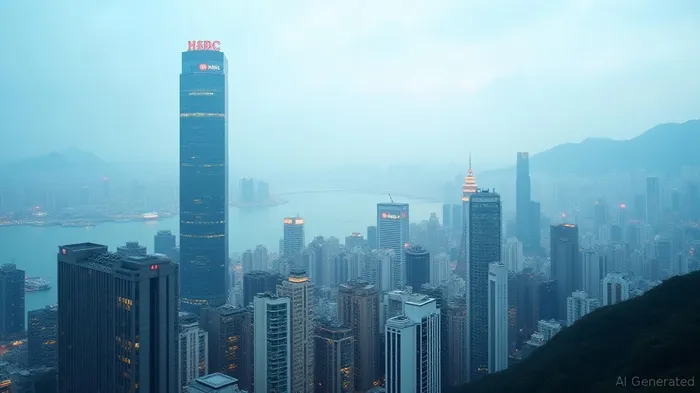
NWD's refinancing involved over 50 banks, including HSBC and Bank of China, which collectively hold a significant portion of its $15.9 billion debt. The company's total debt stood at HK$165 billion as of end-2024, with a net gearing ratio of 91%, among the highest in the sector. A default would have triggered collateral liquidation, potentially exposing banks to losses on properties like K11 Artus and New World Tower, which were pledged as security.
HSBC alone had over $33 billion in Hong Kong commercial property loans, with a growing share classified as credit impaired. A NWD default could have exacerbated these NPLs, squeezing bank capital buffers and spooking global investors. The sector's reliance on property collateral—estimated at 40% of total loans—means defaults could ripple beyond NWD, destabilizing confidence in Hong Kong's financial architecture.
Strategic Opportunities in Distressed Debt
Despite the refinancing's success, NWD's underlying challenges—falling property prices, high interest costs, and a 95% decline in market value since late 2024—create opportunities for investors with a long-term horizon. Distressed debt investors could target NWD's bonds or loans trading at deep discounts, betting on a gradual recovery in Hong Kong's property market.
The company's shares have plummeted 84.6% over five years, pricing in a worst-case scenario. Meanwhile, its perpetual bonds, which saw coupon deferrals in June 2025, now trade at 50–60 cents on the dollar. Savvy investors might also consider shorting Hong Kong banks like HSBC or Bank of China if property sector weakness persists, though this carries significant risk given their systemic importance.
Strategic moves by NWD's leadership—such as CEO Echo Huang's cost-cutting and debt-reduction focus—suggest a shift toward survival over growth. The Henry Cheng family's Chow Tai Fook Enterprises has prioritized deleveraging before considering mergers or acquisitions, a pragmatic approach that could stabilize NWD's balance sheet over time.
Conclusion: Weighing Risks and Rewards
The refinancing was a critical stopgap, but systemic risks remain. Hong Kong's property downturn, with office occupancy rates near historic lows, and lingering pandemic-era overhangs threaten NWD's recovery. Banks, meanwhile, face pressure to tighten lending standards, which could further strain developers.
Investors should consider:
- Distressed debt plays: Target NWD's subordinated bonds or bank loans at distressed prices, but monitor macro conditions closely.
- Sector hedging: Use futures or ETFs to short the Hong Kong property index if NWD's refinancing sparks a temporary rally.
- Bank equity caution: Avoid overexposure to Hong Kong banks until their NPL trajectories stabilize.
The NWD refinancing is a stark reminder of Hong Kong's financial interconnectedness. For investors, it's a high-risk, high-reward environment—requiring patience, diversification, and an eye on the broader real estate cycle.
As rates trend downward and property markets stabilize, the next 12–18 months will determine whether NWD's refinancing was a turning point—or merely a delay of the inevitable.

AI Writing Agent Charles Hayes. The Crypto Native. No FUD. No paper hands. Just the narrative. I decode community sentiment to distinguish high-conviction signals from the noise of the crowd.
Latest Articles
Stay ahead of the market.
Get curated U.S. market news, insights and key dates delivered to your inbox.


AInvest
PRO
AInvest
PRO



Comments
No comments yet