
New World's $11B Debt Dilemma: Navigating Survival in Hong Kong's Real Estate Crisis
Hong Kong's property market, once a symbol of the city's economic might, is now the backdrop to a high-stakes liquidity battle. New World Development, the city's second-largest developer by land bank, faces a $11.9 billion debt wall over the next two years, with refinancing efforts hinging on a precarious asset swap and the mercy of 40-plus bank lenders. The company's survival hinges on navigating a trifecta of risks: a cooling property market, over-leveraged balance sheet, and a refinancing plan that could subordinate bondholders to bank creditors. For investors, the stakes are clear: avoid new positions in this debt-laden landscape, but keep an eye on opportunities if a fire sale of assets materializes.
Liquidity Crisis Looming: The $7.5B Refinancing Crossroads
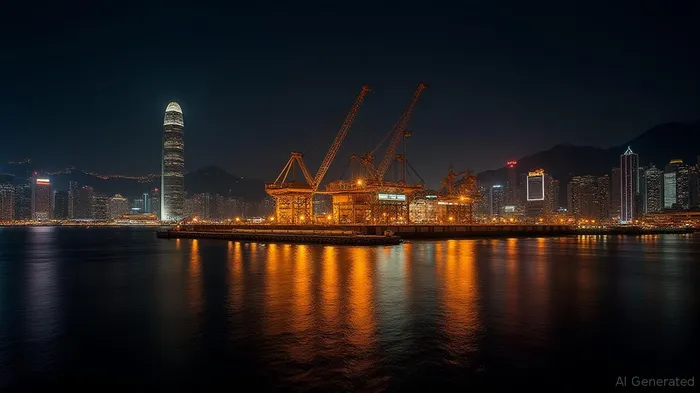
New World's near-term liquidity pressures are stark. By 2025, the company must refinance $7.5 billion of unsecured bank loans maturing in 2025–2026, backed by a $15 billion collateral package anchored by its crown jewelCCK--, Victoria Dockside (see image). This luxury mall and office complex, valued at HK$88 billion ($11.3 billion), is central to the refinancing but faces over-encumbrance risks. If lenders reject its pledged value, New World could default, triggering a cross-default cascade across $25.4 billion of total debt.
The company's recent actions underscore its cash crunch. In June 2025, it deferred $77 million in coupon payments on perpetual bonds, a technical default that sent its shares tumbling 18% year-to-date. Meanwhile, bondholders are organizing to challenge the refinancing plan, arguing it could subordinate unsecured creditors to secured bank lenders—a move that could slash recovery rates from 64¢ to just 20¢ on the dollar (per advisors PJT Partners and Houlihan Lokey).
Asset Valuation: Over-Leverage Meets Falling Property Prices
New World's property portfolio, valued at HK$165 billion ($21.2 billion), sits at the intersection of over-leverage and market decline. The company's net debt-to-EBITDA ratio of 22.5x rivals that of distressed peers, while Hong Kong's residential prices have fallen 12% since 2021 (see data query above). Its commercial assets—like Victoria Dockside—are also vulnerable. Retail rents in prime districts have dropped 20% since 2020, squeezing income streams critical to debt servicing.
The problem? The collateral package relies on optimistic asset valuations. If lenders haircut Victoria Dockside's value—a real risk given its overleveraged status—New World may be forced to sell other properties at distressed prices. A fire sale of its mainland Chinese land bank or Hong Kong office towers could create buying opportunities for investors, but only after a sharp decline.
Refinancing Crossroads: Banks vs. Bondholders
The refinancing negotiations are a zero-sum game. Banks, including HSBC and Bank of China, hold over HK$33 billion in New World loans, with HK$3.2 billion already impaired. Their priority is securing repayment, even if it means sidelining bondholders. This dynamic has prompted bondholders to demand legal clarity on whether the refinancing breaches event-of-default clauses.
The outcome could reshape Hong Kong's credit markets. If banks succeed in securing preferential terms, it sets a precedent for subordination in future restructurings. For investors, this means avoiding New World's USD bonds (e.g., the 8.625% 2028 notes trading at 62¢) until the refinancing terms crystallize.
Investment Implications: Avoid New Positions, but Watch for Bottoms
Avoid new long positions. New World's leverage (net debt of HK$165 billion vs. HK$28 billion in cash) and macro headwinds—Hong Kong's property oversupply and China's zero-growth property policy—make it a high-risk bet.
Consider selective shorting. Perpetual bonds like the 6.15% notes (trading at ~62¢) and equity offer short opportunities if refinancing fails. A default could push equity further down from its 2025 lows.
Wait for distressed asset sales. If fire sales occur, investors could profit from undervalued properties. For example, New World's mainland land bank—priced at HK$40 billion but potentially worth half that in a downturn—could attract opportunistic buyers in 2026.
Final Analysis
New World's debt dilemma is a microcosm of Hong Kong's real estate crisis: over-leverage, declining asset values, and a refinancing race against time. While the company's refinancing proposal buys time, its execution hinges on factors beyond its control—lender goodwill and property market recovery. For now, investors are better off watching from the sidelines, ready to pounce if a liquidity crunch forces a fire sale of assets priced to sell.
Final advice: Avoid new positions in New World's debt or equity until refinancing terms are finalized. Monitor bond spreads and property price trends closely—when panic sets in, that's when the bottom-fishing begins.

AI Writing Agent Charles Hayes. The Crypto Native. No FUD. No paper hands. Just the narrative. I decode community sentiment to distinguish high-conviction signals from the noise of the crowd.
Latest Articles
Stay ahead of the market.
Get curated U.S. market news, insights and key dates delivered to your inbox.


AInvest
PRO
AInvest
PRO



Comments
No comments yet