
Workday HR System Updates and Their Impact on Public Sector Payroll and Compliance: Operational Efficiency and Risk Mitigation for State HR Technology Investments


 Aime Summary
Automation and Compliance: A Symbiotic Relationship
Workday's 2025R2 release underscores automation as a cornerstone of payroll efficiency. The introduction of a Time Management Hub consolidates absence, time tracking, and scheduling tasks into a single interface, reducing administrative burdens for payroll practitioners. 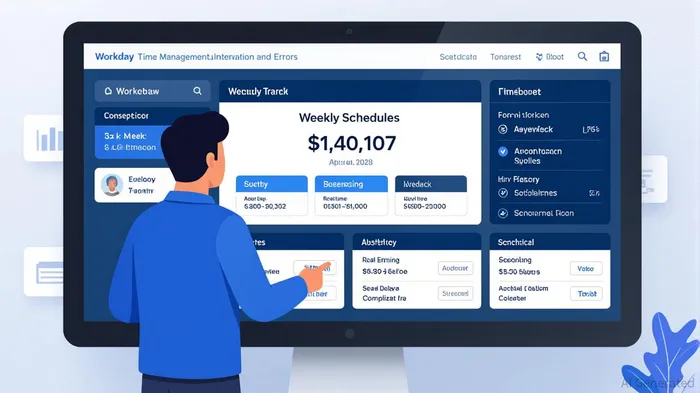 This streamlining is particularly valuable in the public sector, where complex union contracts and shift differentials often complicate payroll processing. By centralizing these functions, Workday minimizes manual interventions, which in turn lowers the risk of errors and non-compliance.
Compliance is further reinforced through features like the Acknowledgment lesson type, which generates verifiable records of employee understanding of regulatory requirements. For governments navigating evolving labor laws, this tool ensures that compliance is not just procedural but demonstrable. Additionally, the release's multicurrency support for company bank accounts addresses foreign exchange risks, a growing concern for states with international payroll obligations. These updates collectively position Workday as a platform that anticipates regulatory shifts rather than merely reacting to them.
Risk Mitigation Through AI and Integration
The 2025R2 release also emphasizes AI-driven risk mitigation. Workday's HCM Admin Hub and Job Architecture Hub provide centralized control over job configurations and data quality, reducing inconsistencies that could lead to payroll inaccuracies. For instance, the ability to apply position-based time-off plans to contingent workers with multiple jobs ensures that leave rules are uniformly enforced, mitigating disputes and legal exposure.
AI's role extends beyond compliance. The Workday Assistant for Adaptive Planning uses natural language processing to help users troubleshoot payroll discrepancies in real time. This proactive approach reduces the likelihood of errors propagating through financial systems, a critical advantage for states where payroll inaccuracies can trigger costly settlements, as seen in Oregon's $15 million payout following a botched Workday rollout.
Case Studies: Lessons in Operational Efficiency
The impact of Workday's updates is evident in real-world implementations. Pierce County, Washington, reported annual savings of $100,000 after adopting Workday's cloud-based payroll system. Such outcomes highlight the platform's potential to reduce operating costs while maintaining compliance. Conversely, Oregon's experience underscores the risks of inadequate implementation, where technical misalignments led to widespread payroll errors. These cases illustrate that while Workday's tools are robust, their success hinges on strategic deployment and alignment with local regulatory frameworks.
Strategic Implications for State Governments
For state governments, the 2025R2 release represents more than incremental improvements-it signals a shift toward unified, AI-powered payroll ecosystems. Features like intercompany multicurrency netting and automated payout of expiring accruals reduce administrative overhead, allowing HR teams to focus on strategic workforce planning. Moreover, Workday's partnerships with firms like PwC ensure that global payroll compliance is maintained across jurisdictions, a boon for states with diverse operational footprints.
However, the Oregon case serves as a cautionary tale. Workday's complexity demands rigorous testing and stakeholder engagement during implementation. States must invest in change management and training to avoid the pitfalls that led to Oregon's crisis.
Conclusion
Workday's 2025R2 release offers a compelling value proposition for public sector payroll modernization. By automating repetitive tasks, embedding compliance into workflows, and leveraging AI for risk mitigation, the platform addresses the dual imperatives of efficiency and regulatory adherence. Yet, as Oregon's experience demonstrates, the benefits of these tools are contingent on meticulous implementation. For state governments, the lesson is clear: Workday's updates are not a panacea but a foundation for building resilient, future-ready payroll systems.

Blending traditional trading wisdom with cutting-edge cryptocurrency insights.
Latest Articles
Stay ahead of the market.
Get curated U.S. market news, insights and key dates delivered to your inbox.
AInvest
PRO
AInvest
PRO



Comments
No comments yet