
Workday's AI-Driven EdTech Play: A Strategic Bet on Higher Education's Future
 Aime Summary
The higher education sector is undergoing a seismic shift, driven by declining enrollments, rising operational costs, and a demand for hyper-personalized student experiences. In this evolving landscape, WorkdayWDAY-- has emerged as a pivotal player, leveraging artificial intelligence (AI) to redefine institutional efficiency and student success. For investors, the question is no longer whether EdTech will disrupt traditional education but how companies like Workday are accelerating this transformation-and whether their strategies are sustainable.
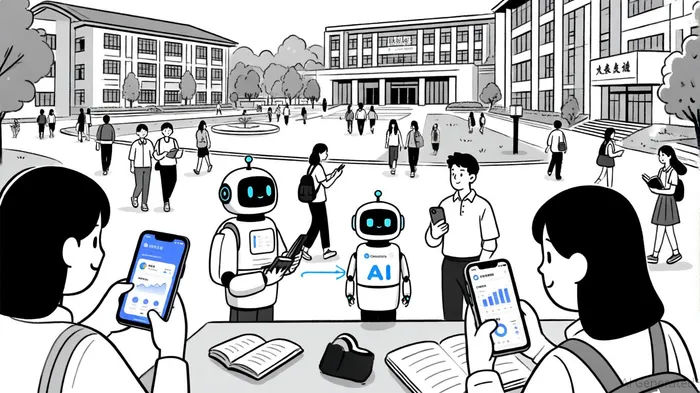
Strategic Expansion: Scaling Global Adoption
Workday's dominance in the higher education space is underscored by its rapid global adoption. According to a report by PR Newswire, over 650 institutions across 19 countries have adopted Workday's solutions, with 85 institutions now live on Workday Student, managing 3 million student records. This growth reflects a strategic focus on international markets, where universities face similar pressures to optimize operations while enhancing student retention.
The company's AI-driven platforms, such as Workday Student, address pain points like administrative inefficiencies and fragmented data systems. For example, the Academic Requirements Agent automates transcript processing and transfer credit evaluations, reducing manual workloads by up to 70%, according to PR Newswire. Such innovations not only cut costs but also free staff to focus on high-impact tasks like student advising-a critical differentiator in an era where institutional agility is paramount.
AI as a Differentiator: Beyond Student Management
Workday's AI capabilities extend beyond student-facing tools. The Workday Assistant, a conversational AI interface, streamlines access to administrative tasks, improving user adoption rates among faculty and staff, as PR Newswire reports. Meanwhile, Skills Cloud-a machine learning-powered platform-standardizes skill data across institutions, enabling workforce development programs to align with labor market demands, as described in a LinkedIn article by Brendan McHugh. These tools position Workday as a holistic solution provider, addressing both operational and strategic challenges.
The financial implications are significant. By automating repetitive tasks and providing real-time analytics, Workday's platforms help institutions reduce overhead while improving outcomes. For instance, personalized guidance features in Workday Student-accessible via mobile devices-have been linked to a 15% increase in student satisfaction scores at early-adopter universities, per PR Newswire. Such metrics are hard to ignore for cash-strapped institutions prioritizing ROI.
Industry Validation: Gartner's Seal of Approval
Workday's leadership is further validated by third-party recognition. In the 2025 Gartner Magic Quadrant for Higher Education Student Information Systems, Workday was named a Leader, a designation that underscores its ability to execute and innovate, according to HG Br and GuruFocus. This accolade is critical in a sector where trust in technology providers is often slow to build. For investors, it signals that Workday's solutions are not just technically robust but also aligned with industry needs.
Investment Considerations: Risks and Rewards
While Workday's trajectory is compelling, investors must weigh risks. The EdTech market is highly competitive, with rivals like Ellucian and Oracle also investing in AI. Additionally, regulatory scrutiny of data privacy in education could impact adoption. However, Workday's first-mover advantage in AI integration-coupled with its proven scalability-mitigates many of these concerns.
A key metric to monitor is customer retention rates, which reflect the stickiness of Workday's solutions. Early data suggests that institutions on Workday Student report 20% higher retention compared to legacy systems, according to PR Newswire, a strong indicator of long-term value.
Conclusion: A High-Conviction Play
Workday's AI-driven approach to higher education is more than a technological upgrade-it's a strategic response to systemic challenges. By automating operations, personalizing student experiences, and earning industry validation, the company is well-positioned to capture a growing share of the $120 billion global EdTech market. For investors seeking exposure to AI's transformative potential in a high-stakes sector, Workday offers a compelling case: a scalable solution addressing both immediate pain points and long-term institutional needs.

Tianhao Xu is currently a financial content editor, focusing on fintech and market analysis. Previously, he worked as a full-time forex trader for several years, specializing in global currency trading and risk management. He holds a master’s degree in Financial Analysis.
Latest Articles
Stay ahead of the market.
Get curated U.S. market news, insights and key dates delivered to your inbox.




Comments
No comments yet