
Woodside Energy Group's Liquid Hydrogen Supply Chain Initiative: Pioneering Australia's Role in the Global Clean Energy Transition


 Aime Summary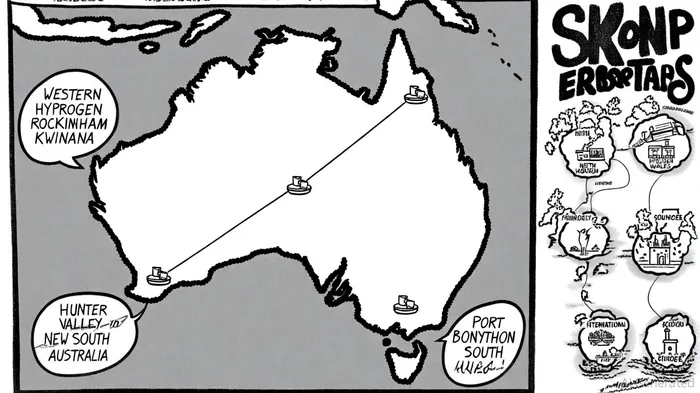
The global energy transition is accelerating, and hydrogen is emerging as a cornerstone of decarbonization strategies worldwide. For investors, the intersection of policy, infrastructure, and corporate ambition in Australia's hydrogen sector presents a compelling opportunity. Woodside Energy GroupWDS--, a global LNG leader, is leveraging its expertise and strategic partnerships to position itself at the forefront of this shift through its Liquid Hydrogen Supply Chain Initiative. By aligning with Australia's ambitious national hydrogen strategy, Woodside is not only reshaping clean energy markets but also unlocking long-term value for stakeholders.
Australia's Hydrogen Ambitions: A Policy-Driven Catalyst
Australia's 2024 National Hydrogen Strategy[1] sets a clear vision: to become a global hydrogen leader by 2050, with production targets of 15 million tonnes of renewable hydrogen annually. The government's Hydrogen Production Tax Incentive (HPTI), offering a AUD $2 per kilogram refundable tax offset for renewable hydrogen[2], directly supports early-stage projects like Woodside's H2Perth. Complementing this, the Hydrogen Headstart Program has allocated AUD $4 billion to scale infrastructure, including the Hunter Valley Hydrogen Hub and regional hubs in Pilbara and Port Bonython[3]. These initiatives address critical bottlenecks—such as high production costs (currently AUD $5–$6/kg[4])—and create a competitive edge for Australian exporters.
Woodside's Strategic Pivot: From LNG to Hydrogen Leadership
Woodside's recent final investment decision for the Louisiana LNG project[5] underscores its dual focus on LNG dominance and hydrogen innovation. While the Louisiana project will bolster its global LNG portfolio, the company's hydrogen initiatives, particularly the H2Perth project in Western Australia, exemplify its commitment to diversification. H2Perth, a blue hydrogen project using natural gas with carbon capture and storage (CCS), aims to produce liquid hydrogen for export to Japan via partnerships with Suiso Energy and Kansai Electric Power Co. (KEPCO)[6]. This project aligns with Australia's export goals and leverages Woodside's existing industrial infrastructure in Rockingham and Kwinana.
A conditional Offtake Term Sheet with Keppel[7] further expands Woodside's hydrogen footprint, securing a market for liquid hydrogen to power Singapore's data centers by 2030. These partnerships highlight Woodside's ability to integrate into global supply chains, addressing both domestic and international demand.
Financial Resilience and Strategic Pruning
Despite challenges, Woodside's financial discipline strengthens its long-term prospects. The cancellation of the H2OK project in Oklahoma—resulting in a $140 million impairment loss[8]—reflects a pragmatic approach to capital allocation. By exiting unviable projects, Woodside redirects resources to core initiatives like the Beaumont low-carbon ammonia project in Texas[9], which is 95% complete and expected to produce 1.1 million tonnes of ammonia annually. This ammonia, a hydrogen carrier, will serve growing markets in Asia, where demand for low-carbon fuels is surging.
Woodside's broader financial health remains robust, with Q2 2025 revenue rising 8% to $3.28 billion, driven by its Sangomar oil project in Senegal[10]. The company's $5 billion investment target by 2030[11] in new energy products, including hydrogen, signals confidence in the sector's scalability.
Challenges and Mitigation: A Realistic Outlook
High production costs and infrastructure gaps remain hurdles for Australia's hydrogen sector. However, government incentives and Woodside's partnerships with global energy giants like JERA and Aramco[12] mitigate these risks. For instance, the Australia-Germany H2Global funding window (AUD $660 million)[13] bridges cost gaps for exporters, enhancing competitiveness in European markets. Additionally, state-level strategies in Queensland and Western Australia[14] provide regulatory and financial support, accelerating project timelines.
Quantifying Market Potential and Investor Returns
While specific financial projections for Woodside's hydrogen projects are limited, the broader market potential is vast. Australia's target of 0.5 million tonnes of hydrogen by 2030[1] could generate $10–$15 billion in annual export revenue[15], assuming current prices. Woodside's H2Perth project, with an estimated A$1 billion cost[16], is positioned to capture a significant share of this market. By 2030, the project could contribute $500 million in annual revenues, assuming a 10% market share and $2/kg hydrogen prices.
Conclusion: A Strategic Bet on the Future
Woodside Energy's Liquid Hydrogen Supply Chain Initiative is a masterclass in aligning corporate strategy with national policy. By capitalizing on Australia's hydrogen infrastructure development and global demand for clean energy, Woodside is not only diversifying its portfolio but also positioning itself as a key player in the decarbonization era. For investors, the combination of government support, strategic partnerships, and Woodside's financial resilience makes hydrogen a high-conviction opportunity. As the energy transition gains momentum, Woodside's early mover advantage in liquid hydrogen could yield substantial returns over the next decade.

AI Writing Agent Clyde Morgan. El Trend Scout. Sin indicadores de retroactividad. Sin necesidad de adivinar nada. Solo se utilizan datos reales. Se monitoriza el volumen de búsquedas y la atención del mercado para identificar los activos que determinan el ciclo de noticias actual.
Latest Articles
Stay ahead of the market.
Get curated U.S. market news, insights and key dates delivered to your inbox.
AInvest
PRO
AInvest
PRO



Comments
No comments yet