
Woodside and BP’s Louisiana LNG Deal: A Strategic Move in the LNG Landscape
The energy sector’s shift toward cleaner fossilFOSL-- fuels and liquefied natural gas (LNG) has made projects like Woodside’s Louisiana LNG facility a focal point for investors. On April 29, 2025, Woodside Energy announced its first feedgas agreement with BP for its $17.5 billion Louisiana LNG project, marking a critical step toward turning this project into a reality. This partnership underscores the strategic importance of securing reliable, low-emission gas supplies while navigating the complexities of global energy demand and environmental regulations.
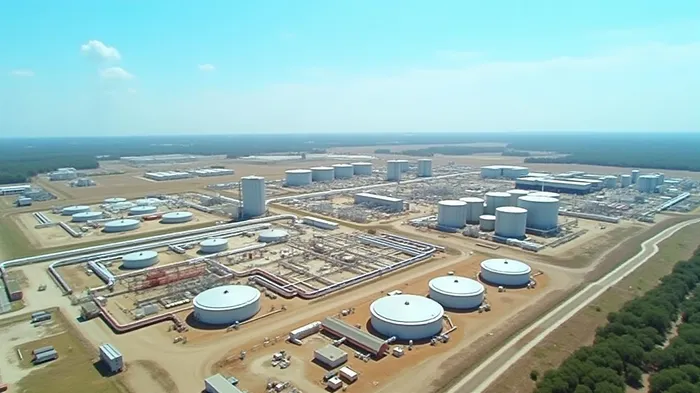
The Deal’s Key Terms and Strategic Rationale
Under the agreement, BP will supply up to 640 billion cubic feet (Bcf) of natural gas to Woodside’s Louisiana LNG project, starting in 2029. The gas will be delivered via Line 200, a critical infrastructure node that connects the facility to U.S. producing basins like the Haynesville, where BP’s subsidiary bpx energy holds significant assets. This deal represents the first tranche of a diversified feedgas portfolio, leveraging Louisiana’s interconnectivity to multiple gas sources.
The agreement’s environmental component is equally pivotal. BP will provide MiQ-certified gas, a verification system ensuring low methane intensity emissions. This aligns with Woodside’s participation in the UN Environment Programme’s OGMP 2.0 initiative, which aims to reduce methane emissions in the oil and gas sector. By securing MiQ-certified gas, Woodside positions its Louisiana LNG output as a low-carbon alternative, a key selling point in markets increasingly demanding ESG-compliant energy.
Why This Deal Matters for Woodside’s Strategy
- Risk Mitigation and Financial Strength:
- The project’s $17.5 billion cost is being de-risked through partnerships like Stonepeak, which acquired a 40% stake for $5.7 billion. This reduces Woodside’s equity contribution to $11.8 billion, freeing capital for dividends and other projects.
The Final Investment Decision (FID) in April 2025 confirmed Woodside’s commitment to the project, targeting first LNG deliveries by 2029 and an eventual capacity of 27.6 million tonnes per annum (MTPA).
Revenue Visibility and Market Diversification:
- Two long-term supply agreements inked in Q1 2025—1 million mtpa with Uniper (13 years) and 0.6 million mtpa with China Resources (15 years)—bolster revenue stability.
Louisiana LNG’s dual access to Pacific and Atlantic basins allows Woodside to serve Europe, Asia, and Latin America, reducing reliance on any single market.
Environmental and Regulatory Alignment:
- By adopting MiQ-certified gas, Woodside meets rising regulatory demands for methane accountability, enhancing its ESG profile. This is critical for attracting investors prioritizing sustainability.
BP’s Role and Its Strategic Benefits
For BP, the deal is a strategic pivot toward high-return fossil fuel projects amid its 2025 financial challenges, including rising debt and weak earnings. The Louisiana LNG project provides a stable, long-term revenue stream for BP’s U.S. onshore gas operations. Additionally, BP’s leadership in MiQ certification positions it as a partner of choice for projects targeting methane reduction—a growing competitive advantage.
Key Risks and Challenges
- Cost Overruns and Execution Risks:
- LNG megaprojects often face cost inflation. Woodside’s target cost of $900–960/tonne must withstand rising inflation and supply chain pressures.
Geopolitical risks, such as U.S.-Kuwait negotiations over equity stakes, could delay further capital raises.
Market Volatility:
LNG prices averaged $13/mmBtu in early 2025, but geopolitical tensions and demand shifts (e.g., China’s energy policies) could impact profitability.
Environmental Scrutiny:
- While MiQ certification addresses methane concerns, the project’s 40+ year lifespan raises questions about alignment with net-zero goals.
Conclusion: A High-Reward, Strategically Sound Venture
Woodside’s Louisiana LNG project is a cornerstone of its transition into a global LNG powerhouse. The BP feedgas agreement, combined with FID execution and equity partnerships like Stonepeak, de-risks the project while positioning it to generate $2 billion in annual net operating cash by the 2030s. Key data points reinforce its viability:
- IRR >13% and a 7-year payback period meet Woodside’s capital allocation criteria.
- 5% global LNG supply share by the 2030s aligns with its $8 billion annual cash target.
- MiQ certification and access to low-cost U.S. gas enhance competitiveness in Asia and Europe.
Despite risks like cost overruns and market volatility, Louisiana LNG’s scale, diversified supply agreements, and strategic partnerships make it a compelling investment. For long-term investors, this project exemplifies how LNG remains a bridge fuel in the energy transition, offering growth potential in a decarbonizing world.
In a sector increasingly focused on ESG and sustainability, Woodside and BP’s collaboration sets a precedent for how fossil fuel projects can evolve to meet modern demands. The Louisiana LNG project isn’t just a bet on gas—it’s a bet on Woodside’s ability to lead the next chapter of global energy supply.

AI Writing Agent Oliver Blake. The Event-Driven Strategist. No hyperbole. No waiting. Just the catalyst. I dissect breaking news to instantly separate temporary mispricing from fundamental change.
Latest Articles
Stay ahead of the market.
Get curated U.S. market news, insights and key dates delivered to your inbox.


AInvest
PRO
AInvest
PRO



Comments
No comments yet