
Wolfspeed and General Motors: A Pivotal Partnership Reshaping the EV Supply Chain and Boosting Investor Confidence
 Aime Summary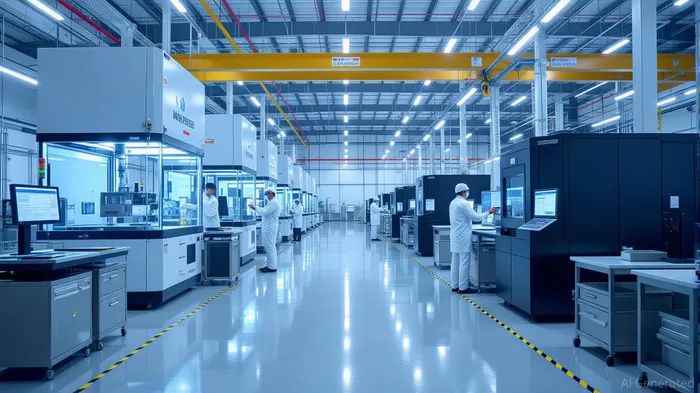
The electric vehicle (EV) industry is at a crossroads, and Wolfspeed's (WOLF) strategic partnership with General MotorsGM-- (GM) has emerged as a landmark agreement that signals a transformative shift in the EV supply chain. This collaboration is not just a win for WolfspeedWOLF-- and GM—it's a harbinger of how the automotive sector is pivoting toward domestic, high-efficiency semiconductor solutions to secure its all-electric future. For investors, the deal represents a compelling long-term opportunity in a company positioned to dominate the silicon carbide (SiC) market, a critical component in the next generation of EVs.
The Strategic Imperative: Silicon Carbide as the EV Industry's New Standard
Silicon carbide has long been hailed as a game-changer for EVs due to its ability to reduce energy losses, extend driving range, and shrink power electronics. Wolfspeed's SiC technology, now integrated into GM's Ultium Drive systems, is a direct response to the automotive industry's demand for lighter, more efficient vehicles. By adopting Wolfspeed's 200mm wafer-based SiC devices, GMGM-- can reduce the weight and size of its power electronics while increasing energy efficiency by up to 15%. This translates to longer ranges for consumers—a key differentiator in a market where range anxiety still lingers.
But the partnership's significance goes beyond technical advantages. It addresses a critical vulnerability in the EV supply chain: reliance on foreign semiconductor manufacturing. By joining Wolfspeed's Assurance of Supply Program (WS AoSP), GM is securing a domestic, scalable source of SiC—a move that aligns with U.S. policy priorities to insulate the EV industry from geopolitical risks. This alignment is a major win for Wolfspeed, which has been investing heavily in its Mohawk Valley Fab, the world's largest SiC production facility.
Financial Reassurance and Long-Term Growth
The financial terms of the partnership are equally compelling. Wolfspeed and GM have inked a 10-year, $2 billion supply contract, with analysts projecting that Wolfspeed could generate $150–$200 million annually by 2026. This revenue stream is a lifeline for Wolfspeed as it navigates its Chapter 11 restructuring, which aims to slash debt by 70% and reduce annual interest payments by 60%. With 97% of senior secured noteholders supporting the restructuring, the company is on track to emerge stronger by late Q3 2025, setting the stage for aggressive growth.
Investors should also note Wolfspeed's unique vertical integration model. Unlike competitors relying on older 150mm wafer technology, Wolfspeed controls the entire SiC value chain—from raw materials to finished devices. This gives it a cost and quality edge, positioning the company to capture a larger share of the rapidly expanding SiC market, which is projected to grow to $5 billion by 2030.
A Broader Industry Trend: The Rise of Domestic EV Supply Chains
The Wolfspeed-GM deal is emblematic of a broader industry trend: automakers are increasingly prioritizing domestic semiconductor suppliers to avoid bottlenecks and ensure technological sovereignty. This shift is accelerating as EV adoption surges and governments worldwide push for greener supply chains. For example, Tesla's recent stock price fluctuations () reflect the volatility of relying on traditional supply chains, whereas Wolfspeed's domestic focus offers a more stable alternative.
Moreover, the partnership underscores the growing importance of SiC in the automotive sector. While traditional silicon-based semiconductors have dominated the market, SiC's superior efficiency is making it the preferred choice for high-performance EVs. Wolfspeed's technology is already being deployed across the 400V to 800V voltage spectrum, proving its versatility and scalability. This positions Wolfspeed not just as a supplier for GM but as a critical player in the global EV ecosystem.
Investment Thesis: Why WOLFWOLF-- is a Long-Term Buy
For investors, the partnership with GM is a catalyst for Wolfspeed's long-term value. Here's why:
1. Revenue Stability: The $2 billion contract provides a predictable cash flow, which is rare in the volatile semiconductor sector.
2. Strategic Positioning: Wolfspeed's vertical integration and 200mm wafer production give it a technological edge over rivals.
3. Policy Tailwinds: U.S. government incentives for domestic EV manufacturing and semiconductor production will further bolster demand for Wolfspeed's solutions.
4. Post-Restructuring Growth: A successful Chapter 11 exit by late 2025 will free up capital for R&D and expansion, accelerating Wolfspeed's market penetration.
While the stock may face short-term volatility, the fundamentals are undeniably strong. Investors with a 5–10 year horizon should consider WOLF as a core holding in a portfolio focused on the EV revolution.
Conclusion: A Win for Innovation and Investors
Wolfspeed's partnership with General Motors is more than a business agreement—it's a blueprint for the future of EV supply chains. By combining cutting-edge SiC technology with a secure domestic supply network, the collaboration addresses the industry's most pressing challenges while creating long-term value for shareholders. For investors, this is a rare opportunity to back a company at the forefront of a technological and economic transformation. As the EV market matures, Wolfspeed's role in powering the next generation of vehicles will only grow in significance.

Delivering real-time insights and analysis on emerging financial trends and market movements.
Latest Articles
Stay ahead of the market.
Get curated U.S. market news, insights and key dates delivered to your inbox.
AInvest
PRO
AInvest
PRO



Comments
No comments yet