
Wolfspeed's New CFO Leadership: Navigating EV Semiconductor Growth Amid Industry Turbulence
The EV semiconductor sector is at a crossroads. Rapid technological advancements, surging demand for electric vehicles (EVs), and geopolitical tensions are reshaping the industry, with consolidation and strategic leadership emerging as critical factors for survival and growth. Against this backdrop, Wolfspeed's appointment of Gregor van Issum as CFO on July 7, 2025, marks a pivotal moment for the company's ability to capitalize on its silicon carbide (SiC) expertise while navigating financial and operational challenges. This move, coupled with broader industry consolidation trends, positions WolfspeedWOLF-- at the center of a high-stakes race to dominate the EV semiconductor landscape.
Leadership-Driven Value Creation: Van Issum's Strategic Imperatives
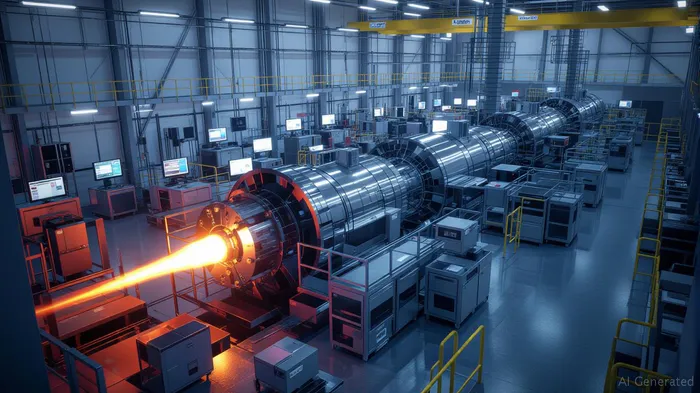
Van Issum's 20-year career in restructuring and strategic financing—including roles at ams-OSRAM and NXP Semiconductors—equips him to address Wolfspeed's immediate challenges. His priorities are clear: enhance transparency for investors, restructure the balance sheet to reduce $4.6 billion in debt, and leverage Wolfspeed's unique advantages, such as its 200mm SiC manufacturing platform. This platform, which offers a 30% cost advantage over competitors' 150mm wafers, is central to Wolfspeed's claim of leadership in EV power electronics.
Van Issum's experience in M&A and IT integration could also accelerate partnerships critical to Wolfspeed's growth. For instance, his ability to manage complex supply agreements—such as the $2 billion 10-year deal with Renesas Electronics—will be vital. This partnership, delayed by Wolfspeed's Chapter 11 restructuring, could now regain momentum under his leadership, ensuring Wolfspeed's position as a key supplier to automakers like General MotorsGM-- and its Ultium EV platform.
Industry Consolidation: A Double-Edged Sword for Wolfspeed
The EV semiconductor sector is consolidating rapidly, driven by surging demand and the need to scale production. The global automotive semiconductor market is projected to grow at an 8% CAGR, reaching $102 billion by 2034, with EV-related chips leading the charge.
However, this growth is accompanied by risks. Geopolitical tensions, supply chain bottlenecks, and talent shortages are pushing firms to seek partnerships or acquisitions. Wolfspeed faces direct competition from companies like STMicroelectronicsSTM-- and Infineon, which are expanding their SiC production and leveraging subsidies (e.g., China's “Big Fund Phase 3”) to undercut pricing. For Wolfspeed, van Issum's restructuring expertise may help mitigate these threats by stabilizing finances and securing investor confidence.
Strategic Partnerships and Competitive Dynamics
Wolfspeed's $21 billion design-win backlog—a pipeline of secured orders—depends heavily on its partnerships. The Renesas deal, delayed due to restructuring, remains a lifeline. Meanwhile, Infineon's reliance on Wolfspeed's 150mm wafers underscores interdependencies in the supply chain. Yet, competitors are moving swiftly:
- STMicroelectronics: Partnering with Sanan Semiconductor in China, leveraging subsidies to build SiC capacity.
- Infineon: Expanding its Malaysia plant and diversifying supplier relationships.
Wolfspeed's U.S. government support—via a $750 million CHIPS Act grant—provides a strategic buffer, but its success hinges on executing its restructuring while maintaining partnerships. Van Issum's ability to balance these priorities could determine whether Wolfspeed emerges as a consolidated leader or becomes a takeover target.
Investment Considerations: Risk vs. Reward
Investors face a nuanced calculus. On one hand, Wolfspeed's SiC technology is indispensable to EV innovation, and van Issum's leadership brings credibility to its turnaround. Its pre-packaged Chapter 11 exit, supported by 97% of lenders, reduces immediate bankruptcy risks.
On the other hand, risks loom large:
- Competitor encroachment: Firms like STMicro and Infineon are closing the technological gap.
- Supply chain dependency: Delays in fulfilling partnerships like Renesas's could trigger impairment losses.
- Geopolitical headwinds: U.S.-China tensions may disrupt supply chains or funding.
Investment Takeaway: Wolfspeed presents a high-risk, high-reward opportunity. Investors with a long-term horizon and tolerance for volatility may find value in its SiC leadership, especially if van Issum successfully stabilizes finances and executes partnerships. However, short-term traders should proceed cautiously, as near-term headwinds—including Chapter 11 outcomes and competitive pressures—could amplify volatility.
Conclusion
Wolfspeed's appointment of van Issum signals a strategic pivot toward financial discipline and operational excellence. In an industry where consolidation and leadership are separating winners from losers, his expertise could be the catalyst to transform Wolfspeed's $21 billion backlog into sustained profitability. Yet, success is far from assured. The coming quarters will test whether Wolfspeed can outpace rivals in a sector where every wafer counts and every partnership defines survival. For investors, this is a story of innovation and execution—where leadership-driven value creation may yet tip the scales.
This analysis is for informational purposes only. Always consult a financial advisor before making investment decisions.

Delivering real-time insights and analysis on emerging financial trends and market movements.
Latest Articles
Stay ahead of the market.
Get curated U.S. market news, insights and key dates delivered to your inbox.




Comments
No comments yet