
Wolfspeed's Breakthrough in Wide-Bandgap Semiconductor Tech: A High-Conviction Play in EV and AI
 Aime Summary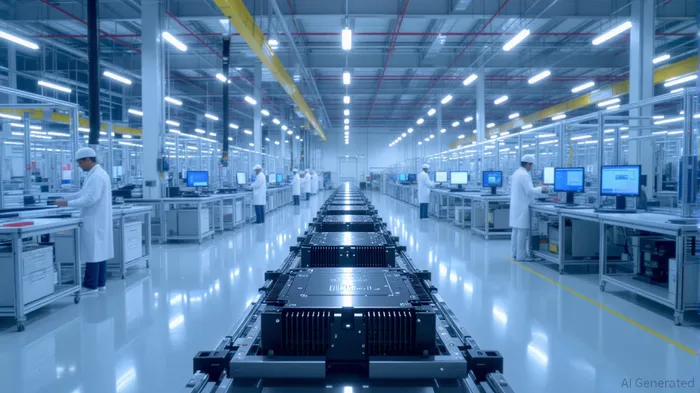
In the race to redefine energy efficiency, WolfspeedWOLF-- (WOLF) has emerged as a trailblazer in wide-bandgap semiconductor technology. By pioneering silicon carbide (SiC) innovations, the company is not only reshaping electric vehicle (EV) performance but also unlocking new frontiers in AI infrastructure. With strategic R&D, aggressive execution, and a clear-eyed focus on high-growth markets, Wolfspeed's stock has surged 483% in just five trading days in July 2025—a testament to its transformative potential.
The Technological Edge in EVs: Powering the Future of Mobility
Wolfspeed's fourth-generation SiC MOSFETs and Schottky diodes are revolutionizing EV powertrains. These components enable up to 80% fewer power losses compared to traditional silicon-based systems, directly translating to a 10% increase in driving range. For automakers racing to meet stringent emissions targets and consumer demands for longer-range vehicles, this efficiency is a game-changer.
The company's E-Series of automotive-grade SiC components—AEC-Q101 qualified and PPAP capable—are now embedded in 800V EV architectures, enabling smaller, lighter, and more efficient traction inverters. This aligns with the industry's shift toward 800V systems, which reduce charging times and improve thermal management. By 2027, over 50% of battery EVs are projected to adopt SiC powertrains, creating a compounding demand for Wolfspeed's solutions.
Powering the AI Revolution: Efficiency at the Edge of Computation
Beyond EVs, Wolfspeed's SiC and gallium nitride (GaN) technologies are critical to AI data centers, where energy efficiency is a top priority. AI workloads generate immense heat and power demands, but Wolfspeed's semiconductors reduce thermal loads by up to 40%, minimizing the need for costly cooling systems. This is particularly valuable as hyperscalers like MicrosoftMSFT-- and AmazonAMZN-- invest billions in AI infrastructure.
The company's SiC-based power supplies are also enabling next-generation 5G networks, which serve as the backbone for AI-driven applications. With global data center energy consumption expected to grow by 50% by 2030, Wolfspeed's role in decarbonizing this sector is both strategic and scalable.
Manufacturing and Strategic Expansion: Scaling the SiC Revolution
Wolfspeed's ability to scale is central to its long-term thesis. The company has pioneered 200mm SiC wafer production, reducing manufacturing costs by 30% and improving yield rates. This breakthrough has been instrumental in making SiC cost-competitive with silicon, accelerating adoption across EVs and renewables.
With $2.5 billion in funding—including $750 million from the U.S. CHIPS Act and $750 million from private investors like ApolloAPO-- and Fidelity—Wolfspeed is expanding its U.S. footprint. The Mohawk Valley and Siler City facilities are now operational, with output exceeding initial projections. This domestic production not only secures supply chains but also aligns with U.S. national security priorities, as SiC is classified as a critical material by the Department of Energy.
Financial Restructuring and Leadership: A Path to Profitability
Wolfspeed's prepackaged Chapter 11 filing in July 2025 has been a catalyst for investor confidence. By reducing $4.6 billion in debt and cutting annual interest payments by 60%, the company is reallocating capital to R&D and production. The restructuring has been supported by 97% of senior secured note holders, signaling strong alignment among stakeholders.
The appointment of Gregor van Issum as CFO—a restructuring expert with a track record at TeslaTSLA-- and IBM—has further bolstered the management team. Van Issum's focus on operational discipline and capital efficiency positions Wolfspeed to navigate its bankruptcy process while maintaining momentum in high-growth markets.
Market Dynamics and Investment Outlook
Wolfspeed's stock has defied conventional metrics, driven by a perfect storm of short-squeeze dynamics, restructuring optimism, and sector tailwinds. While the valuation remains volatile, the company's long-term fundamentals are compelling.
- EV Tailwinds: With EVs accounting for 30% of global vehicle sales by 2030, Wolfspeed's SiC powertrains are poised to capture a significant share of the $1.2 trillion EV market.
- AI Infrastructure: The global SiC market for data centers is projected to grow at 11.7% CAGR through 2030, with Wolfspeed's partnerships with hyperscalers securing a first-mover advantage.
- Supply Chain Resilience: U.S. government support and CHIPS Act funding ensure Wolfspeed's role in a secure, domestic semiconductor ecosystem.
High-Conviction Investment Thesis
Wolfspeed is not just a semiconductor company—it's a linchpin in the energy transition and AI revolution. Its leadership in SiC technology, combined with strategic manufacturing expansion and a leaner financial structure, creates a durable competitive moat. For investors seeking exposure to the EV and AI megatrends, Wolfspeed offers a high-conviction, high-reward opportunity.
However, risks remain. The company's debt restructuring is untested, and execution on capacity expansion is critical. Those who can stomach short-term volatility, though, are positioned to benefit from a potential 10x outcome as Wolfspeed scales its SiC dominance in the coming decade.
In a world increasingly powered by electrification and artificial intelligence, Wolfspeed's breakthroughs in wide-bandgap semiconductors are not just transformative—they're inevitable.

Delivering real-time insights and analysis on emerging financial trends and market movements.
Latest Articles
Stay ahead of the market.
Get curated U.S. market news, insights and key dates delivered to your inbox.




Comments
No comments yet