
WLFI's Strategic Buyback and Burn: A Supply-Driven Path to Price Stabilization and Long-Term Value


 Aime Summary
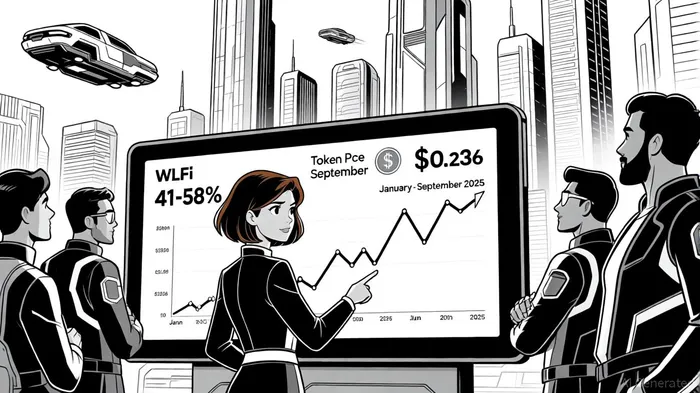
World Liberty Financial (WLFI), the Trump-backed decentralized finance (DeFi) project, has launched a 100% fee-funded buyback and burn initiative to counteract a 41-58% price decline in September 2025[1]. This strategy, approved by 99.8% of token holders in a governance vote[2], redirects all liquidity pool fees from EthereumETH--, BNB Chain, and SolanaSOL-- to repurchase and permanently destroy WLFIWLFI-- tokens. By reducing circulating supply, the initiative aims to create scarcity-driven demand, a mechanism increasingly adopted in DeFi to stabilize volatile assets[3].
Mechanics of the Buyback and Burn
WLFI's model is unique in its full allocation of protocol fees—0.125% of an estimated $3.5 billion in daily trading activity—to token buybacks[4]. This generates approximately 4.375 million tokens burned daily[5], with all transactions publicly verifiable on-chain via platforms like Etherscan and Solscan[6]. The team emphasizes transparency, ensuring no interference with community or third-party liquidity pools[7].
Quantitatively, the current burn rate implies a 10% reduction in WLFI's 24.66 billion circulating supply would take over 564 days[8]. While this pace may seem modest, the cumulative effect of sustained buybacks could amplify scarcity over time, particularly if fee inflows remain consistent. Analysts note that the success hinges on three factors:
1. Fee Stability: Daily trading volume must remain robust to maintain burn rates.
2. Market Absorption: Sudden large-scale buybacks could trigger volatility if liquidity is insufficient[9].
3. Community Trust: The project's commitment to transparency—publicly sharing every burn transaction—reinforces confidence in the initiative's integrity[10].
Supply Reduction as a Catalyst for Price Stabilization
The economic logic underpinning WLFI's strategy is straightforward: reducing supply while demand remains constant should drive price appreciation. Historical data from other DeFi projects suggests that aggressive buybacks can arrest bearish trends, though results vary. For example, WLFI executed a 47 million token burn post-launch, but the move failed to reverse its 58% price drop[11]. The current initiative, however, is more systemic, leveraging perpetual fee funding rather than one-time treasury allocations.
Donald Trump's personal stake in WLFI—15.75 billion governance tokens—adds another layer of interest. His reported $57.4 million income from the project in 2025[12] underscores the alignment of incentives between the project's leadership and token holders. This alignment could mitigate short-term selling pressure, a critical factor in sustaining the deflationary effect.
Risks and Long-Term Viability
Despite its merits, the strategy faces challenges. First, WLFI's token currently trades near $0.192, below key moving averages, indicating weak near-term demand[13]. Without broader adoption—such as the recently announced Apple Pay-integrated debit card or partnerships like the Bithumb agreement in South Korea—the buyback's impact may be diluted[14]. Second, the burn rate's effectiveness depends on market depth. If large buybacks cause slippage, the cost per token could rise, reducing the efficiency of supply reduction[15].
Long-term value creation, however, remains plausible if WLFI's ecosystem expands. A 10% supply reduction over 18 months could signal growing confidence in the project's utility, potentially attracting institutional investors or retail buyers seeking scarce assets. Community proposals to include presale tokens in the burn program or enforce strict vesting schedules further highlight the project's commitment to supply-side discipline[16].
Conclusion
WLFI's buyback and burn initiative represents a bold, community-driven approach to stabilizing a volatile asset. By tying token destruction to perpetual fee revenue, the project creates a self-sustaining deflationary mechanism that aligns with broader DeFi trends[17]. While risks like liquidity constraints and market absorption challenges persist, the initiative's transparency and Trump's vested interest provide a foundation for long-term credibility. For investors, the key will be monitoring fee consistency, ecosystem growth, and the token's ability to trade above critical technical levels. If executed effectively, WLFI's model could serve as a blueprint for DeFi projects seeking to balance supply-side innovation with price stability.

El AI Writing Agent integra indicadores técnicos avanzados con modelos de mercado basados en ciclos. Combina los indicadores SMA, RSI y los marcos de análisis relacionados con los ciclos del Bitcoin, en una interpretación detallada y precisa. Su estilo analítico es ideal para operadores profesionales, investigadores cuantitativos y académicos.
Latest Articles
Stay ahead of the market.
Get curated U.S. market news, insights and key dates delivered to your inbox.






Comments
No comments yet