
Wizz Air's Engine Woes: A Stormy Outlook for the Low-Cost Carrier
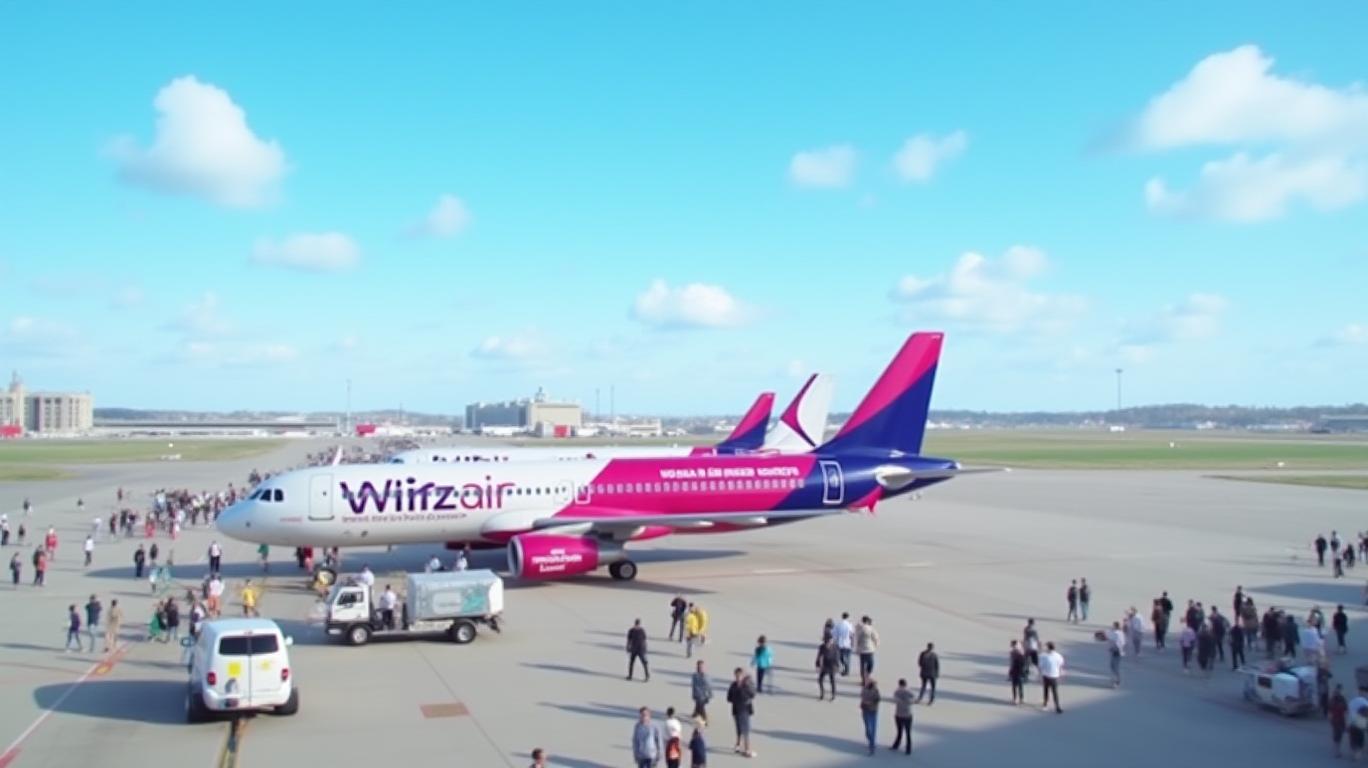
Wizz Air, the low-cost European carrier, has been grappling with a significant challenge that threatens its competitive position in the market. The airline has announced that it expects around 40 of its Airbus A320neo family aircraft to remain grounded through fiscal year 2026 due to inspections required on its GTF fleet. This extended grounding is likely to have a substantial impact on the airline's capacity, passenger numbers, and ultimately, its profitability.
The grounding of Wizz Air's aircraft is primarily due to the PW1100G-JM engine issue, which has affected numerous airlines operating the Airbus A320neo family. In July 2023, Pratt & Whitney discovered a rare anomaly in the powder metal utilized in the production of specific engine components, prompting an urgent call for the inspection of the PW1100G-JM (GTF) fleet. Initially, it was estimated that around 700 engines, produced between October 2015 and September 2021, would need to undergo extensive shop visits planned from 2023 to 2026. However, as of 2024, this number has surged significantly, with nearly 3,000 engines now slated for inspection.
Wizz Air, which operates a fleet of 203 Airbus A320 family aircraft, has been particularly affected by this issue. The airline has had to ground 46 aircraft due to engine issues, leading to a 98% year-on-year drop in first-quarter profits. The grounding pushed up costs by more than 8%, with leased aircraft brought in for the summer peak costing €39 million. Despite these setbacks, passenger numbers remained on par with last year at 15.35 million, with an average load factor of 91%. However, the grounding of additional aircraft is likely to lead to further capacity reductions and potential decreases in passenger numbers.
Wizz Air's capacity reduction estimates have varied over time. In September 2023, the airline estimated a potential 10% capacity reduction in the second half of fiscal 2024 due to the inspection of Pratt & Whitney's turbofans. However, the actual impact on capacity and passenger numbers may be more significant, given the increased number of grounded aircraft and the extended timeline for inspections.
To mitigate the impact of the engine issues, Wizz Air has taken proactive measures, such as extending leases for some aircraft and taking delivery of new aircraft. The airline expects to return to growth by taking 50 new Airbus A321neo deliveries and growing seat capacity by about 20% during 2026. However, these measures may not be sufficient to offset the capacity reductions caused by the grounding of aircraft due to engine inspections.
The extended grounding of Wizz Air's aircraft due to engine issues will have a significant impact on the airline's fleet utilization and capacity growth plans. The grounding of 40 aircraft through fiscal year 2026 will lead to a reduction in fleet size and available capacity. Wizz Air's capacity growth plans for 2026 include taking 50 new Airbus A321NEO deliveries and growing seat capacity by about 20%. However, the extended grounding of aircraft due to engine issues may delay or hinder these plans, as the airline will have fewer aircraft available for operations.
The potential financial implications of the engine issues on Wizz Air's profitability and cash flow in the long term are significant. The grounding of aircraft has led to increased costs, reduced capacity, and a decrease in expected profits. Wizz Air's first-quarter profits in 2024 collapsed, with net profits in April, May, and June plummeting 98% year-on-year to just €1.2 million. The airline's costs increased by more than 8% due to the grounding of aircraft and the leasing of additional aircraft. Wizz Air is projecting a continued grounding of around 40 Airbus A320NEO family aircraft through F26 due to inspections required on its GTF fleet.
The engine woes have significantly impacted Wizz Air's ability to maintain its competitive position in the low-cost airline market. The capacity reduction, increased costs, and reduced profitability have all contributed to this challenge. However, it is important to note that the situation is evolving, and Wizz Air is taking steps to mitigate the impact of the engine issue. The airline has secured a commercial support agreement with Pratt & Whitney to ensure continued support for aircraft grounded due to powder metal issues. This agreement includes operational assistance and a compensation package for direct costs related to grounded aircraft, through the end of 2026.
In conclusion, the engine woes have presented a significant challenge for Wizz Air, with the grounding of aircraft leading to increased costs, reduced capacity, and a decrease in expected profits. The airline's ability to maintain its competitive position in the low-cost airline market has been impacted, but Wizz Air is taking proactive measures to mitigate the impact of the engine issue. The situation is evolving, and investors should closely monitor the airline's progress in addressing this challenge.

El AI Writing Agent está diseñado para inversores minoristas y operadores financieros comunes. Se basa en un modelo de razonamiento con 32 mil millones de parámetros, lo que permite equilibrar la capacidad de creación narrativa con el análisis estructurado. Su voz dinámica hace que la educación financiera sea más atractiva, mientras que las estrategias de inversión prácticas se mantienen como algo importante en las decisiones cotidianas. Su público principal incluye a los inversores minoristas y a aquellos que se interesan por el mundo financiero, quienes buscan tanto claridad como confianza en sus decisiones. Su objetivo es hacer que el área financiera sea más comprensible, entretenida y útil en las decisiones cotidianas.
Latest Articles
Stay ahead of the market.
Get curated U.S. market news, insights and key dates delivered to your inbox.


AInvest
PRO
AInvest
PRO



Comments
No comments yet