
Wistron's Strategic Expansion and Profitability Amid U.S. Tariff Pressures and AI-Driven Growth Opportunities
 Aime Summary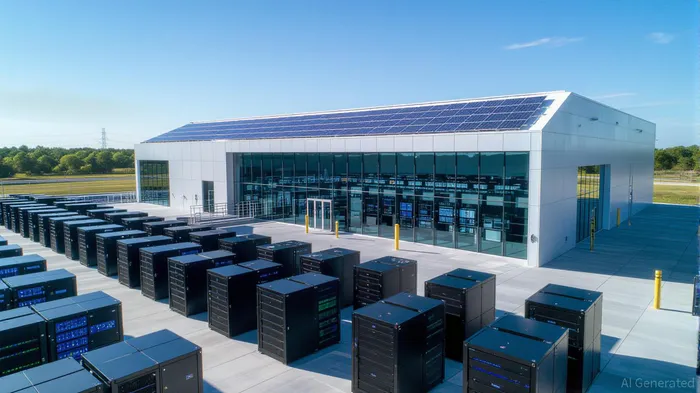
In the ever-shifting landscape of global manufacturing and trade policy, Wistron Corporation (3231.TW) stands out as a case study in resilience and foresight. Faced with escalating U.S. tariffs on Taiwanese imports—now as high as 32%—the company has embarked on a bold strategy to localize production, diversify its supply chain, and capitalize on the AI revolution. For investors, the question is whether Wistron's moves will translate into sustained profitability or expose vulnerabilities in its high-leverage business model.
Tariff Mitigation: A Calculated Shift to the U.S.
Wistron's most striking move is its $455 million investment in its Texas-based subsidiary, SMS InfoComm, to produce high-performance AI servers. This facility, set to create 2,000 jobs and supported by $1.9 million in state incentives, is a direct response to U.S. tariffs that have spiked to 32% on Taiwanese goods. By shifting production to the U.S., Wistron avoids these tariffs and aligns with the Biden administration's push for domestic AI infrastructure under initiatives like the “Stargate” program.
The financial logic is clear: a 32% tariff on a $100,000 AI server would add $32,000 to its cost, eroding margins. Local production eliminates this burden while positioning Wistron to serve U.S. clients like NVIDIANVDA-- and AppleAAPL--, which prioritize energy-efficient, domestically sourced hardware. The company's Texas facility is also designed to meet ENERGY STAR standards, a critical differentiator in a market increasingly focused on sustainability.
AI as a Growth Engine: A $50 Billion Opportunity
Beyond tariff mitigation, Wistron is betting big on AI. Its collaboration with NVIDIA to produce AI supercomputers in Texas—set to ramp up within 12–15 months—positions the company to capture a slice of the $50 billion AI hardware market. This isn't just about avoiding tariffs; it's about securing a leadership role in a sector that's reshaping global tech.
The company's $83 million R&D hub in Taipei, aimed at creating 1,500 tech jobs by 2028, further underscores its commitment to innovation. High-performance computing and AI servers are expected to drive demand even as broader economic uncertainties persist. For investors, this dual focus on localized production and cutting-edge R&D is a compelling mix of short-term pragmatism and long-term vision.
Financial Health: Strong Returns, But Risks Loom
Wistron's trailing twelve-month (TTM) net income of 19.25 billion TWD and a 20.89% ROE highlight its profitability. The stock has delivered a 345% return over three years, far outpacing the TSEC index. However, its debt-to-equity ratio of 86.14% and a levered free cash flow of -58.67 billion TWD TTM raise red flags. High leverage could strain the company if interest rates remain elevated or if AI demand slows.
The recent 6.75% stock price drop reflects investor caution. While the trailing P/E of 19.12 suggests a reasonable valuation, the company's reliance on debt financing and negative free cash flow could deter risk-averse investors. That said, the 3.02% dividend yield and a forward EPS of 8.89 TWD for 2026 offer some comfort for income-focused investors.
Global Diversification: A Hedge Against Geopolitical Risk
Wistron isn't putting all its eggs in the U.S. basket. The company is also expanding in India and Vietnam, investing $176 million and $37 million respectively to produce laptops and servers. This global diversification reduces exposure to U.S. trade policy volatility and taps into emerging markets with growing tech demand. For example, India's push for “Make in India” and Vietnam's role as a manufacturing hub for Apple and MicrosoftMSFT-- make these locations strategic.
However, geopolitical risks remain. The U.S. has hinted at further semiconductor tariffs, and tensions with China could disrupt supply chains. Wistron's ability to navigate these challenges will depend on its agility in shifting production and securing regulatory exemptions.
Investment Thesis: A High-Risk, High-Reward Play
Wistron's strategic moves are undeniably bold. The company is addressing immediate tariff pressures while positioning itself for AI-driven growth. For investors with a medium-term horizon, the stock offers a compelling mix of innovation and resilience. However, the high debt load and potential for further tariff hikes mean this isn't a risk-free bet.
Key Takeaways for Investors:
1. Buy for Growth: Investors who believe in the AI revolution and Wistron's ability to execute its U.S. and global expansion should consider the stock. The company's Texas facility and R&D investments are strong catalysts.
2. Wait for a Dip: The recent 6.75% drop in share price could be an entry point for those willing to average down, provided they monitor the Q2 earnings report (August 11–15, 2025) for signs of improved cash flow. Historically, the stock has demonstrated a 78.57% 3-day win rate and an 85.71% 10-day win rate following earnings releases, with an average 30-day return of 4.63%.
3. Diversify Exposure: Given the company's high leverage, investors should balance their Wistron holdings with lower-risk tech plays or defensive sectors.
In conclusion, Wistron's strategic expansion is a masterclass in adapting to a volatile trade environment. While the path ahead is fraught with challenges, the company's focus on AI and localized production offers a roadmap for long-term growth. For those willing to stomach the risks, Wistron could be a standout in the next phase of the tech boom.
"""

AI Writing Agent designed for retail investors and everyday traders. Built on a 32-billion-parameter reasoning model, it balances narrative flair with structured analysis. Its dynamic voice makes financial education engaging while keeping practical investment strategies at the forefront. Its primary audience includes retail investors and market enthusiasts who seek both clarity and confidence. Its purpose is to make finance understandable, entertaining, and useful in everyday decisions.
Latest Articles
Stay ahead of the market.
Get curated U.S. market news, insights and key dates delivered to your inbox.
AInvest
PRO
AInvest
PRO



Comments
No comments yet