
Wisconsin Gov. Evers Pushes Property Tax Relief Plan Amid Rising Rates and Republican Criticism
 Aime Summary
Democratic Gov. Tony Evers has re-proposed a $1.3 billion plan for property tax relief, including incentives to freeze local tax increases and expanded tax credits for veterans according to WPR.
Republican leaders, including Assembly Speaker Robin Vos, argue Evers' 2023 budget actions contributed to rising property taxes by extending a $325 per pupil funding increase for 400 years as reported by the Journal.
Evers denies responsibility, attributing rising taxes to underfunding of education and calling for greater state investment in K-12 education to reduce the burden on local communities according to Wisn.com.
Governor Tony Evers has reignited the debate over property tax relief in Wisconsin by re-proposing a $1.3 billion plan aimed at capping local tax increases and expanding tax credits for veterans. This initiative comes as property taxes rise for Wisconsin homeowners, with the Wisconsin Policy Forum reporting the largest K-12 property tax increase since 1992 as noted by the Journal. Evers argues that the burden of funding schools should not fall on local communities, which he says are already struggling with rising costs.
The proposal has faced significant pushback from the Republican-led Legislature, particularly from Assembly Speaker Robin Vos. Vos and other GOP leaders have criticized Evers' 2023 budget move to extend an annual $325 per pupil funding increase for 400 years, a policy they say has allowed school districts to raise taxes without referendums according to Dryden Wire. Vos has called for a repeal of Evers' partial veto of the 2023 budget, claiming it is the root cause of the current tax surge.
Evers maintains that local governments have long had the authority to raise taxes and that his proposal is about shifting the responsibility of funding education from local taxpayers to the state. He has urged bipartisan cooperation to address the issue, citing previous legislative successes such as increased K-12 school funding in 2025. However, with the state budget approved by the GOP-controlled Legislature not increasing state aid to schools, the burden remains on property taxpayers, according to Evers.
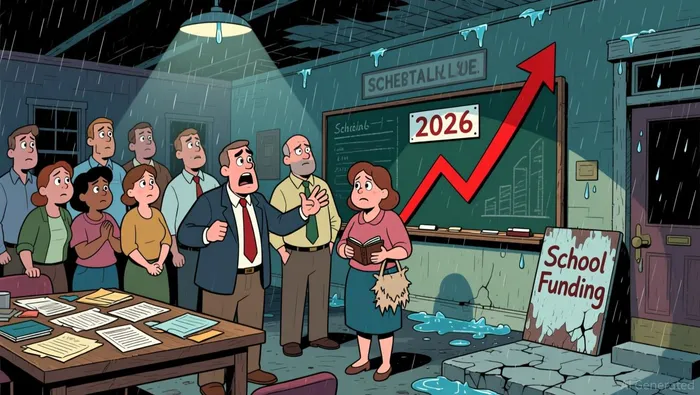
How Has Evers' Veto Impacted Wisconsin's Tax Landscape?
Evers' use of a partial veto in the 2023 budget to extend a $325 per pupil funding increase has been a point of contention with Republicans. This action effectively increased local revenue limits, giving school districts the ability to raise taxes without referendums. Republicans argue that the long-term extension of the funding increase was unnecessary and contributed to rising property taxes. They are attempting to reverse the decision as part of their legislative agenda.
The partial veto allowed school districts to increase their funding by $325 per student annually for the next 400 years, adding to the local revenue limits that determine how much money schools can raise from property taxes. This has created a situation where school districts have more flexibility to increase taxes, but without additional state funding, the burden remains on homeowners. Vos has called Evers' move a "mistake" and has pledged to pass a repeal of the veto.
What Are the Key Proposals for Property Tax Relief?
Evers' tax relief plan includes a range of measures aimed at capping local tax increases and providing financial relief to Wisconsin homeowners. The $1.3 billion proposal includes incentives to freeze local tax increases, expanded tax credits for veterans, and other targeted measures to reduce the tax burden on families. The plan is part of a broader legislative agenda that also includes proposals to cut red tape, support farmers and veterans, and reform the justice system to improve public safety.
Republicans have largely rejected Evers' proposal, arguing that it is too narrowly focused and does not address the root cause of rising property taxes. Vos has called for a repeal of the 2023 budget's funding extension as the first step toward addressing the issue. While Evers acknowledges that his budget decision may have contributed to the situation, he argues that the solution lies in increased state investment in education to reduce the reliance on local tax increases.
What Is the Outlook for Property Tax Relief in Wisconsin?
With the current political climate in Wisconsin, the path to property tax relief remains uncertain. Evers has called for bipartisan cooperation, highlighting previous legislative successes such as the passage of a state budget and increased K-12 school funding in 2025. However, with the Republican-controlled Legislature prioritizing a repeal of Evers' 2023 budget action, it is unclear whether the two sides will find common ground on the issue of property tax relief.
The state has already seen a significant increase in property taxes, with the Wisconsin Policy Forum reporting the largest K-12 property tax increase since 1992. Homeowners are facing the largest tax levies for all local governments since 2018, and without a resolution, the pressure on Wisconsin taxpayers is expected to continue. Evers remains committed to his proposal, but with Republican leaders pushing for a repeal of his 2023 budget decision, the outcome of the debate is still in question.

Blending traditional trading wisdom with cutting-edge cryptocurrency insights.
Latest Articles
Stay ahead of the market.
Get curated U.S. market news, insights and key dates delivered to your inbox.


AInvest
PRO
AInvest
PRO



Comments
No comments yet