
Winter Weather Disruptions and Regional Aviation: Assessing Risk Exposure and Operational Resilience in a Climate-Driven Era


 Aime Summary
Operational Vulnerabilities and Climate Volatility
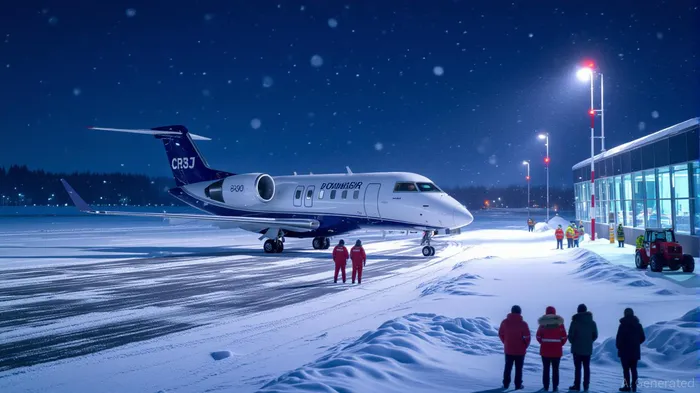 The Delta incident, while non-fatal, exposed systemic weaknesses in regional airline operations during extreme weather. The Endeavor Air CRJ-900LR, a 12-year-old aircraft, veered off Runway 31 amid snowfall and freezing conditions, triggering a chain reaction of flight cancellations and rebookings. Such events are no longer isolated; they reflect a broader trend of climate-driven disruptions. According to a Q3 2025 global insurance market overview by Aon, insurers are recalibrating risk models to account for rising attritional claims tied to extreme weather, . For regional airlines, which often operate older fleets and rely on smaller, less-equipped airports, the financial and operational toll of such disruptions is disproportionately severe.
The , compounds these risks. Regional carriers, constrained by supply chain delays and limited manufacturer investment, face extended timelines for fleet modernization. This creates a vicious cycle: older aircraft are more prone to weather-related incidents, which in turn drive up insurance costs and operational downtime. The Des Moines incident, for instance, required the NTSB to oversee the aircraft's removal, delaying runway reopening until midday the following day. Such delays not only erode customer trust but also amplify financial exposure for airlines and investors.
Insurance Costs and Investor Risk Assessments
Climate volatility is reshaping the aviation insurance landscape, with regional airlines bearing the brunt of premium adjustments. A 2025 report by the Aviation Insurance Global Strategic Business Report notes that insurers are adopting stricter underwriting standards and leveraging to mitigate exposure. For regional operators, this translates to higher attritional claims costs and reduced capacity for risk absorption. The Delta Des Moines incident, coupled with other 2025 aviation losses like the American Airlines helicopter collision, has intensified pressure on insurers to recalibrate pricing models. While the market remains competitive, the report warns that turbine and commercial operations-segments where regional airlines operate-will see the most significant premium increases.
Investors are increasingly factoring these dynamics into their risk assessments. The (CRIF), launched in June 2025, provides a structured methodology for evaluating physical climate risks, including those affecting infrastructure and corporate assets. For regional aviation, this means investors are scrutinizing airlines' ability to integrate climate resilience into fleet strategies and operational planning. United Airlines' United Next initiative-ordering 800 new aircraft to improve fuel efficiency by 20% per seat-offers a benchmark for how fleet modernization can align with both climate goals and investor expectations. Regional carriers that fail to adopt similar strategies risk falling behind in a market where climate resilience is becoming a non-negotiable criterion for capital allocation.
Fleet Modernization and Strategic Adjustments
The path to operational resilience lies in fleet modernization, yet regional airlines face unique challenges. The 2025 Global Fleet and MRO Market Forecast highlights , driven by aging aircraft and labor shortages. For regional operators, the cost of transitioning to newer, more efficient models-such as the CRJ550, which offers dual-class configurations and improved fuel efficiency-is often prohibitive. However, the financial imperative is clear: airlines with modern fleets are better positioned to navigate winter disruptions and reduce insurance liabilities.
Investor responses to fleet strategies in Q4 2025 further emphasize this trend. A survey of 220 institutional investors revealed , with a focus on decarbonization and operational efficiency. Regional airlines that prioritize (SAF) adoption or green financing mechanisms-such as green bonds-are likely to attract capital more easily. For example, SkyWest's strategic alignment with major carriers to expand connectivity while modernizing its fleet has drawn investor interest. Conversely, airlines clinging to outdated aircraft and operational models may face divestment pressures as climate risks become more pronounced.
Conclusion: Balancing Risk and Resilience
The Delta Des Moines incident serves as a microcosm of the broader challenges facing regional aviation in a climate-volatile era. For investors, the key takeaway is that operational resilience is no longer optional-it is a prerequisite for long-term value. Airlines must balance the immediate costs of fleet modernization and insurance adjustments with the long-term benefits of climate adaptation. Those that fail to act risk not only operational disruptions but also eroded investor confidence in a sector where climate risks are increasingly material.
As winter weather events become more frequent and severe, the ability of regional airlines to demonstrate resilience through strategic fleet upgrades, robust risk management, and transparent climate disclosures will determine their survival-and their appeal to capital markets.

Delivering real-time insights and analysis on emerging financial trends and market movements.
Latest Articles
Stay ahead of the market.
Get curated U.S. market news, insights and key dates delivered to your inbox.
AInvest
PRO
AInvest
PRO



Comments
No comments yet