
Winter Weather Disruptions and Their Impact on Airline and Airport Infrastructure Stocks


 Aime Summary
Des Moines: A Microcosm of Systemic Strain
DSM's struggles in late 2025 underscored the compounding risks of winter disruptions. A November 29 snowstorm , including a DeltaDAL-- Connection incident where an aircraft skidded off an icy runway at DSM. These events were exacerbated by a U.S. government shutdown , indirectly affecting DSM through ripple effects on regional connectivity. Staffing shortages further compounded the crisis: , . The airport's infrastructure, already strained by , faced delays and cancellations from United and Delta, highlighting the fragility of regional hubs reliant on national scheduling networks.
Broader Industry Trends: Resilience Amid Chaos
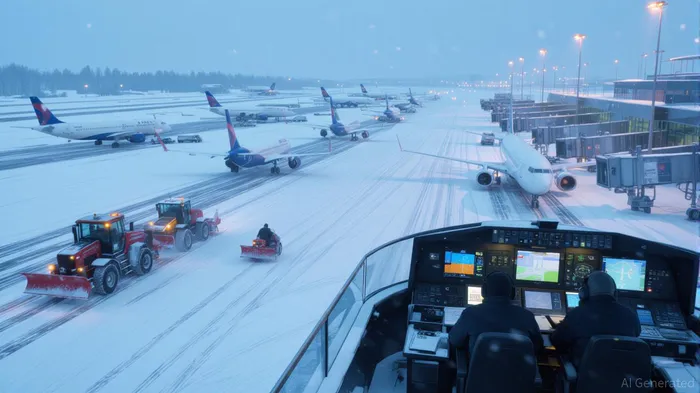 Despite DSM's challenges, the post-Thanksgiving travel period (November 21–December 1, 2025) demonstrated the sector's capacity to rebound. , , . during the holiday window, . carrier. This resilience, however, came at a cost. Operating margins tightened, , . Rising staffing and maintenance expenses, coupled with economic headwinds like tariffs, dampened profitability.
Resilient Airport Infrastructure Stocks: Ferrovial and Vinci Lead the Way
Airport infrastructure stocks, while indirectly impacted by winter disruptions, showcased robust . Ferrovial SE (FER), which operates Dallas-Fort Worth International Airport and Heathrow, for the first nine months of 2025, . Its thrived, particularly in North America, where U.S. outpaced inflation in revenue per transaction. Similarly, VINCI Airports, managing over 70 airports globally, , Mexico, and France. , reflecting its ability to maintain traffic growth despite operational headwinds.
Risk Management Strategies: Airlines Adapt to Winter Volatility
Major U.S. airlines adopted multifaceted strategies to mitigate winter-related risks. Liquidity management became critical: United and Delta leveraged pre-COVID to avoid restructuring, even as dipped. improvements, such as Delta's enhanced mobile app and automated rebooking tools, reduced passenger friction during disruptions. Airlines also diversified risk by expanding and incorporating into itineraries. For example, American Airlines prioritized , a segment less sensitive to price fluctuations, to offset softer demand in lower-income brackets.
The Path Forward: Balancing Vulnerability and Opportunity
While winter disruptions exposed vulnerabilities, they also accelerated innovation. Airports like DSM are investing in , such as 's 2026 opening, to enhance resilience. Investors should focus on companies with strong , such as Ferrovial's long-term airline agreements, and airlines with and technology-driven operations. like the U.S. offer diversified exposure to mitigate individual .
In conclusion, the 2025 winter season highlighted the aviation sector's duality: fragility in the face of compounding shocks, yet resilience through . For investors, the key lies in identifying players-like Ferrovial and VINCI in infrastructure, or United and Delta in airlines-that balance with financial fortitude.

Delivering real-time insights and analysis on emerging financial trends and market movements.
Latest Articles
Stay ahead of the market.
Get curated U.S. market news, insights and key dates delivered to your inbox.
AInvest
PRO
AInvest
PRO



Comments
No comments yet