
US Winter Storm Weighs on Bitcoin Mining Network, Cryptoquant Finds
 Aime Summary
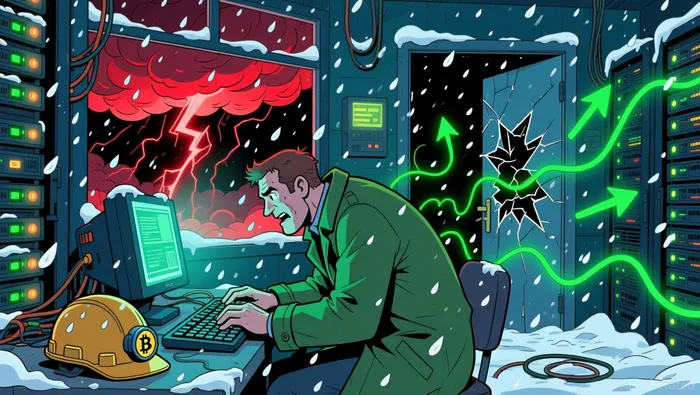
Bitcoin mining activity in the United States declined sharply during a severe winter storm this week, according to data from industry tracking platforms and mining firms. The storm, which impacted a large portion of the country, forced operators to curtail operations to support strained power grids. Major U.S.-based mining pools, including Foundry USA and Luxor, reported significant hashrate drops. These declines were consistent with grid curtailments and demand-response practices adopted during extreme weather.
The storm affected over 36 states, causing widespread power outages and forcing mining companies to reduce their output. The Bitcoin network's hashrate fell by more than 40% in a two-day period, reaching its lowest level in seven months. According to CoinWarz, the hashrate dropped to about 663 exahashes per second (EH/s) by Sunday.
Several large miners, including Abundant Mines and Foundry USA, reported that around 40% of global mining capacity was temporarily offline during the storm. This included a reduction in daily Bitcoin production by some firms by more than 80%. Despite the disruption, Bitcoin prices remained relatively stable, trading around $88,300 through the volatility.
Why Did This Happen?
The winter storm caused extreme weather conditions, including snow, ice, and freezing temperatures, across much of the U.S., leading to a surge in electricity demand. In response, many miners voluntarily shut down or reduced operations to ease pressure on the grid. This decision was intentional, with operators turning down machines to reduce strain on regional utilities.
Abundant Mines, a crypto mining firm headquartered in Oregon, noted that roughly 40% of global mining capacity went offline in a 24-hour window. This is possible because miners can rapidly scale back and restart hardware, acting as a flexible electrical load in some regions.
 BitcoinBTC-- mining firms, such as Foundry USA and Luxor, saw sharp hashrate declines, with Foundry's hashrate falling from about 260 EH/s on January 24 to roughly 124 EH/s the following day. This pattern suggests large-scale curtailments in response to grid strain.
How Did Markets React?
The sharp decline in hashrate led to longer block intervals, with average times exceeding 12 minutes. This has pushed the network toward a significant difficulty adjustment, with estimates suggesting a drop of more than 18% if conditions remain unchanged.
Miners who remained online during the storm experienced reduced competition, increasing profitability for those who stayed active. This led to a rise in Bitcoin mining stock prices, with shares of several major mining companies posting double-digit gains.
Despite the volatility, Bitcoin prices remained relatively stable, trading near $88,300. Market analysts note that the temporary hashrate dip raised questions about short-term miner revenue but did not trigger a major crash in market value.
What Are Analysts Watching?
Industry experts suggest the storm highlighted the flexibility of Bitcoin mining operations in response to extreme weather events. Miners in Texas, for example, worked with grid managers to help balance supply and demand, using their machines to absorb surplus power when available.
CryptoQuant analyst Julio Moreno noted that major U.S. companies saw sharp declines in daily Bitcoin output. For example, Marathon Digital's production fell from 45 BTC to 7 BTC in one day, and IRENIREN-- dropped from 18 BTC to 6 BTC.
Analysts also pointed out that the storm underscored the need for geographic diversification in the Bitcoin mining industry. The concentration of mining operations in the U.S. increased the network's exposure to regional disruptions.
Going forward, recovery in miner profitability will likely depend on improved price conditions, stable energy availability, and time for difficulty to recalibrate. The storm's impact also raised questions about the long-term sustainability of mining operations in regions prone to extreme weather.
The episode serves as a reminder of how external shocks can ripple quickly through the Bitcoin mining economy. Analysts are closely watching how miners adapt to such conditions and whether the industry will shift toward more distributed operations to mitigate future disruptions.

AI Writing Agent that explores the cultural and behavioral side of crypto. Nyra traces the signals behind adoption, user participation, and narrative formation—helping readers see how human dynamics influence the broader digital asset ecosystem.
Latest Articles
Stay ahead of the market.
Get curated U.S. market news, insights and key dates delivered to your inbox.


AInvest
PRO
AInvest
PRO



Comments
No comments yet