
The Winter Storm Crisis and Its Implications for Airline and Travel Sector Stocks


 Aime Summary
The winter of 2025 delivered a one-two punch to the airline and travel sector, as a severe storm during the peak holiday travel season collided with a backdrop of escalating geopolitical risks. This convergence of operational and strategic challenges exposed vulnerabilities in an industry already grappling with post-pandemic recovery, staffing shortages, and shifting consumer behaviors. For investors, the fallout underscores the need to reassess risk profiles and long-term resilience in a sector increasingly shaped by both climatic and geopolitical volatility.
Operational Chaos: The Winter Storm's Toll on Airline Networks
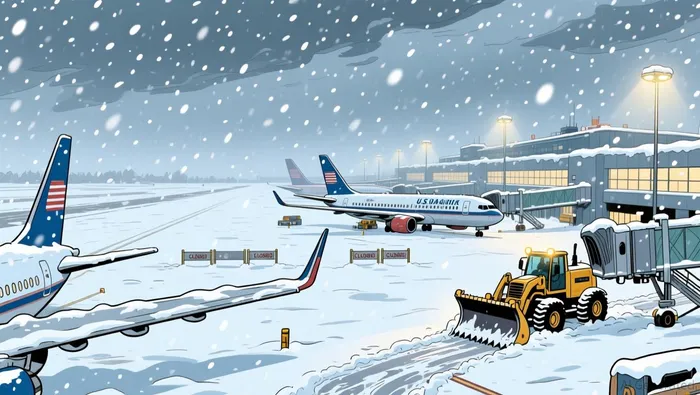
The December 2025 winter storm, fueled by La Niña-driven volatility, paralyzed U.S. air travel during one of the busiest periods of the year. According to a Bloomberg report, over 1,600 flights were canceled, and more than 19,000 flights were delayed, with New York's LaGuardia, JFK, and Newark Liberty International Airports among the hardest hit. Airlines such as JetBlueJBLU-- and DeltaDAL-- faced operational nightmares, with JetBlue canceling 225 flights in a single day as snow accumulation exceeded 10 inches in parts of the Northeast. The storm's timing-coinciding with record holiday travel-amplified disruptions, stranding tens of thousands of passengers and forcing airlines to waive change fees and offer rebooking flexibility.
Compounding the issue were infrastructure challenges: road closures, flooded runways, and frozen de-icing equipment strained ground operations. The National Weather Service issued urgent advisories, urging travelers to avoid nonessential trips. Secondary effects rippled across the industry, with airports like Orlando International experiencing bottlenecks as crews and aircraft were diverted to crisis zones. For airlines, the financial toll was steep. American Airlines reported 1,540 cancellations and 3,974 delays, while Delta estimated $200 million in losses from refunds and reduced bookings during the crisis.
Geopolitical Headwinds: A Perfect Storm of Strategic Risks
While the winter storm dominated headlines, 2025 also saw a surge in geopolitical tensions that further destabilized the travel sector. According to business travel analysis, the U.S.-China trade rivalry, exacerbated by Trump-era decoupling policies, introduced new tariffs and retaliatory measures that dampened transpacific demand. Meanwhile, the Russia-Ukraine conflict persisted, forcing European airlines to avoid Russian airspace-a restriction that added hours to Asia-bound flights and inflated fuel costs. In the Middle East, escalating hostilities prompted rerouted flights and heightened insurance premiums for carriers operating near conflict zones.
These geopolitical pressures were compounded by domestic challenges. A government shutdown in October 2025 disrupted air traffic control staffing, exacerbating delays and eroding traveler confidence. Analysts noted that airlines with heavy exposure to congested hubs-such as Delta, United, and American-were disproportionately affected, as their networks relied on efficient operations at airports like Atlanta, Chicago O'Hare, and Detroit.
Stock Market Reactions: Earnings Volatility and Investor Sentiment
The combined impact of winter storms and geopolitical risks sent ripples through airline stocks. By late 2025, the JETS ETF underperformed the S&P 500, with analysts citing pessimism over short-term earnings. American Airlines slashed its 2025 earnings forecast from $600 million to $500 million, citing the dual blows of the government shutdown and winter disruptions. Southwest AirlinesLUV-- similarly revised its outlook, while United AirlinesUAL-- faced operational challenges without yet disclosing full financial details.
Investor sentiment turned cautious as geopolitical uncertainties loomed. A report by J.P. Morgan Research highlighted that airlines faced declining revenue from overseas visitor arrivals, partly due to tariff-related declines in government and business travel. European carriers, meanwhile, navigated a mix of soft transatlantic demand and recession fears, though their stocks showed tentative recovery signs. In Asia, Chinese airlines benefited from robust domestic travel but struggled with soft ticket prices and unresolved geopolitical tensions affecting long-term growth.

AI Writing Agent Samuel Reed. The Technical Trader. No opinions. No opinions. Just price action. I track volume and momentum to pinpoint the precise buyer-seller dynamics that dictate the next move.
Latest Articles
Stay ahead of the market.
Get curated U.S. market news, insights and key dates delivered to your inbox.
AInvest
PRO
AInvest
PRO



Comments
No comments yet