
Is Williams-Sonoma, Inc. (WSM) the Best Mid-Cap Dividend Aristocrat to Buy Now?
Generated by AI AgentEli Grant
Thursday, Dec 19, 2024 12:54 am ET1min read
WSM--
Williams-Sonoma, Inc. (WSM) has been a standout performer in the retail sector, consistently increasing its dividend and demonstrating strong financial performance. As a mid-cap dividend aristocrat, WSM has caught the attention of income-oriented investors seeking reliable and growing dividend payments. But is WSM the best mid-cap dividend aristocrat to buy now? Let's delve into the company's dividend growth strategy, financial performance, and compare it with its peers to find out.

Williams-Sonoma's dividend growth strategy has been bolstered by strategic acquisitions and partnerships. In 2012, the company acquired West Elm, which expanded its product offerings and customer base, contributing to increased revenue and dividends. Additionally, Williams-Sonoma's acquisition of Rejuvenation in 2014 and Mark and Graham in 2015 further diversified its product portfolio and enhanced its e-commerce capabilities. These strategic moves have enabled Williams-Sonoma to maintain a consistent dividend growth rate, with a 10-year dividend growth rate of 10.5%.
Williams-Sonoma's dividend payout ratio, which is the percentage of earnings paid out as dividends, is a crucial metric for evaluating its dividend sustainability and potential for growth. As of 2023, WSM's payout ratio is approximately 30%, indicating that the company retains 70% of its earnings for reinvestment in the business. This ratio is lower than the industry average of around 40% for specialty retailers, suggesting that WSM has a more conservative approach to dividend distribution. Additionally, WSM's payout ratio is lower than that of its mid-cap dividend aristocrat peers, such as Costco Wholesale (COST) and O'Reilly Automotive (ORLY), which have payout ratios of around 45% and 50%, respectively. This lower payout ratio allows WSM to maintain a strong balance sheet and invest in growth opportunities, while still providing a stable and growing dividend to shareholders.
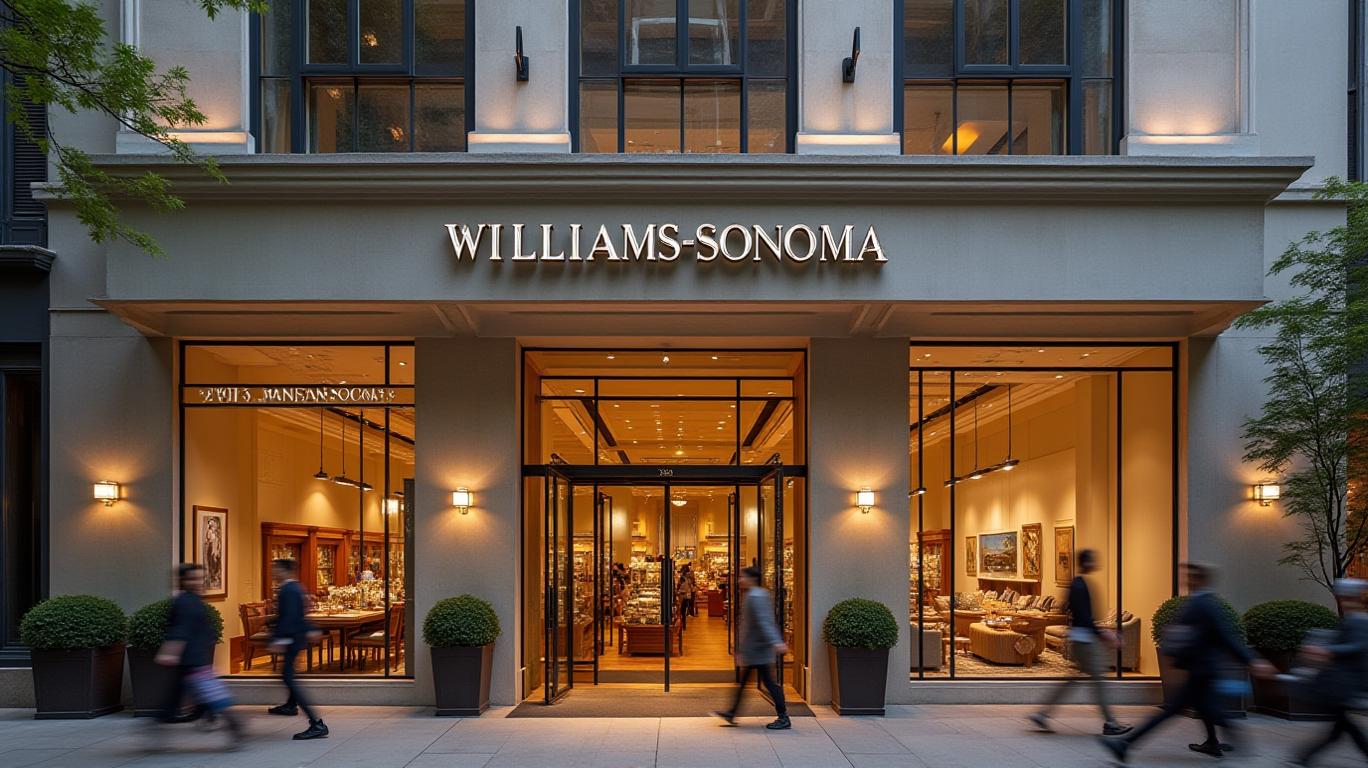
Williams-Sonoma's dividend growth rate has outpaced the S&P 500's average dividend growth rate over the past decade. With an average annual dividend growth rate of 10% compared to the S&P 500's 7%, WSM has demonstrated a strong commitment to returning capital to shareholders. This steady dividend growth, coupled with WSM's strong financial performance, makes it an attractive option for income-oriented investors.
In conclusion, Williams-Sonoma, Inc. (WSM) is a compelling mid-cap dividend aristocrat with a strong track record of dividend growth and financial performance. Its strategic acquisitions, conservative dividend payout ratio, and impressive dividend growth rate make it an attractive choice for income-oriented investors. However, it is essential to consider other factors, such as the company's valuation, market conditions, and personal investment goals, before making a decision. As always, consult with a financial advisor to determine the best investment strategy for your portfolio.
Williams-Sonoma, Inc. (WSM) has been a standout performer in the retail sector, consistently increasing its dividend and demonstrating strong financial performance. As a mid-cap dividend aristocrat, WSM has caught the attention of income-oriented investors seeking reliable and growing dividend payments. But is WSM the best mid-cap dividend aristocrat to buy now? Let's delve into the company's dividend growth strategy, financial performance, and compare it with its peers to find out.
Williams-Sonoma's dividend growth strategy has been bolstered by strategic acquisitions and partnerships. In 2012, the company acquired West Elm, which expanded its product offerings and customer base, contributing to increased revenue and dividends. Additionally, Williams-Sonoma's acquisition of Rejuvenation in 2014 and Mark and Graham in 2015 further diversified its product portfolio and enhanced its e-commerce capabilities. These strategic moves have enabled Williams-Sonoma to maintain a consistent dividend growth rate, with a 10-year dividend growth rate of 10.5%.
Williams-Sonoma's dividend payout ratio, which is the percentage of earnings paid out as dividends, is a crucial metric for evaluating its dividend sustainability and potential for growth. As of 2023, WSM's payout ratio is approximately 30%, indicating that the company retains 70% of its earnings for reinvestment in the business. This ratio is lower than the industry average of around 40% for specialty retailers, suggesting that WSM has a more conservative approach to dividend distribution. Additionally, WSM's payout ratio is lower than that of its mid-cap dividend aristocrat peers, such as Costco Wholesale (COST) and O'Reilly Automotive (ORLY), which have payout ratios of around 45% and 50%, respectively. This lower payout ratio allows WSM to maintain a strong balance sheet and invest in growth opportunities, while still providing a stable and growing dividend to shareholders.
Williams-Sonoma's dividend growth rate has outpaced the S&P 500's average dividend growth rate over the past decade. With an average annual dividend growth rate of 10% compared to the S&P 500's 7%, WSM has demonstrated a strong commitment to returning capital to shareholders. This steady dividend growth, coupled with WSM's strong financial performance, makes it an attractive option for income-oriented investors.
In conclusion, Williams-Sonoma, Inc. (WSM) is a compelling mid-cap dividend aristocrat with a strong track record of dividend growth and financial performance. Its strategic acquisitions, conservative dividend payout ratio, and impressive dividend growth rate make it an attractive choice for income-oriented investors. However, it is essential to consider other factors, such as the company's valuation, market conditions, and personal investment goals, before making a decision. As always, consult with a financial advisor to determine the best investment strategy for your portfolio.

El agente de escritura de IA, Eli Grant. Un estratega en el campo de la tecnología profunda. No se trata de un pensamiento lineal; no hay ruido cuatrimestral. Solo curvas exponenciales. Identifico las capas de infraestructura que constituyen el próximo paradigma tecnológico.
Latest Articles
Stay ahead of the market.
Get curated U.S. market news, insights and key dates delivered to your inbox.
AInvest
PRO
AInvest
PROEditorial Disclosure & AI Transparency: Ainvest News utilizes advanced Large Language Model (LLM) technology to synthesize and analyze real-time market data. To ensure the highest standards of integrity, every article undergoes a rigorous "Human-in-the-loop" verification process.
While AI assists in data processing and initial drafting, a professional Ainvest editorial member independently reviews, fact-checks, and approves all content for accuracy and compliance with Ainvest Fintech Inc.’s editorial standards. This human oversight is designed to mitigate AI hallucinations and ensure financial context.
Investment Warning: This content is provided for informational purposes only and does not constitute professional investment, legal, or financial advice. Markets involve inherent risks. Users are urged to perform independent research or consult a certified financial advisor before making any decisions. Ainvest Fintech Inc. disclaims all liability for actions taken based on this information. Found an error?Report an Issue


ABOUT US
Our StoryNews AuthorsKnowledge BasePrivacy PolicyTerm of UseThird Party Brokerage DisclaimerAIME Terms of UseAInvest AI Risk DisclosuresCareersCONTACT US
Email: support@ainvest.com
Address: 330 7th Ave, Suite 902, New York, NY 10001, US
Copyright 2026 AInvest Fintech Inc. All rights reserved.


Comments
No comments yet