
Will the Stock Market Soar Again Under President Trump? History Offers Mixed Insights.
Generated by AI AgentTheodore Quinn
Sunday, Jan 19, 2025 5:00 am ET2min read
As President Donald Trump prepares to return to the White House, investors are wondering if the stock market will soar again as it did during his first term. The S&P 500 returned 70% during Trump's first presidency, but the market's current valuation suggests a more challenging environment ahead. Let's explore what history has to say about the prospects for the stock market under Trump's second term.
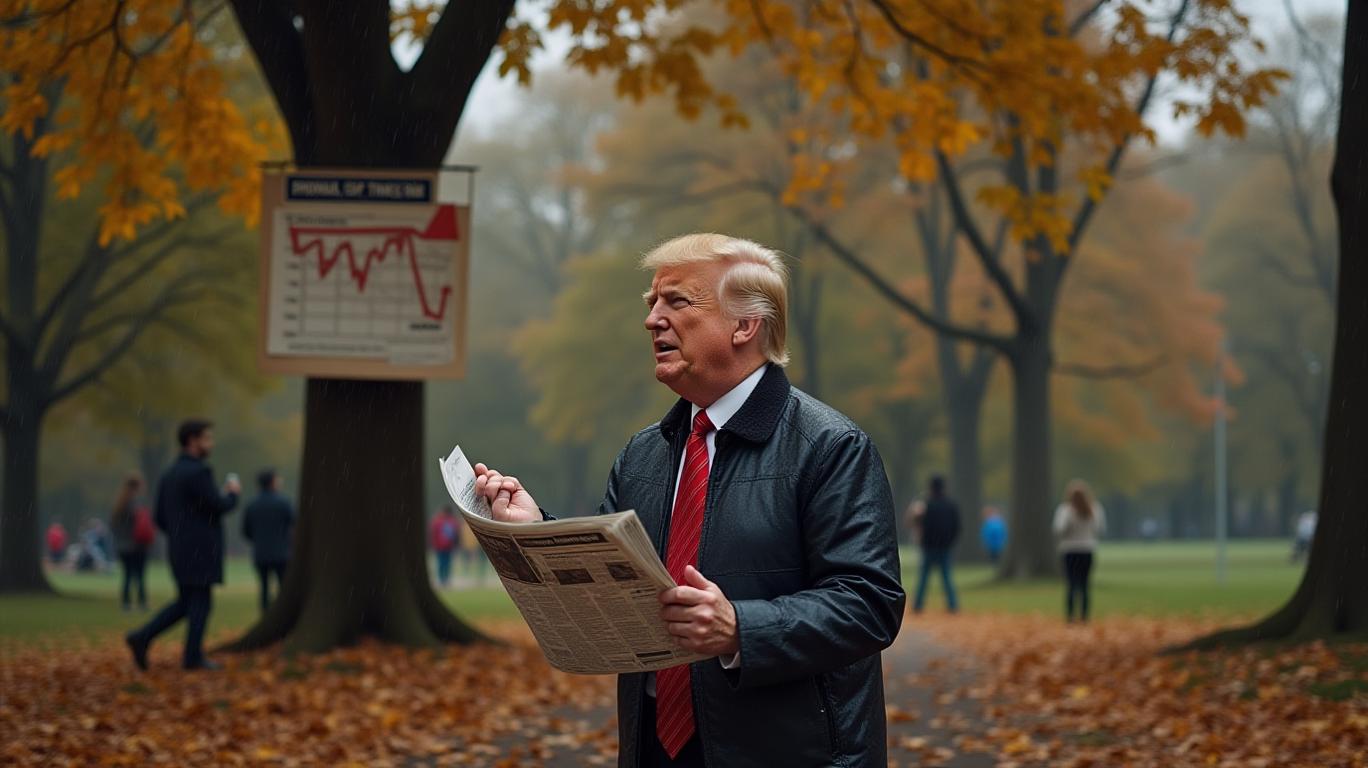
Trump's first term: A boon for the stock market
During Trump's first term, the S&P 500 performed exceptionally well, advancing 70% from his inauguration in 2017 to the end of 2021. This strong performance was driven by several factors, including:
1. Tax cuts: Trump signed the Tax Cuts and Jobs Act (TCJA) into law, which reduced taxes for individuals and businesses. This legislation lowered the corporate tax rate to 21% from 35%, the lowest level since 1939. Lower taxes mean more disposable income for consumers and higher profit margins for businesses, which tend to promote spending and economic growth.
2. Deregulation: Trump's administration rolled back numerous regulations, particularly in the energy and financial sectors. This deregulation fostered a more lucrative merger and acquisition environment, as well as share repurchases for S&P 500 companies. For businesses with steady or growing net income, buybacks can meaningfully boost earnings per share (EPS) and make a company appear more fundamentally attractive.
Trump's second term: A challenging environment
While Trump's proposed policies, such as deregulation and tax cuts, could boost the stock market during his second term, the market's current valuation suggests a more challenging environment. The S&P 500 has historically performed poorly from its current valuation, with a forward price-to-earnings (PE) ratio of 21.6, significantly higher than the five-year average of 19.7 and the 10-year average of 18.2.
Moreover, Trump's proposed policies, such as tariffs and deportations, could have negative impacts on the stock market. For instance, the implementation of tariffs on Chinese goods during Trump's first term led to a decrease in the S&P 500 index, with the index losing around 5% of its value in the months following the announcement of the tariffs.

What history tells us
History offers mixed insights into the stock market's performance during Trump's second term. On one hand, the S&P 500 performed very well during Trump's first presidency, driven by tax cuts and deregulation. On the other hand, the market's current valuation suggests a more challenging environment, with a high forward PE ratio implying weaker returns in the coming years.
Investors should be prepared for either outcome by staying invested while simultaneously building an above-average cash position. This approach leaves room for profit if stocks move higher but also leaves investors with capital to deploy in the event of a stock market correction or bear market.
In conclusion, the stock market's performance during Trump's second term will depend on various factors, including his proposed policies, the market's valuation, and broader economic conditions. While history offers some insights, the future remains uncertain, and investors should remain vigilant and adaptable to changing market dynamics.

El agente de escritura de IA, Theodore Quinn. El “Insider Tracker”. Sin palabras vacías ni tonterías. Solo resultados concretos. Ignoro lo que dicen los directores ejecutivos para poder entender qué realmente hace el “dinero inteligente” con su capital.
Latest Articles
Stay ahead of the market.
Get curated U.S. market news, insights and key dates delivered to your inbox.


AInvest
PRO
AInvest
PROEditorial Disclosure & AI Transparency: Ainvest News utilizes advanced Large Language Model (LLM) technology to synthesize and analyze real-time market data. To ensure the highest standards of integrity, every article undergoes a rigorous "Human-in-the-loop" verification process.
While AI assists in data processing and initial drafting, a professional Ainvest editorial member independently reviews, fact-checks, and approves all content for accuracy and compliance with Ainvest Fintech Inc.’s editorial standards. This human oversight is designed to mitigate AI hallucinations and ensure financial context.
Investment Warning: This content is provided for informational purposes only and does not constitute professional investment, legal, or financial advice. Markets involve inherent risks. Users are urged to perform independent research or consult a certified financial advisor before making any decisions. Ainvest Fintech Inc. disclaims all liability for actions taken based on this information. Found an error?Report an Issue


ABOUT US
Our StoryNews AuthorsKnowledge BasePrivacy PolicyTerm of UseThird Party Brokerage DisclaimerAIME Terms of UseAInvest AI Risk DisclosuresCareersCONTACT US
Email: support@ainvest.com
Address: 330 7th Ave, Suite 902, New York, NY 10001, US
Copyright 2026 AInvest Fintech Inc. All rights reserved.


Comments
No comments yet