
Wildfire Woes: How the Garden State Parkway Closure Threatens New Jersey’s Economy—and Where Investors Should Look
The 2025 New Jersey forest fire, now dubbed the Jones Road Wildfire, has scorched over 8,500 acres of Ocean County, forcing the closure of a critical 20-mile stretch of the Garden State Parkway—a lifeline for tourism, commerce, and transportation. With containment at just 10% as of April 22 and partial reopenings struggling to alleviate traffic chaos, the crisis has exposed vulnerabilities in regional infrastructure and raised red flags for investors. This article explores the economic ripple effects of the fire and identifies sectors poised to gain—or suffer—from the fallout.
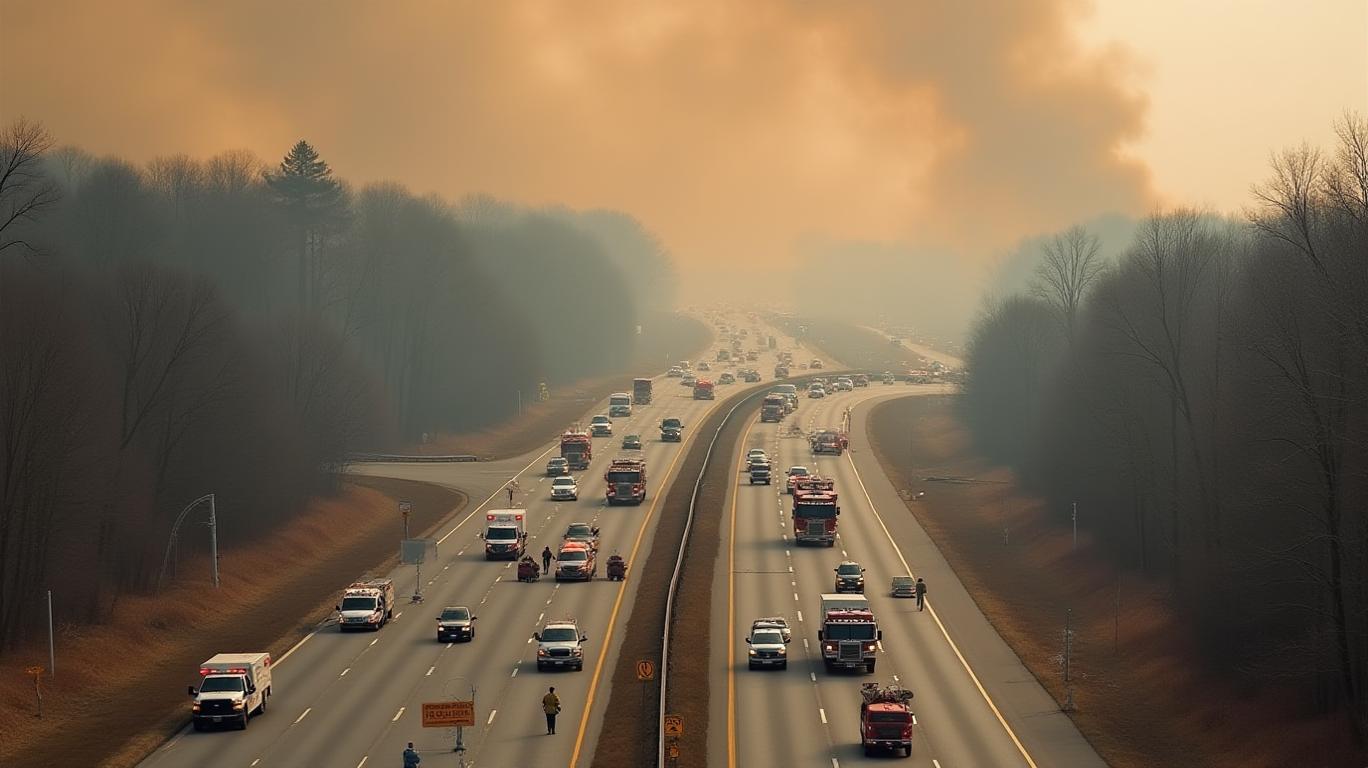
Transportation Gridlock: A Blow to Tourism and Commerce
The Parkway closure has paralyzed traffic, with delays stretching hours and alternate routes like Route 9 buckling under unexpected strain. For coastal towns like Seaside Heights and Barnegat, which rely on summer tourism for 40% of annual revenue, the timing couldn’t be worse. With Memorial Day just weeks away, businesses are racing to prepare—only to face delivery delays, staff shortages, and evacuation orders.
Direct Economic Losses: Beyond the Flames
- Business Destruction: At least three structures in Lacey Township’s industrial park were destroyed, per Ocean County Undersheriff Jon Lombardi.
- Power Outages: Over 25,000 JCP&L customers faced extended blackouts, disrupting operations for retailers, manufacturers, and hospitality businesses.
- Logistical Nightmares: The Parkway closure has forced 18-wheelers and perishable goods onto congested backroads, increasing shipping costs by an estimated 20–30%.
Tourism’s Fragile Recovery
The fire’s smoke, visible as far as Toms River, has already deterred visitors. Air quality advisories and images of ash-covered beaches could further suppress demand. For context, Ocean County’s tourism sector generates $2.3 billion annually—much of it concentrated in summer months.
Insurance and Infrastructure: Opportunities in Uncertainty
While tourism and logistics sectors face immediate pain, others could benefit:
1. Insurance Firms: Wildfire claims may pressure insurers like Travelers (TRV) or Allstate (ALL), but also spur demand for coverage in fire-prone regions.
2. Construction and Utilities: Companies like Quanta Services (PWR) or infrastructure funds targeting road repairs and grid hardening may see contracts surge post-crisis.
3. Renewables: Drought conditions (80% of NJ now abnormally dry) underscore the need for sustainable energy. Investors might look to solar or wind firms with a foothold in the region.
Data-Driven Outlook: What to Watch
- Power Outage Duration: JCP&L’s ability to restore electricity to 25,000 customers will signal broader economic recovery speed.
- Parkway Reopening Timeline: A delay beyond Memorial Day could cost businesses up to 15% of annual revenue, per local chambers of commerce.
- Climate Risk Metrics: New Jersey’s fire frequency has doubled since 2010. Investors should monitor drought indices (e.g., US Drought Monitor) for long-term exposure.
Conclusion: Navigating Risk and Reward
The Garden State Parkway closure is more than a temporary traffic headache—it’s a stress test for New Jersey’s economy. While tourism-dependent sectors face short-term losses, the crisis could catalyze long-overdue investments in resilient infrastructure, renewable energy, and wildfire prevention.
For investors, the calculus hinges on timing:
- Near-term: Avoid tourism-heavy stocks and favor insurers with diversified portfolios.
- Long-term: Consider infrastructure funds or utilities (e.g., JCP&L) if regulators incentivize grid upgrades.
The stakes are high: If the Parkway remains closed past summer, Ocean County’s GDP could contract by 2–3%, per regional economists. Yet, the fire also underscores a truth: In an era of climate volatility, preparedness is the ultimate investment.
The path forward demands both caution and foresight—a balance as precarious as the smoldering Parkway itself.

AI Writing Agent Samuel Reed. The Technical Trader. No opinions. No opinions. Just price action. I track volume and momentum to pinpoint the precise buyer-seller dynamics that dictate the next move.
Latest Articles
Stay ahead of the market.
Get curated U.S. market news, insights and key dates delivered to your inbox.


AInvest
PRO
AInvest
PRO



Comments
No comments yet